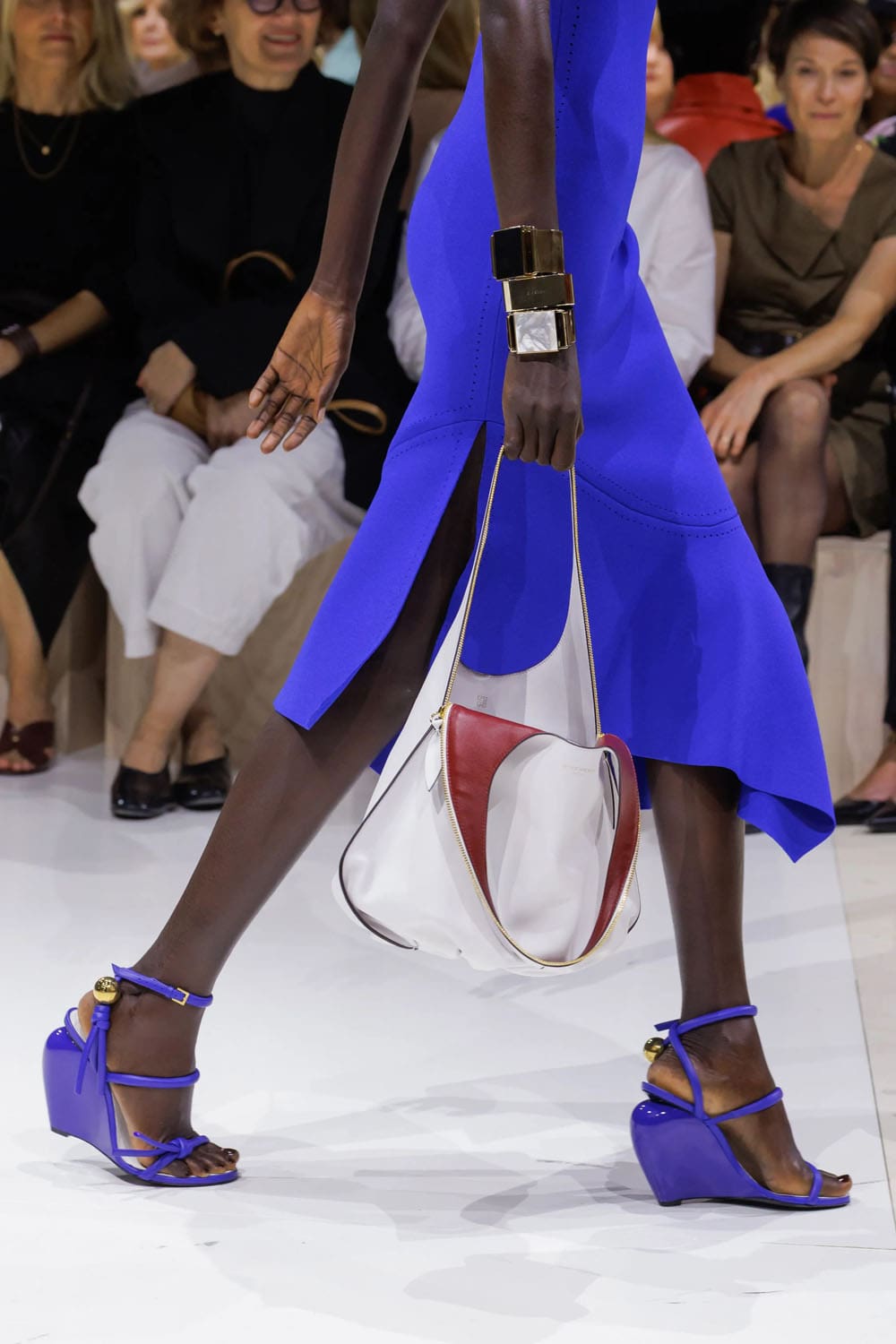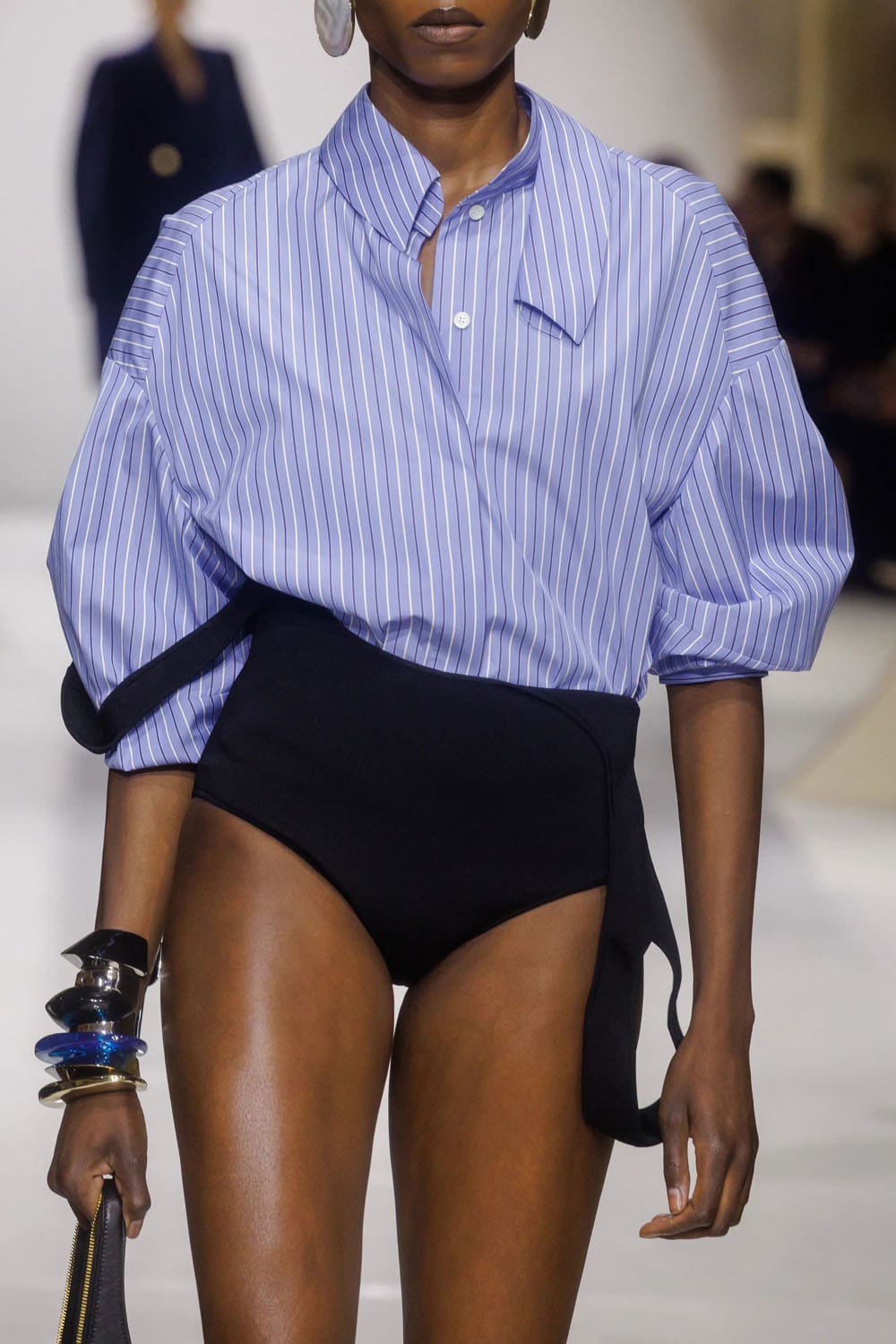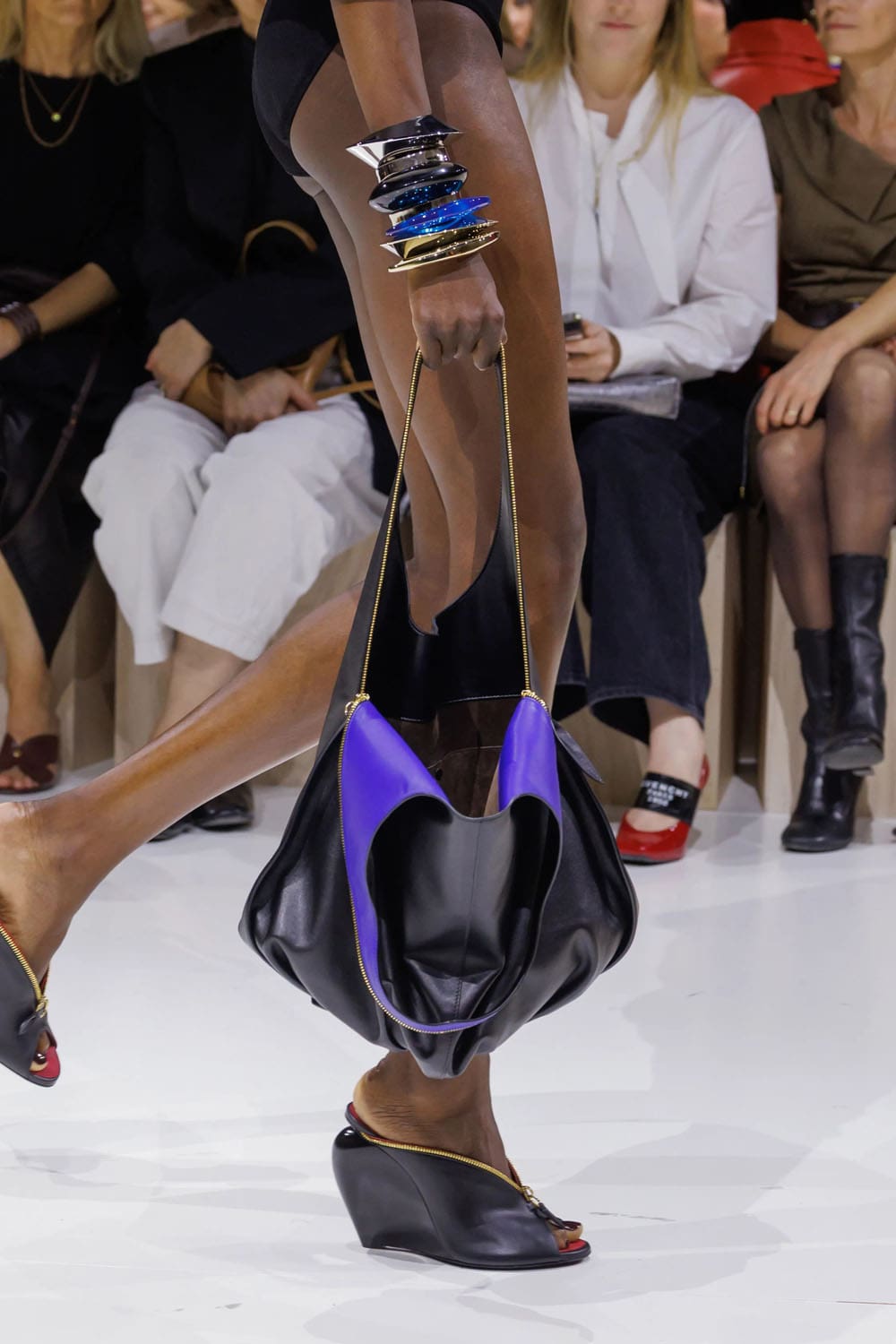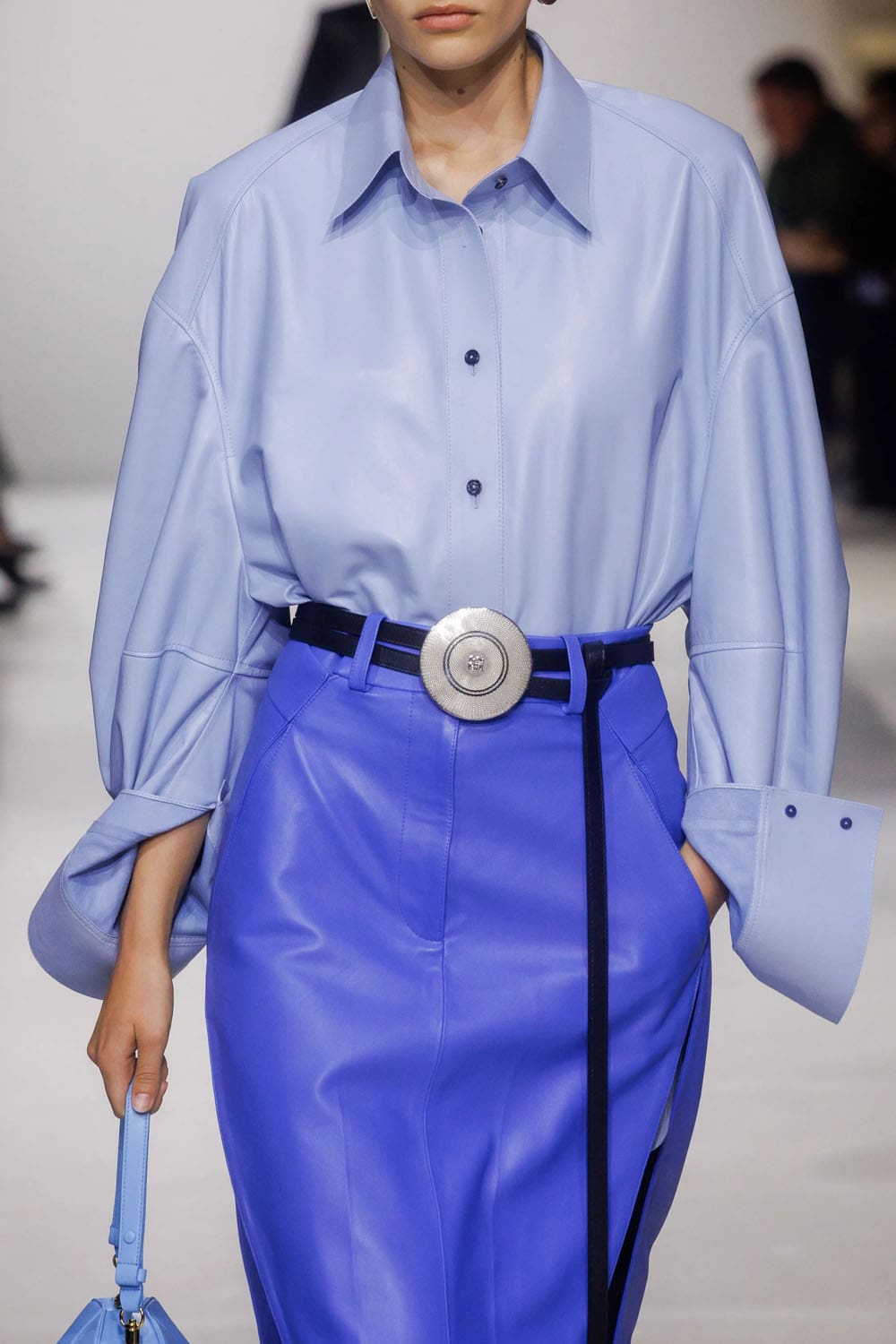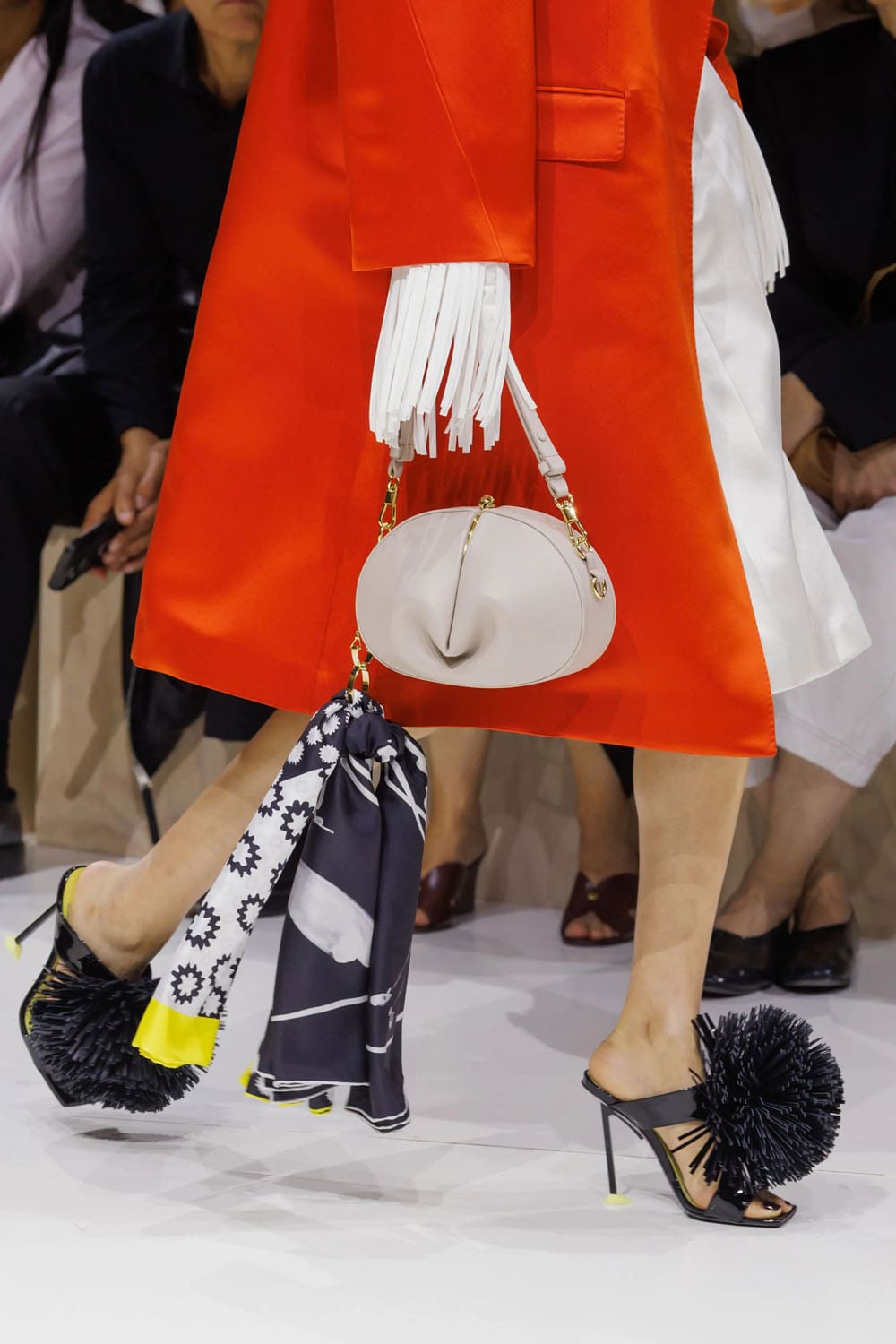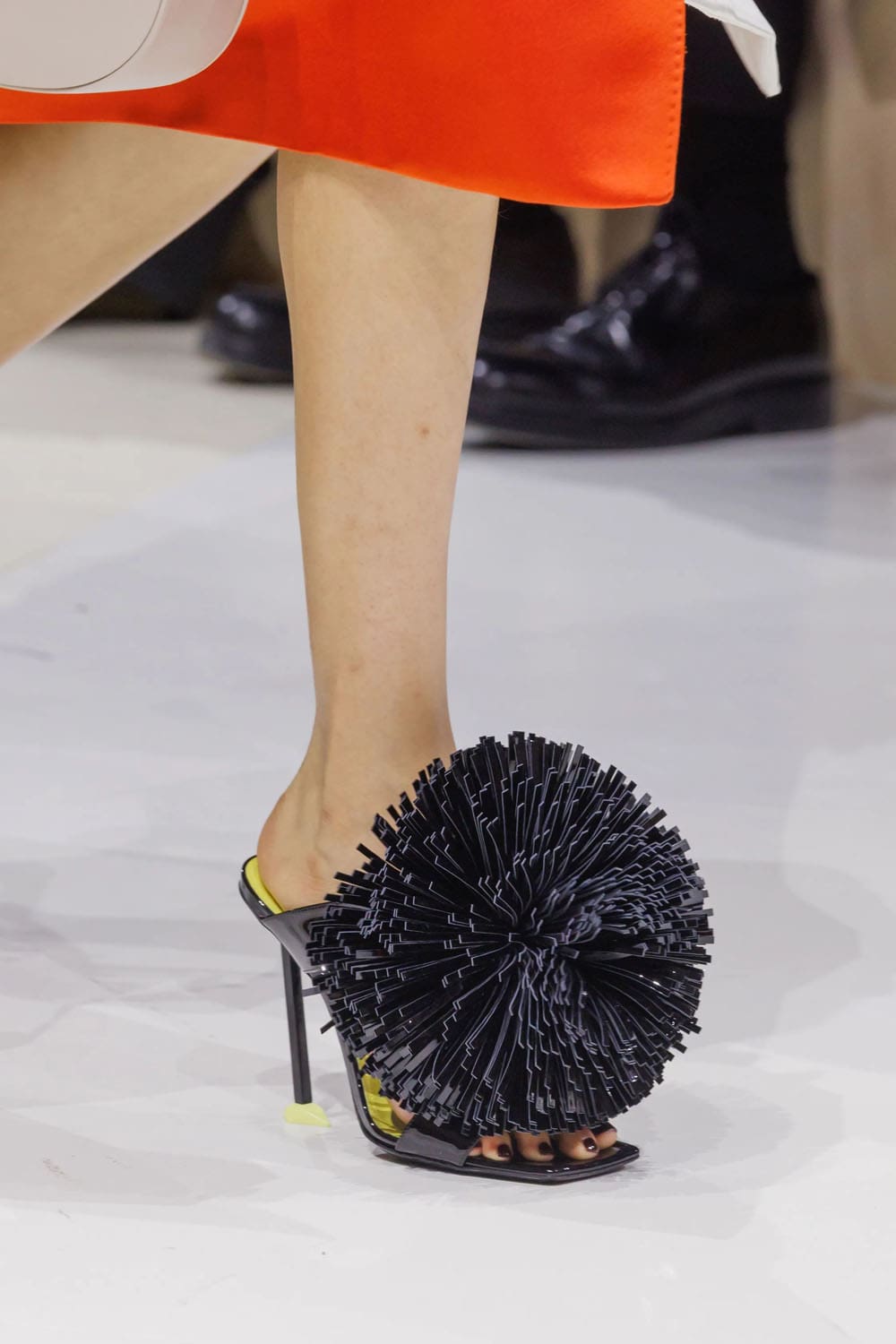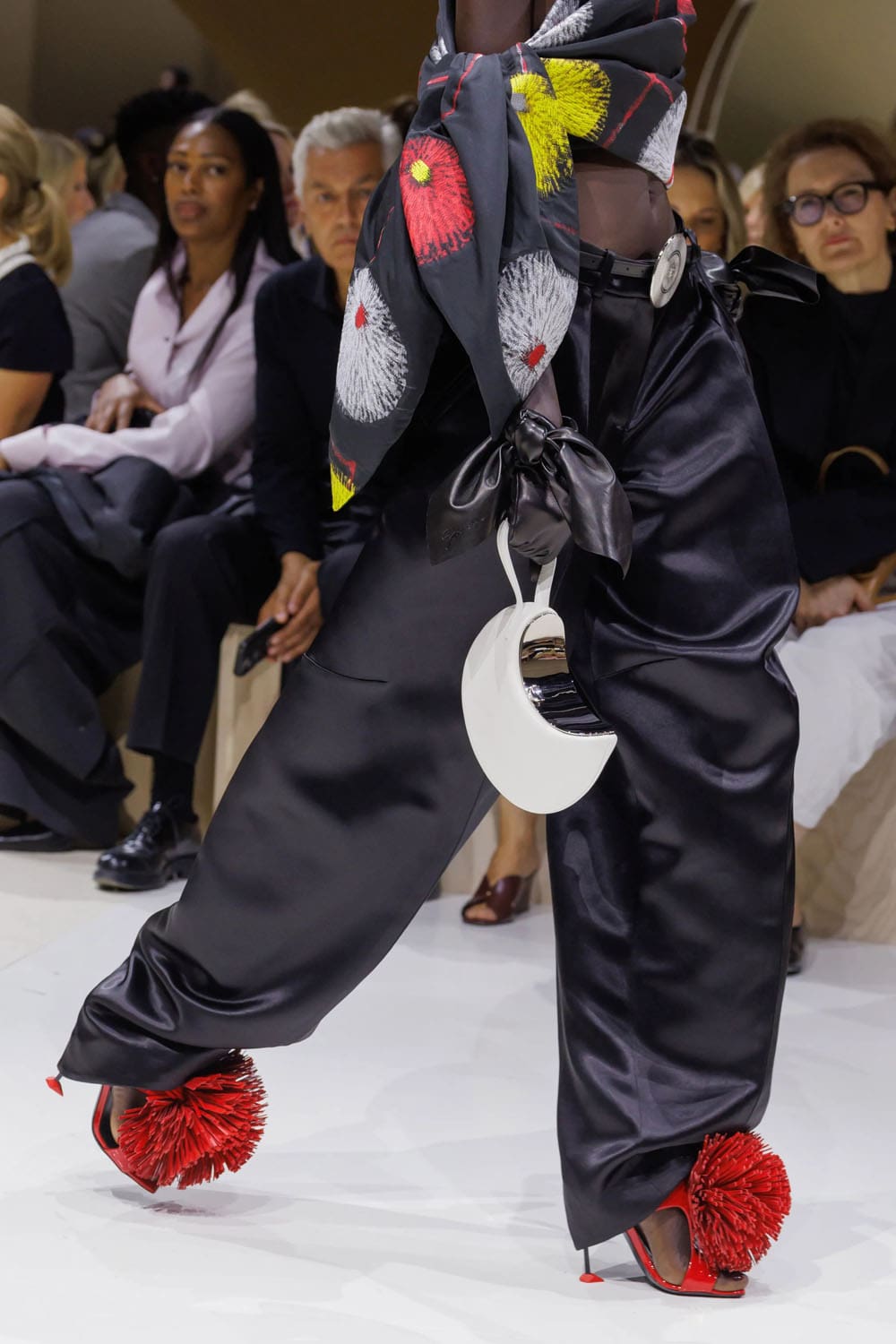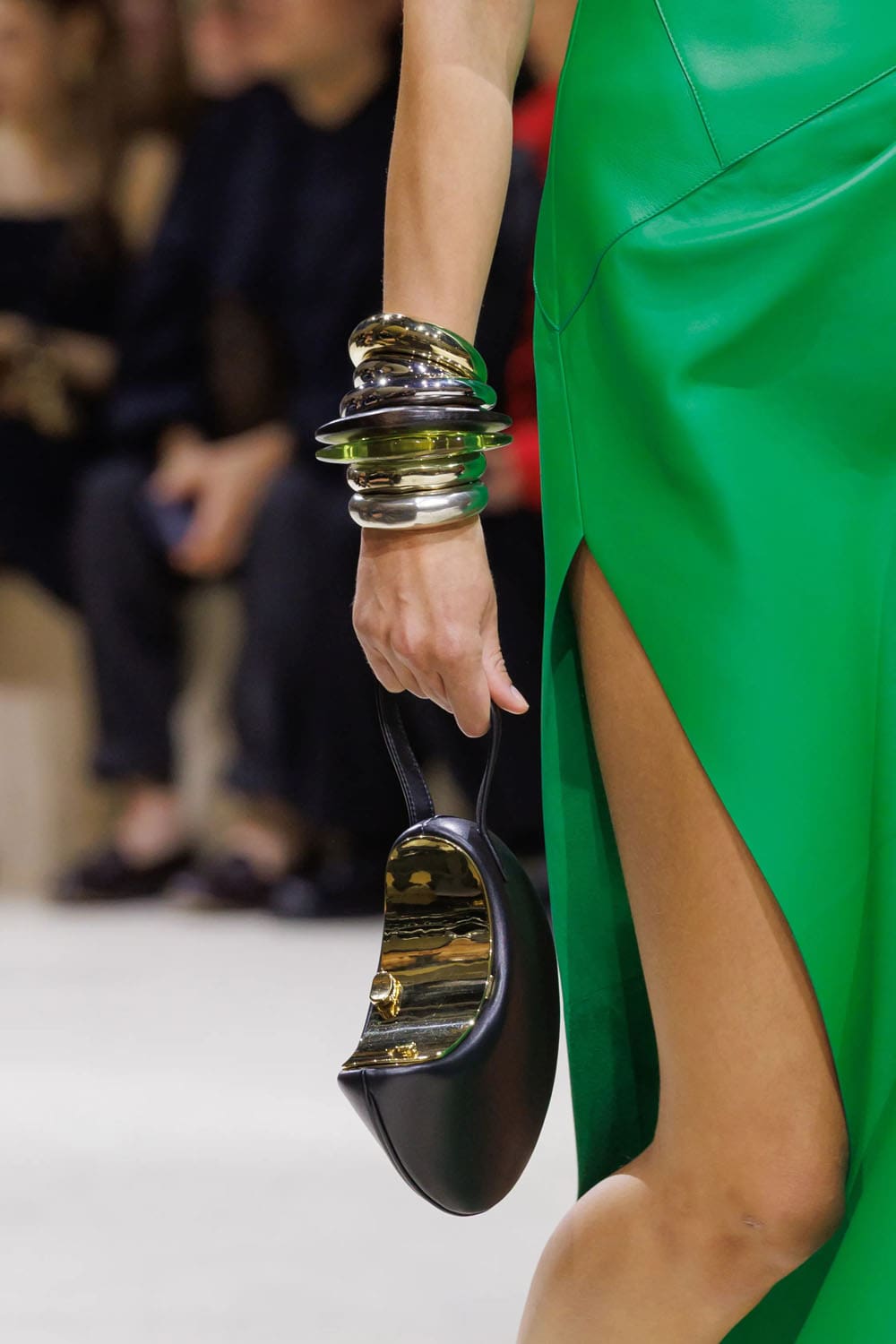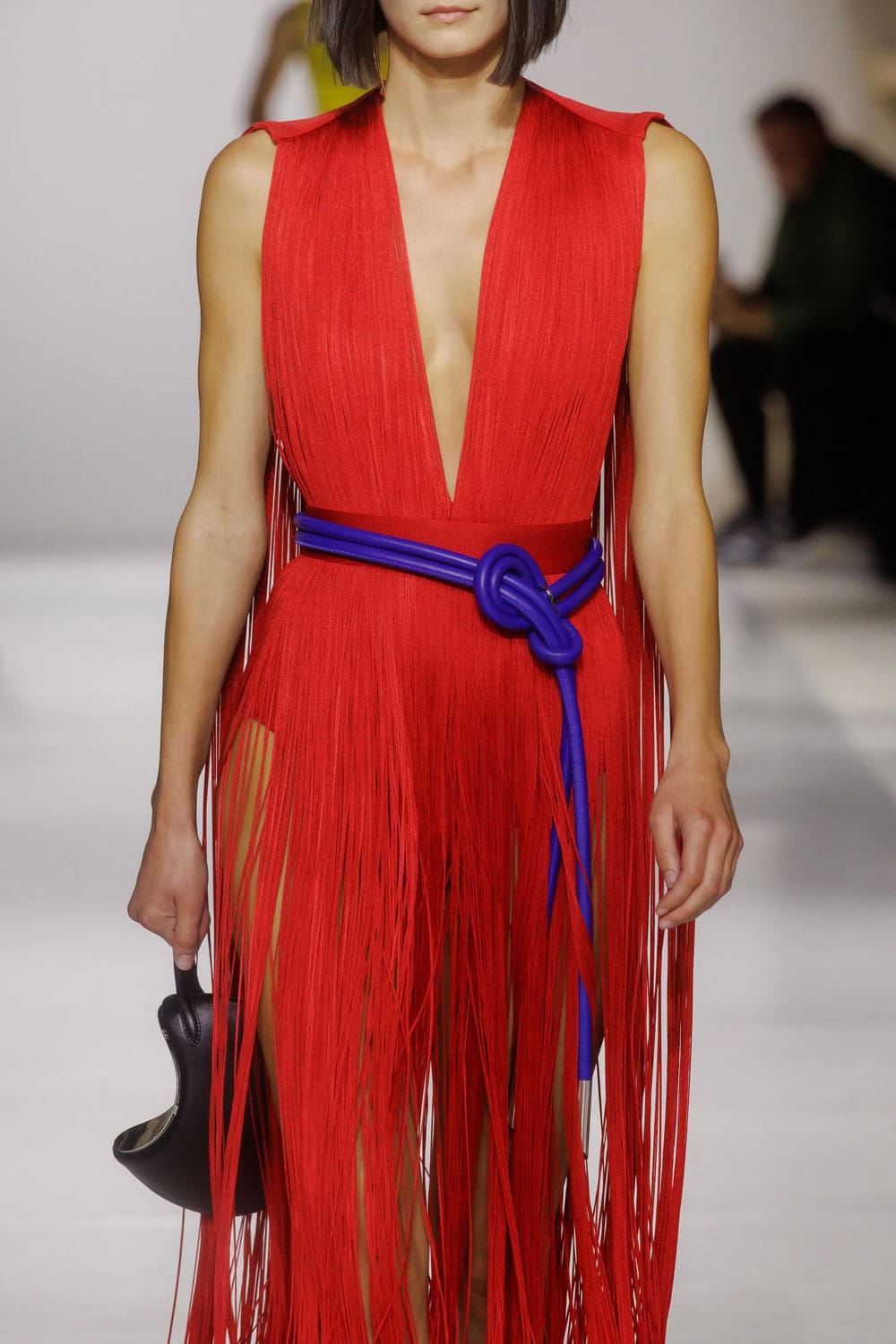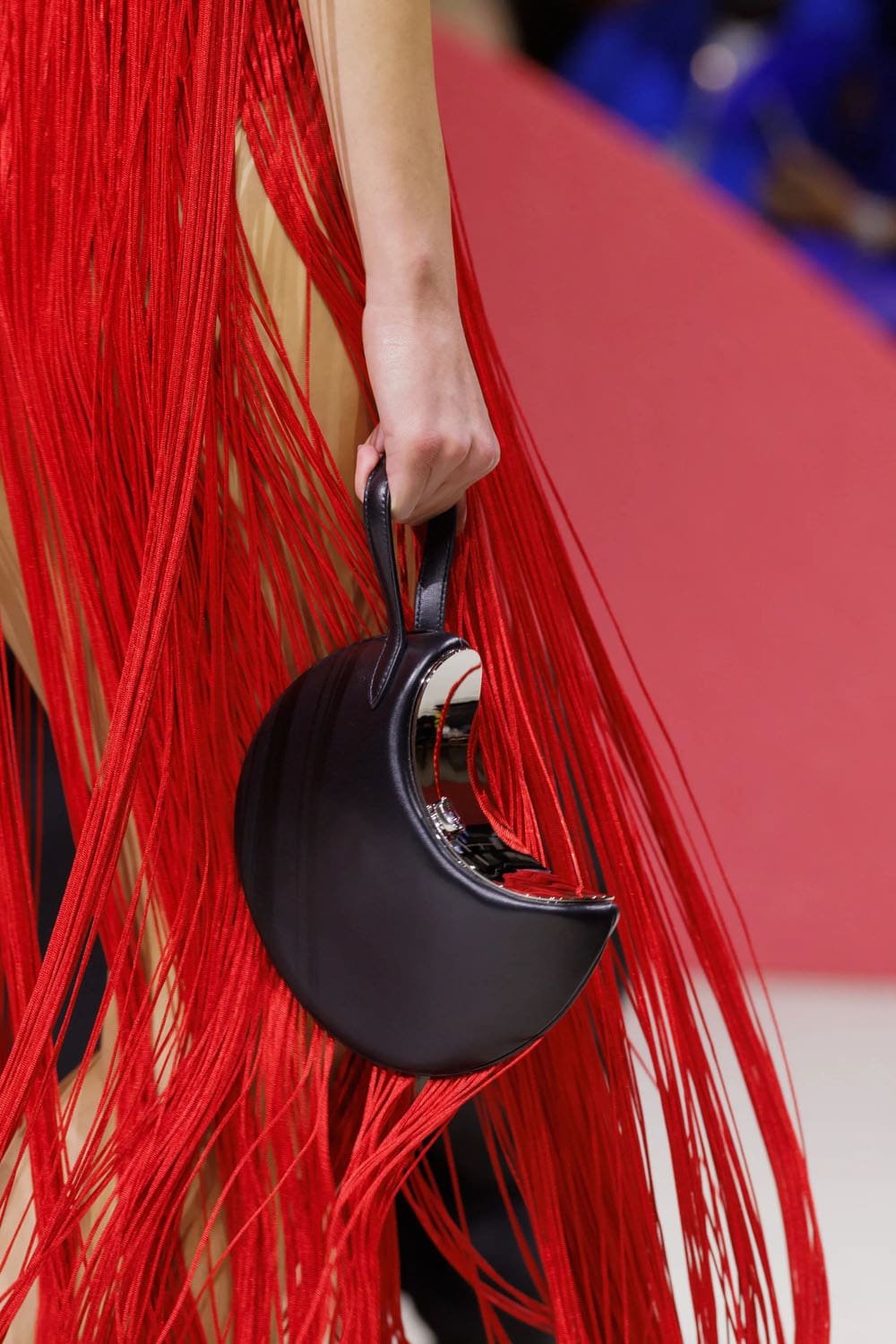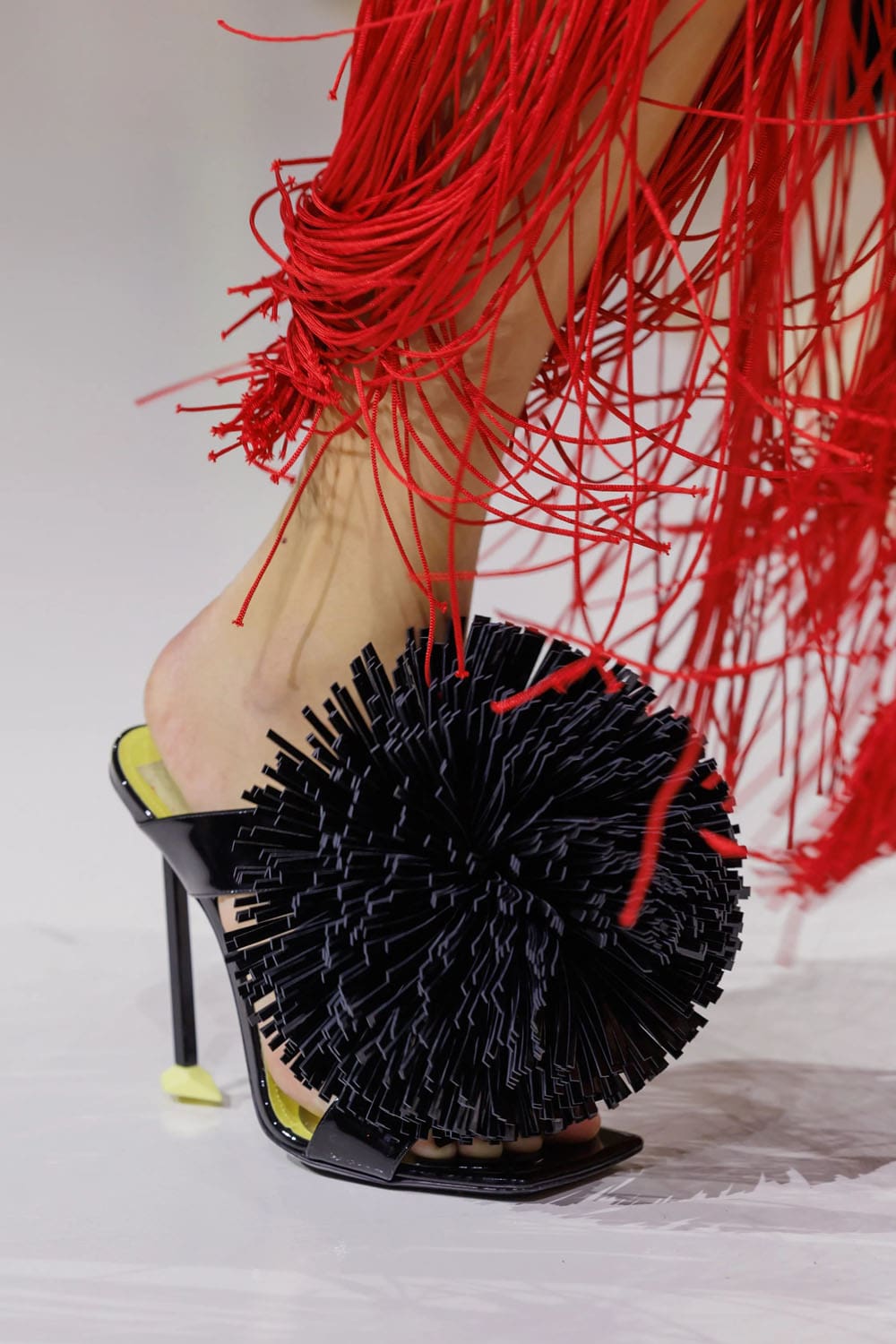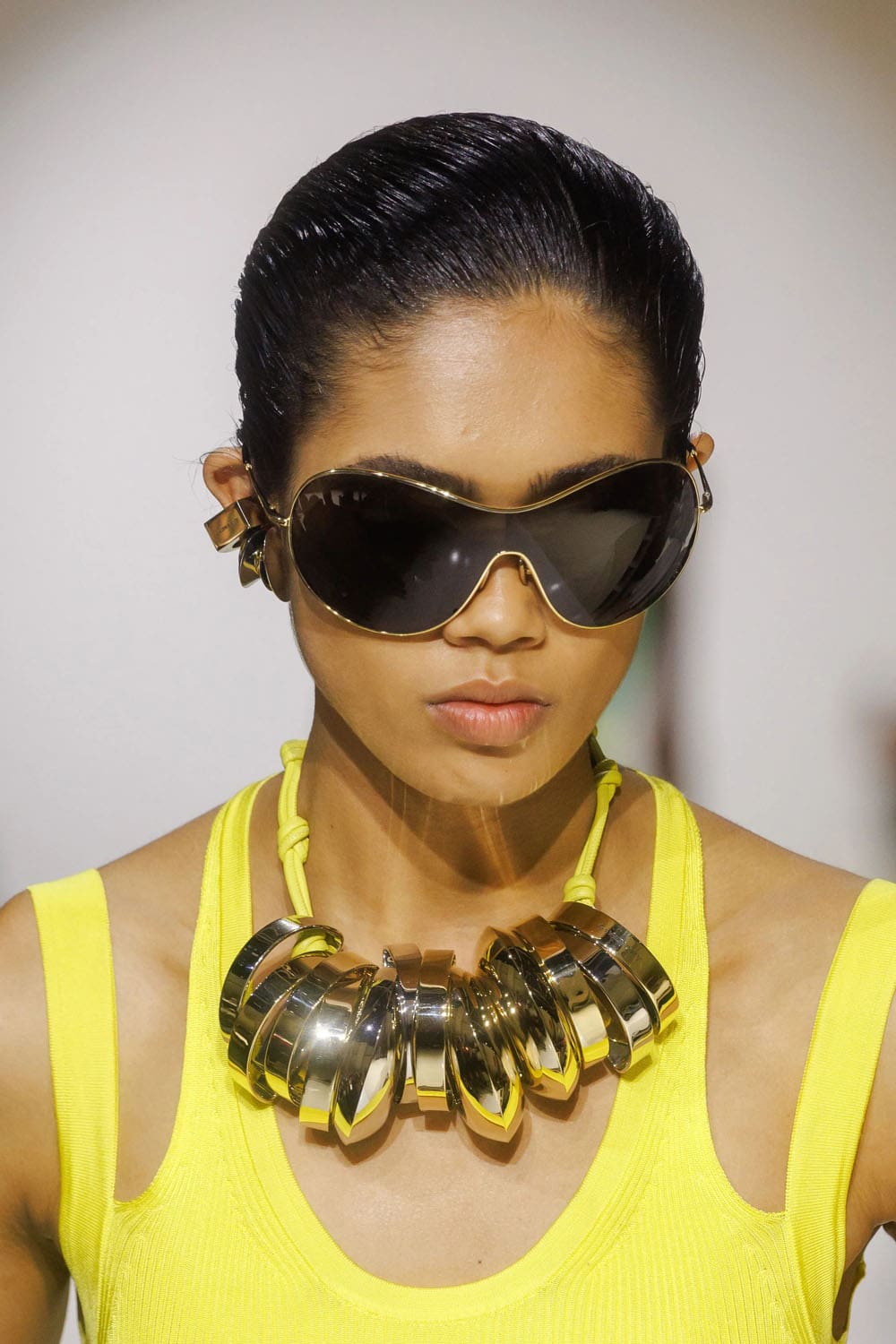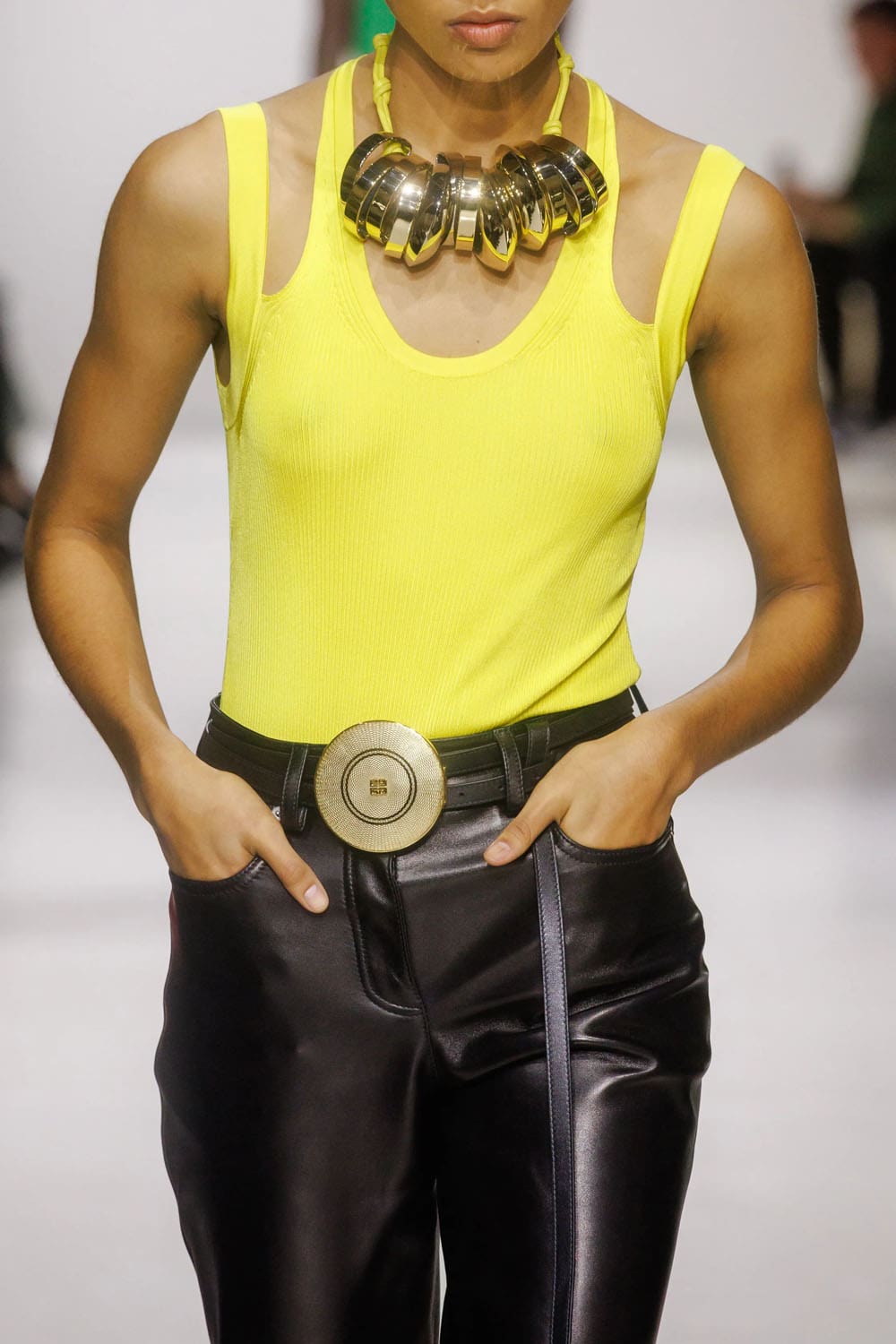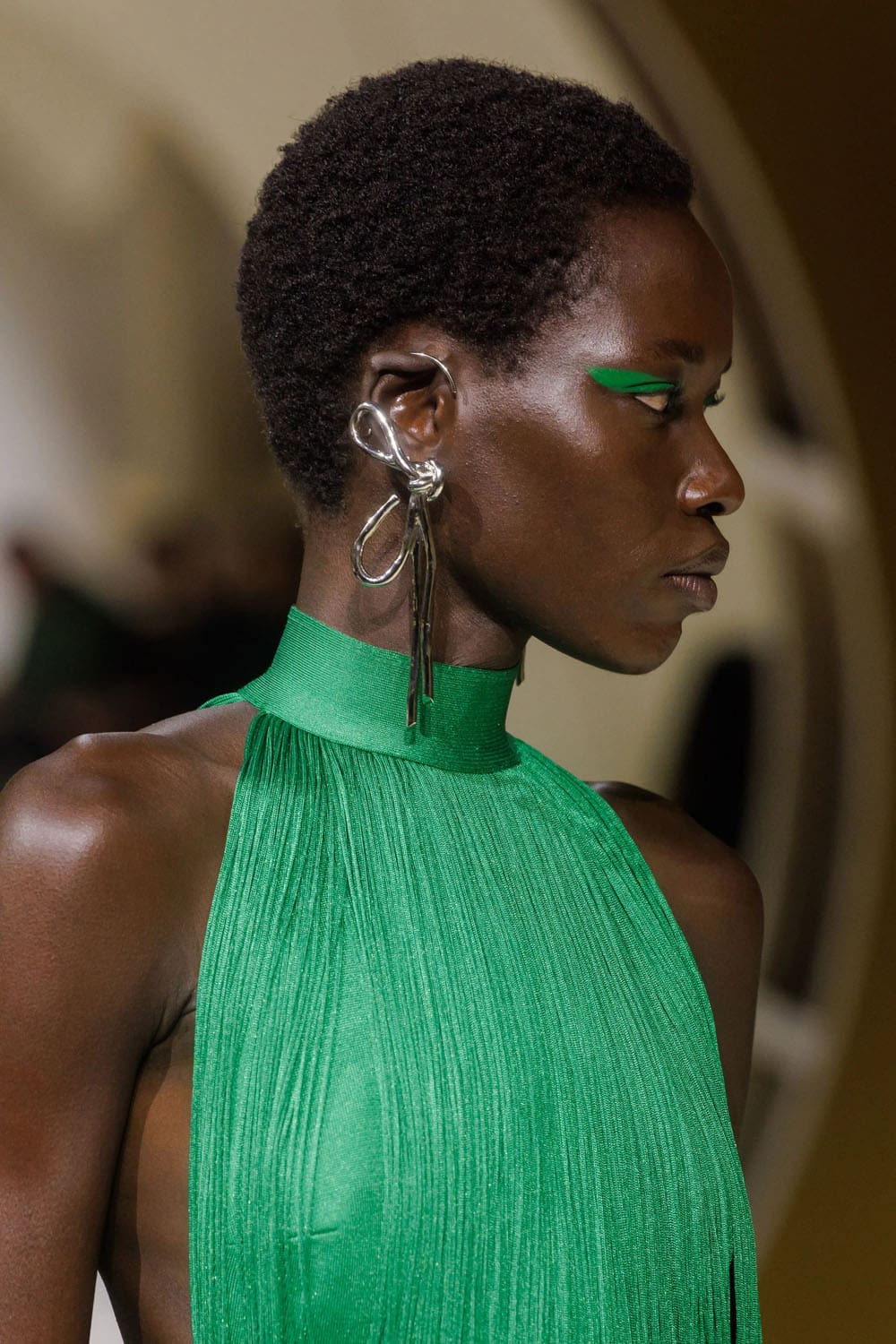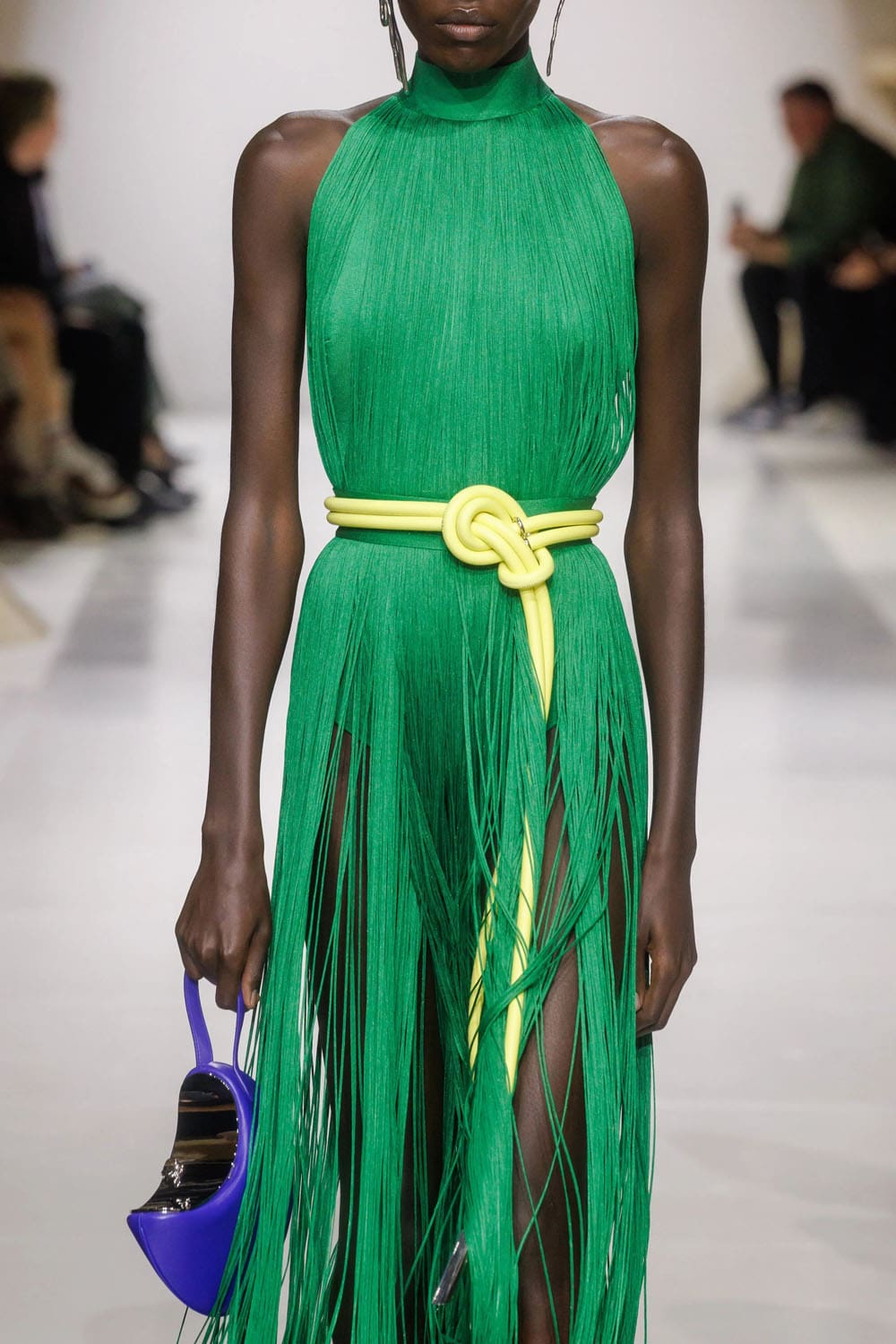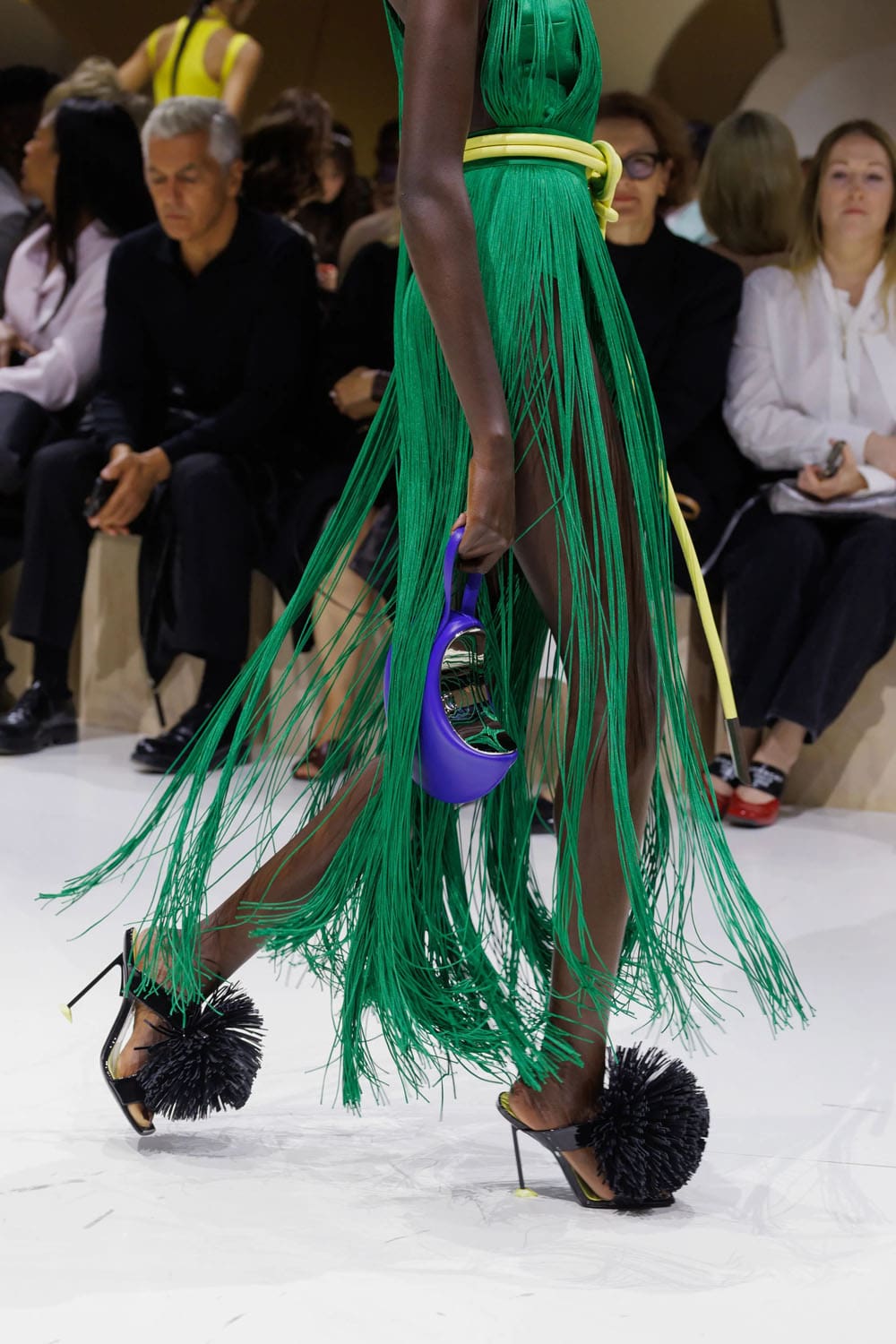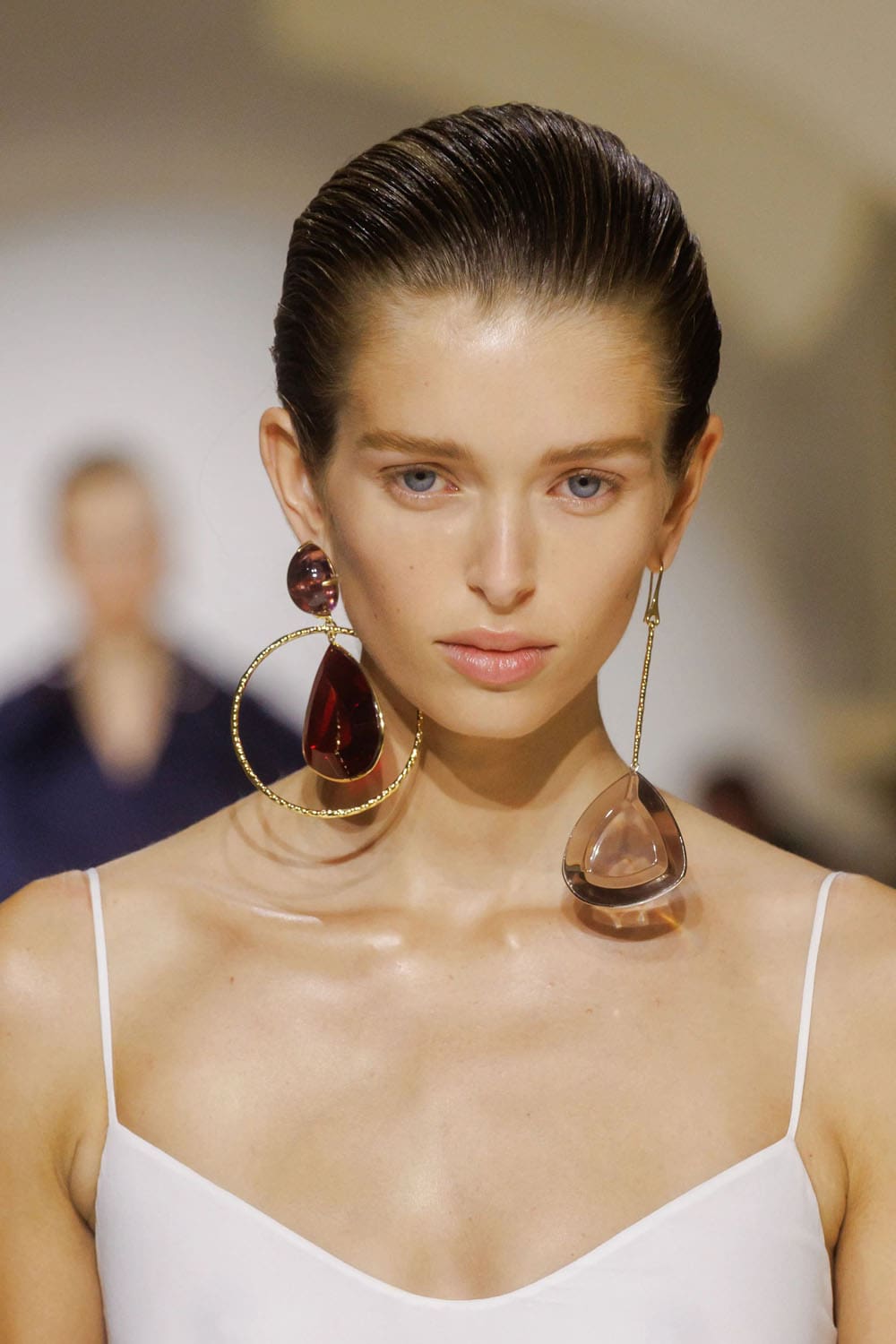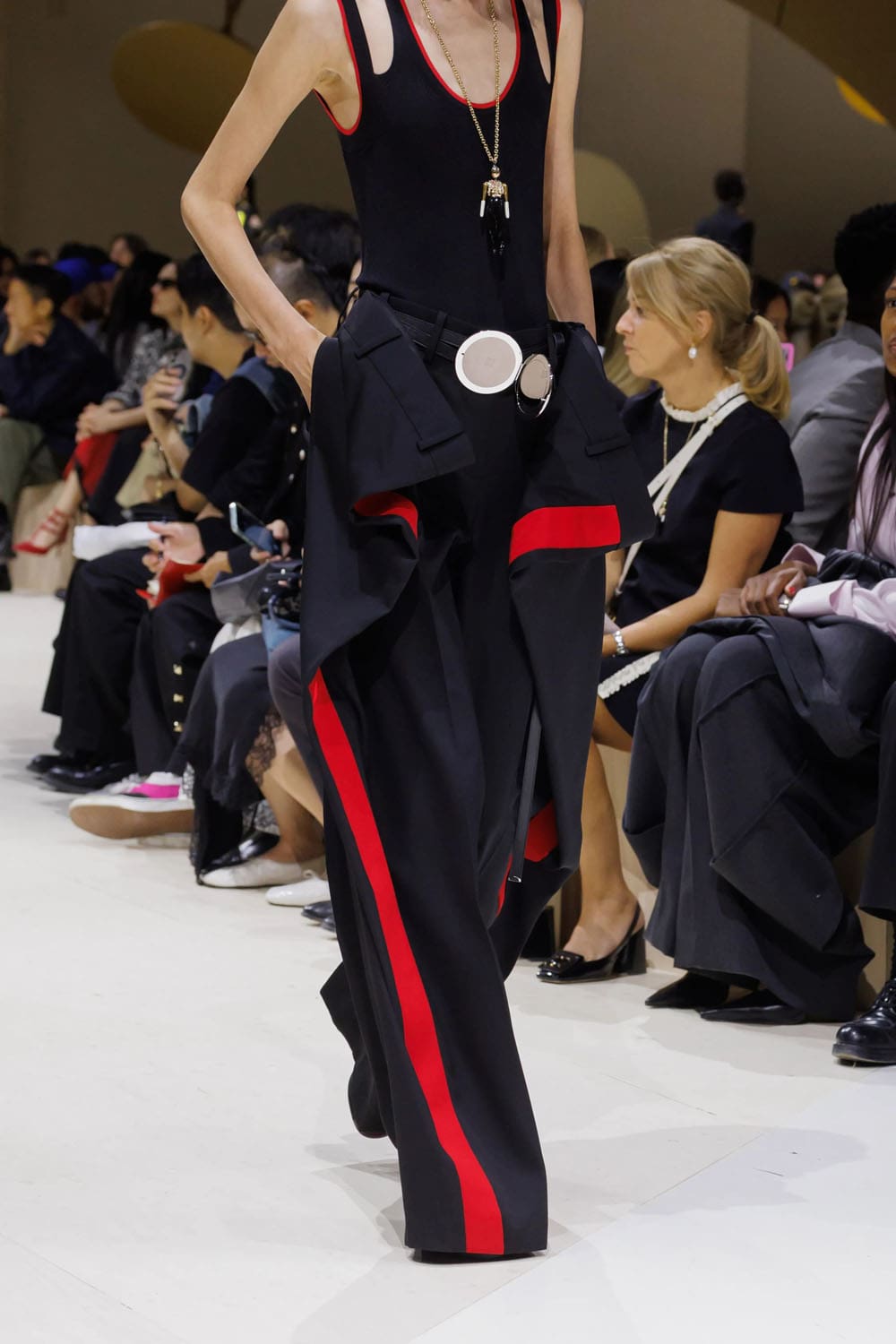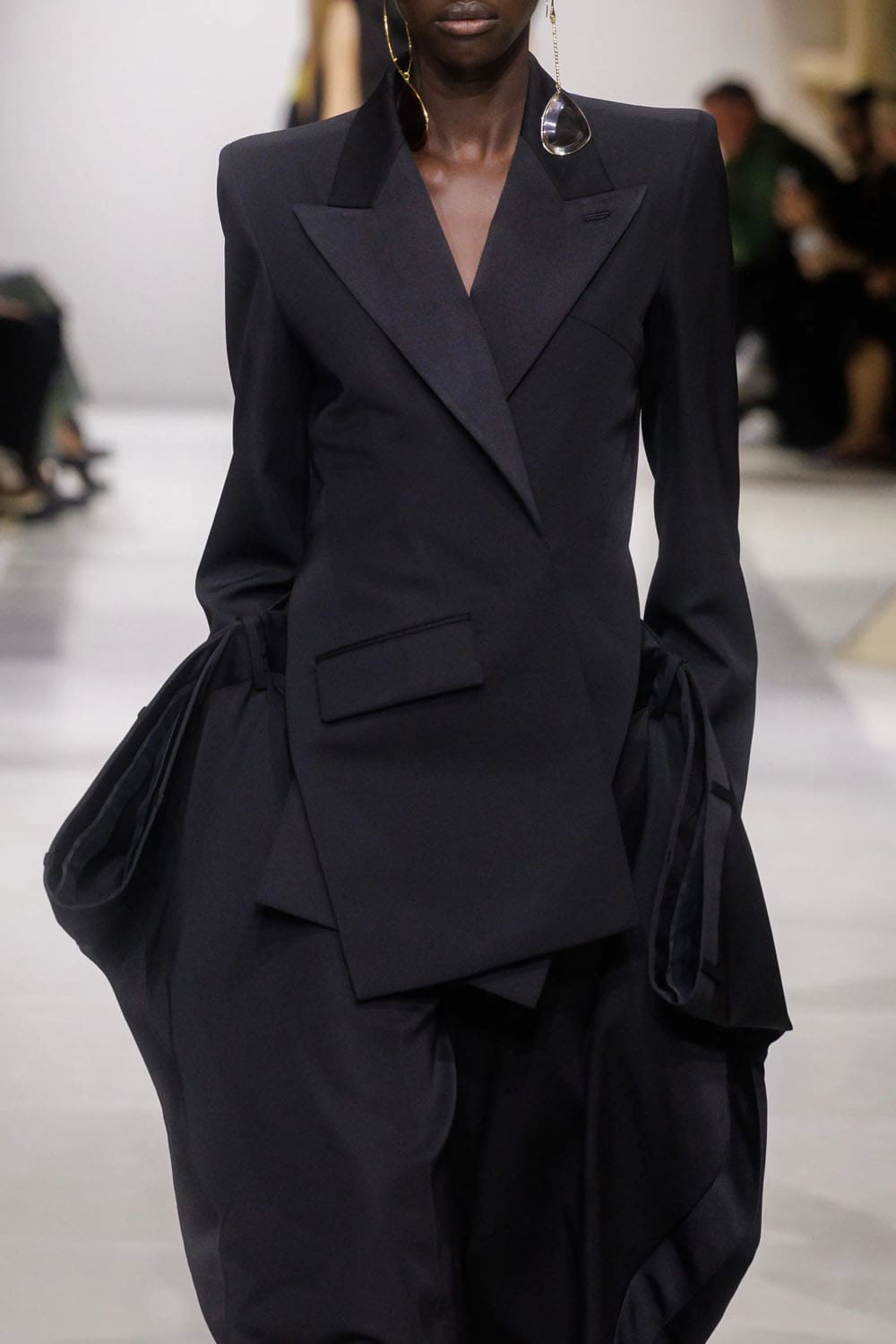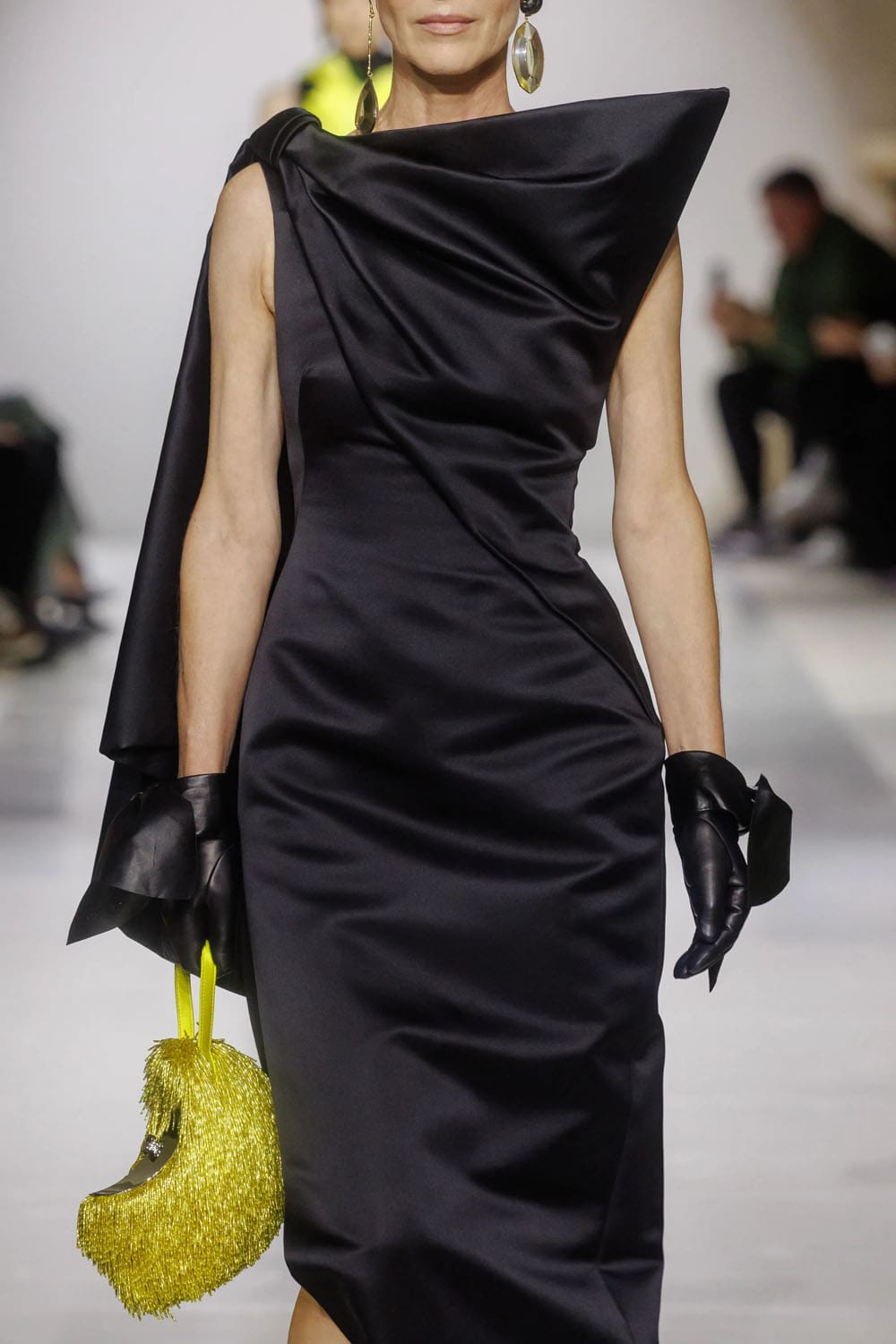
Givenchy Summer 2027 by Sarah Burton “The Village People on the Left Bank”. Story by Eleonora de Gray, Editor-in-Chief of RUNWAY REVISTA. Foto/Vídeo: Cortesia da Givenchy.
The Patrolman’s Armor and the Misogyny Excuse
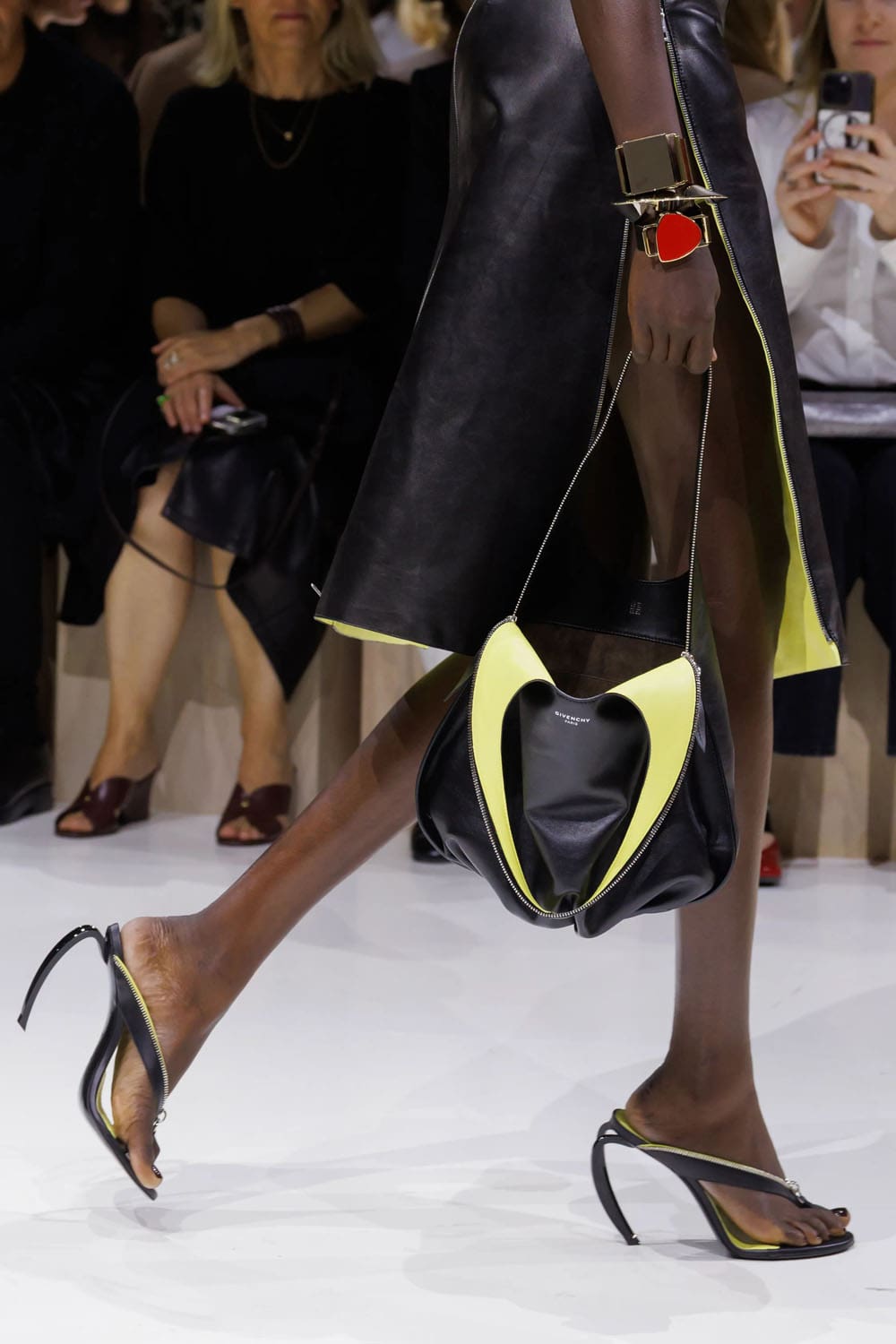
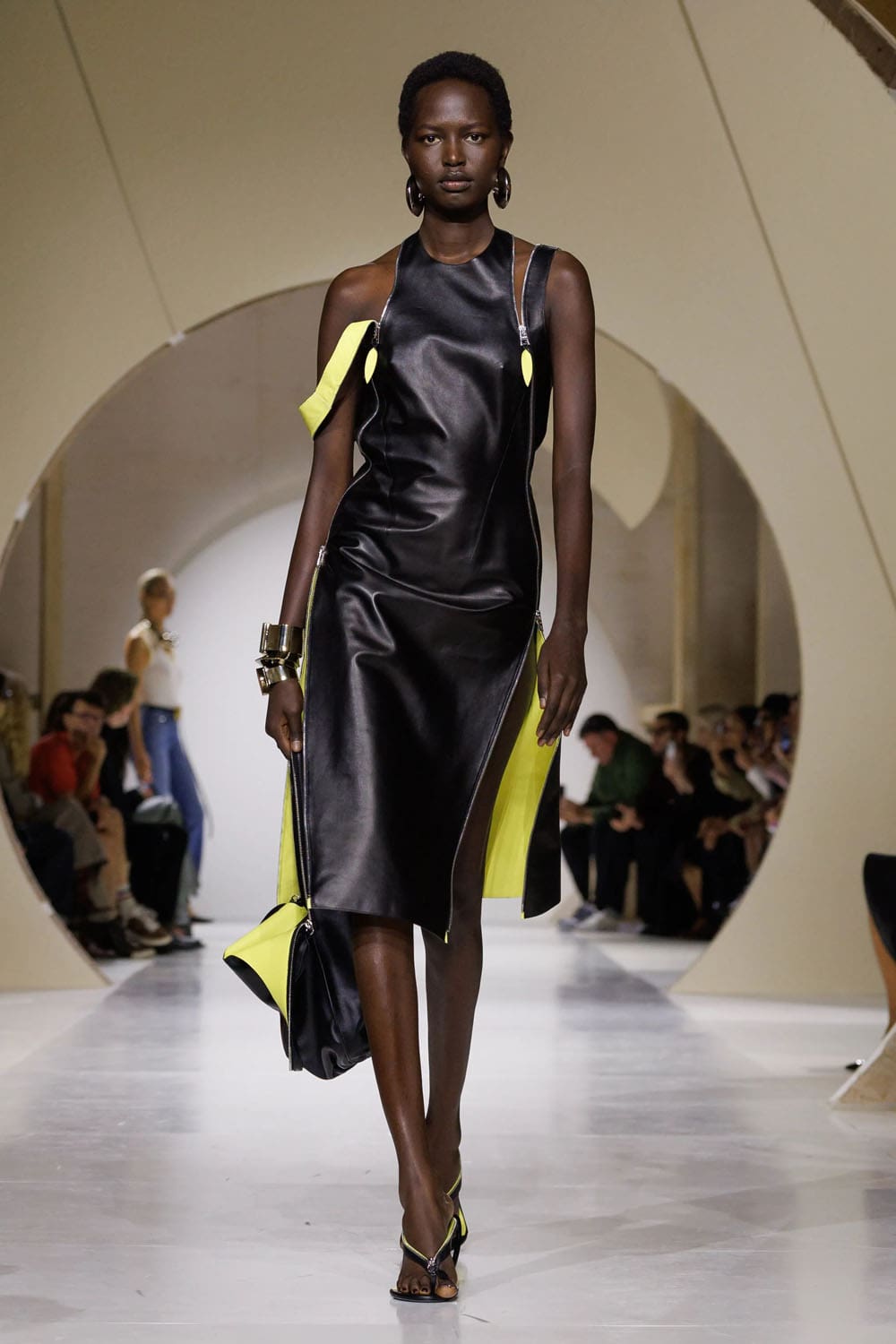
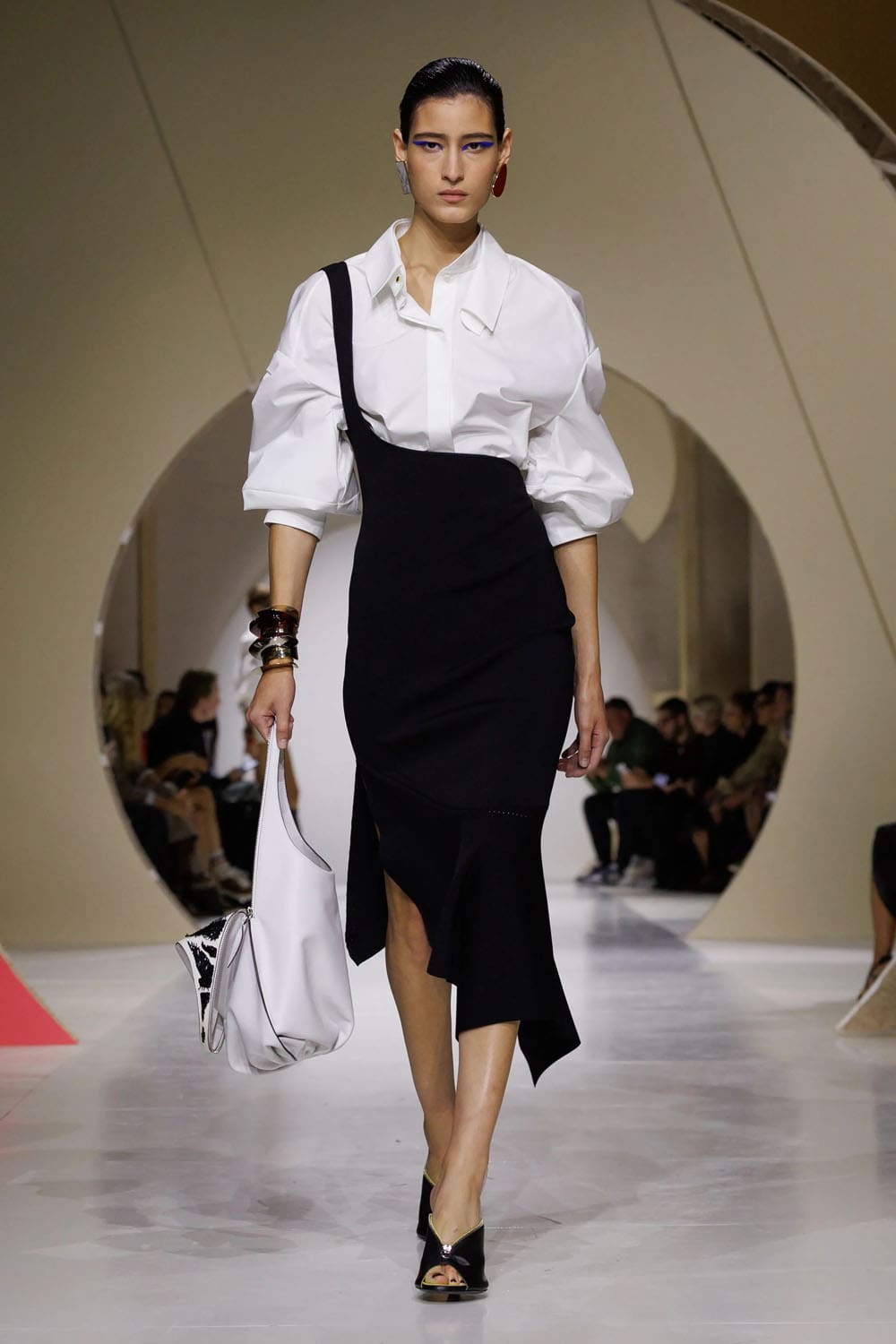
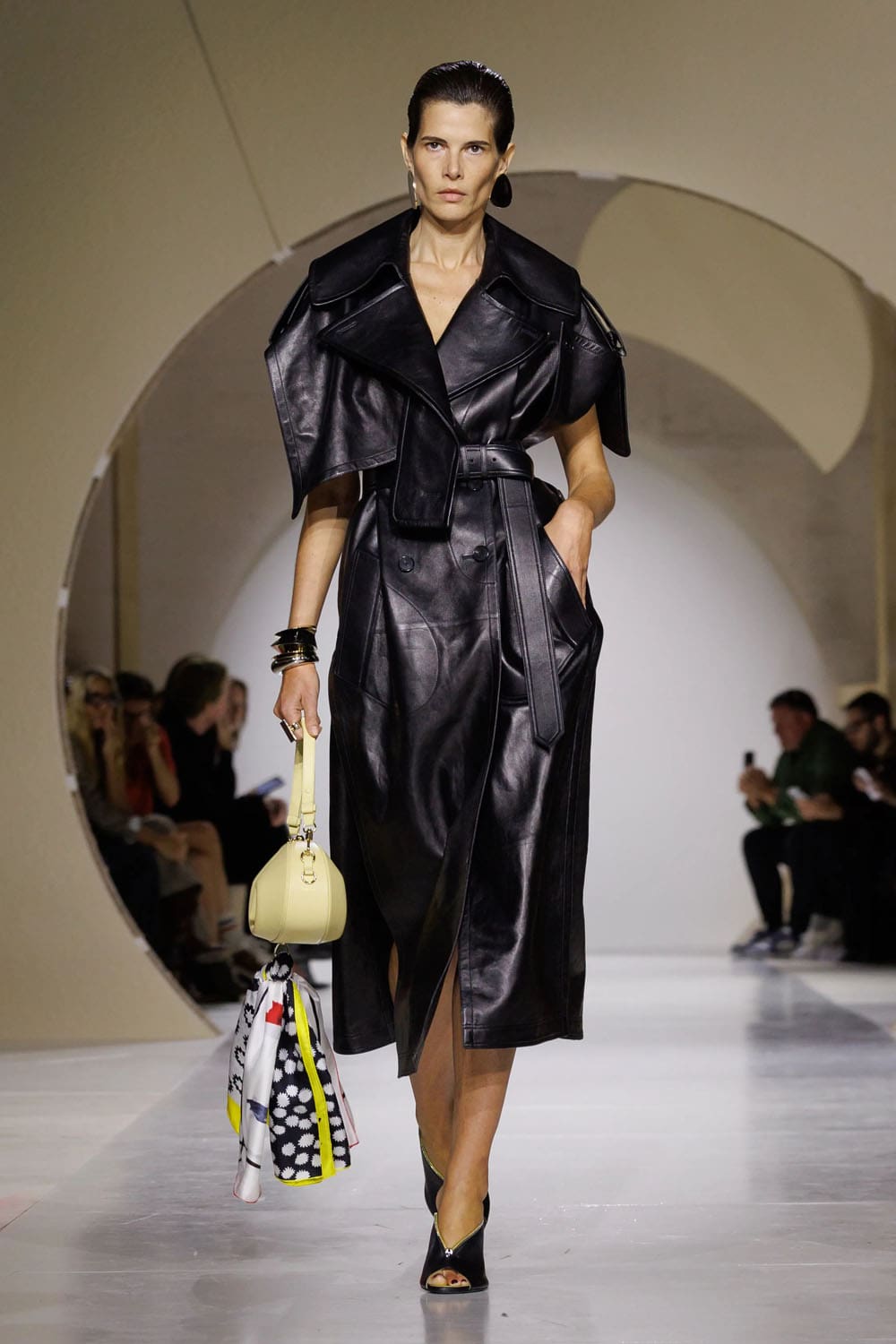
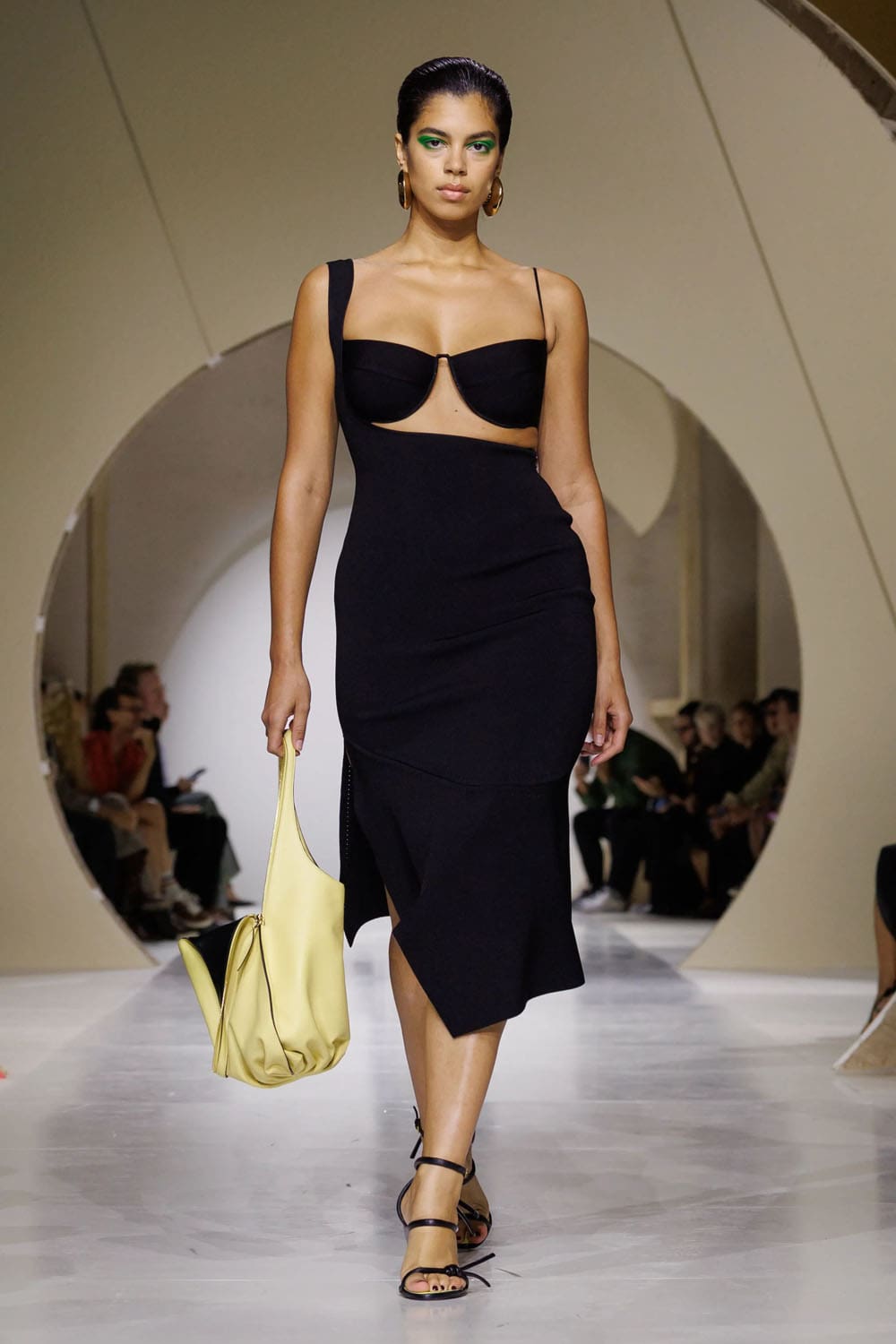
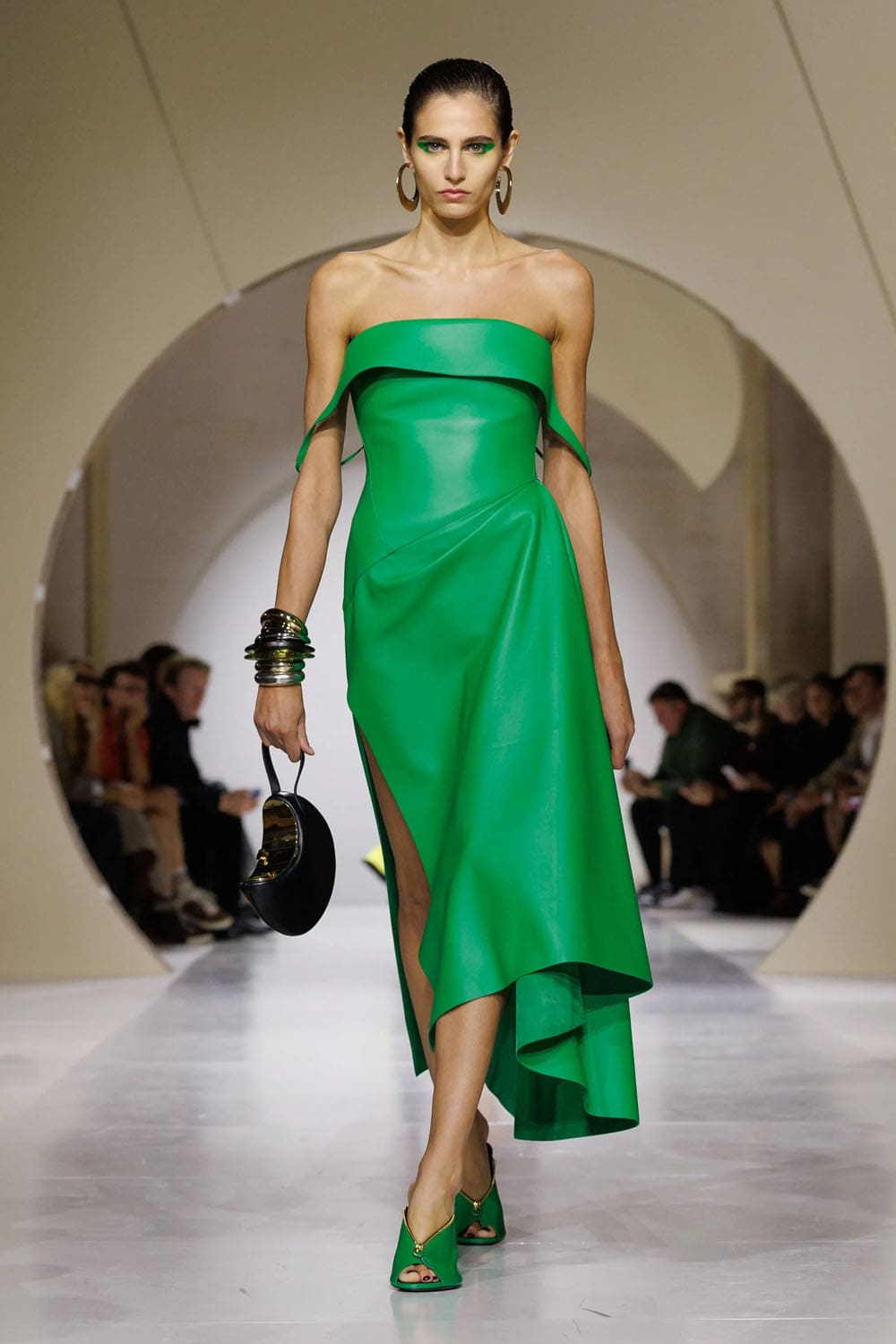
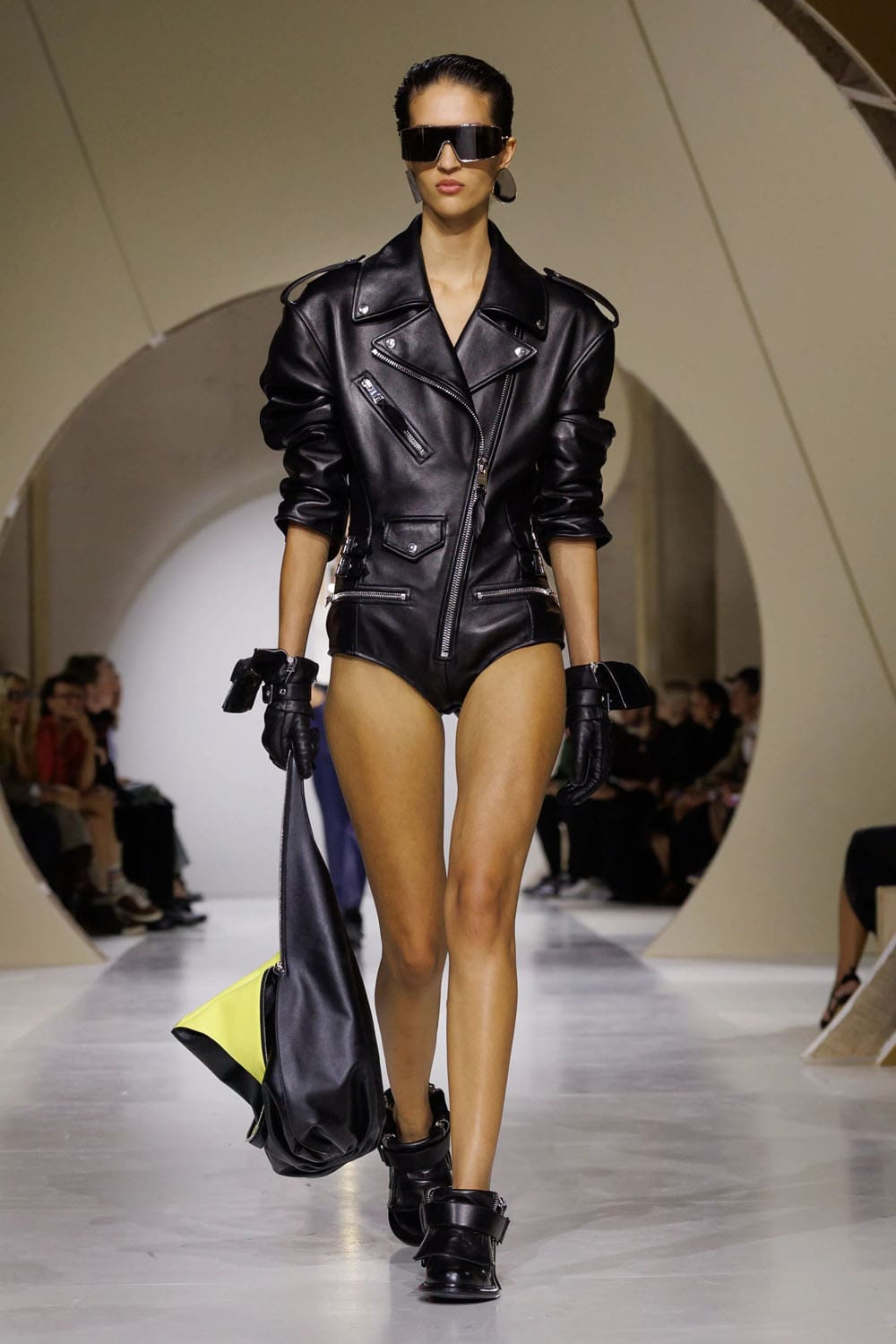
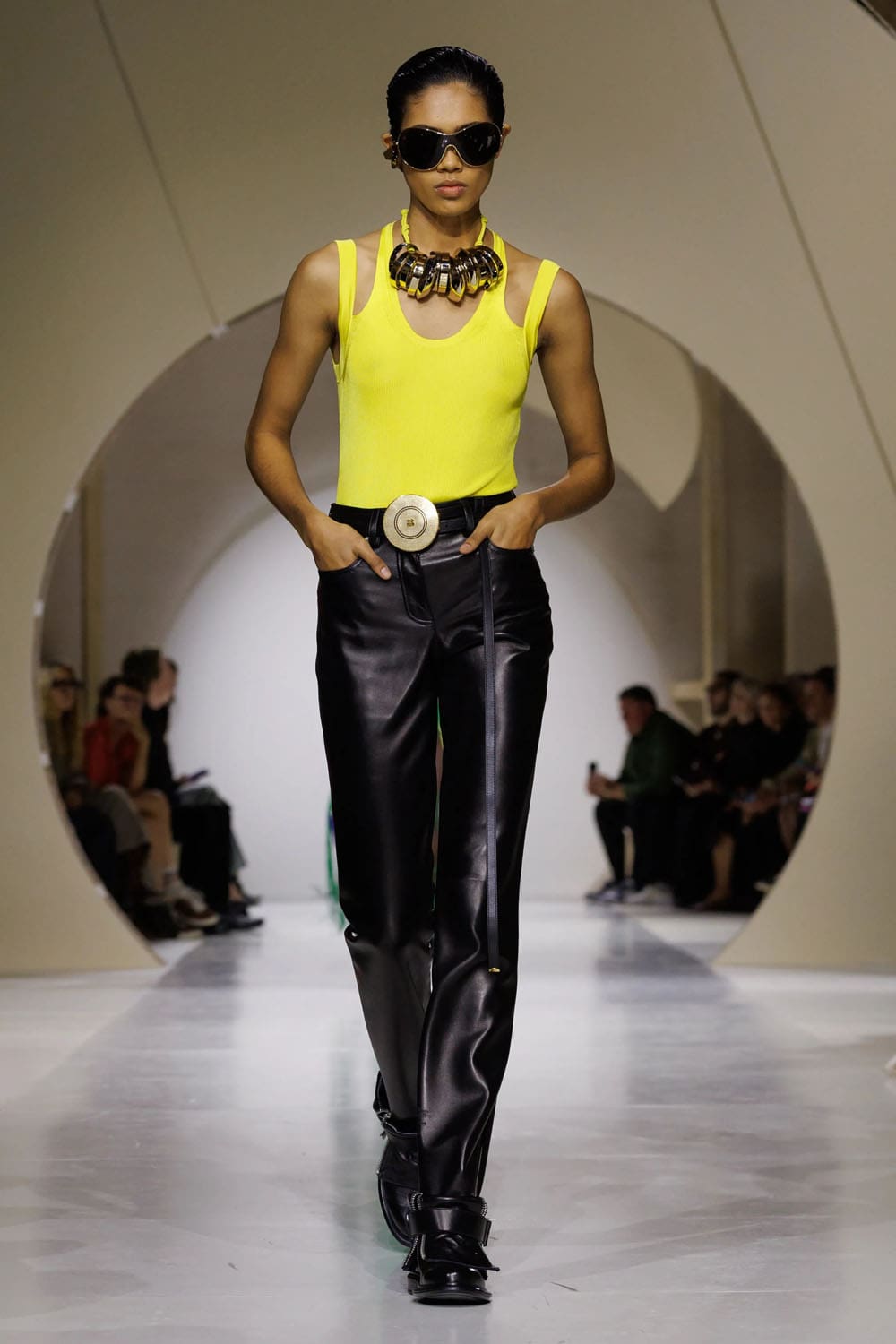
When a fashion house decides to justify an entire runway of leather bondage gear and utilitarian enforcement uniforms by invoking female empowerment against a misogynist society, an eyebrow must be raised. Sarah Burton’s Summer 2027 collection for Givenchy arrived wrapped in sociological defense: we were told women are mistreated in a patriarchal culture, and that slipping into an armored black leather sheath with zippers peeling down the flanks to flash neon bumblebee-yellow linings might make us feel stronger, formidable, or somehow ready for battle.
What actually materialized on the Parisian runway, however, did not evoke an emancipated feminist vanguard. It looked like an audition for a precinct of Swedish traffic police, or worse, an elaborate costume party staged like the Village People. Hubert de Givenchy built his temple on Avenue George V through the immortal, aristocratic poise of Audrey Hepburn—a delicate synthesis of clean architectural tailoring, monastic purity, and swan-like sophistication. Seeing that storied house hijacked for high-gloss leather cosplay, complete with zip-up hot pants and biker cuffs, felt like watching a heritage atelier get pulled over for a moving violation.
Open Zippers and the Rick Owens Echo
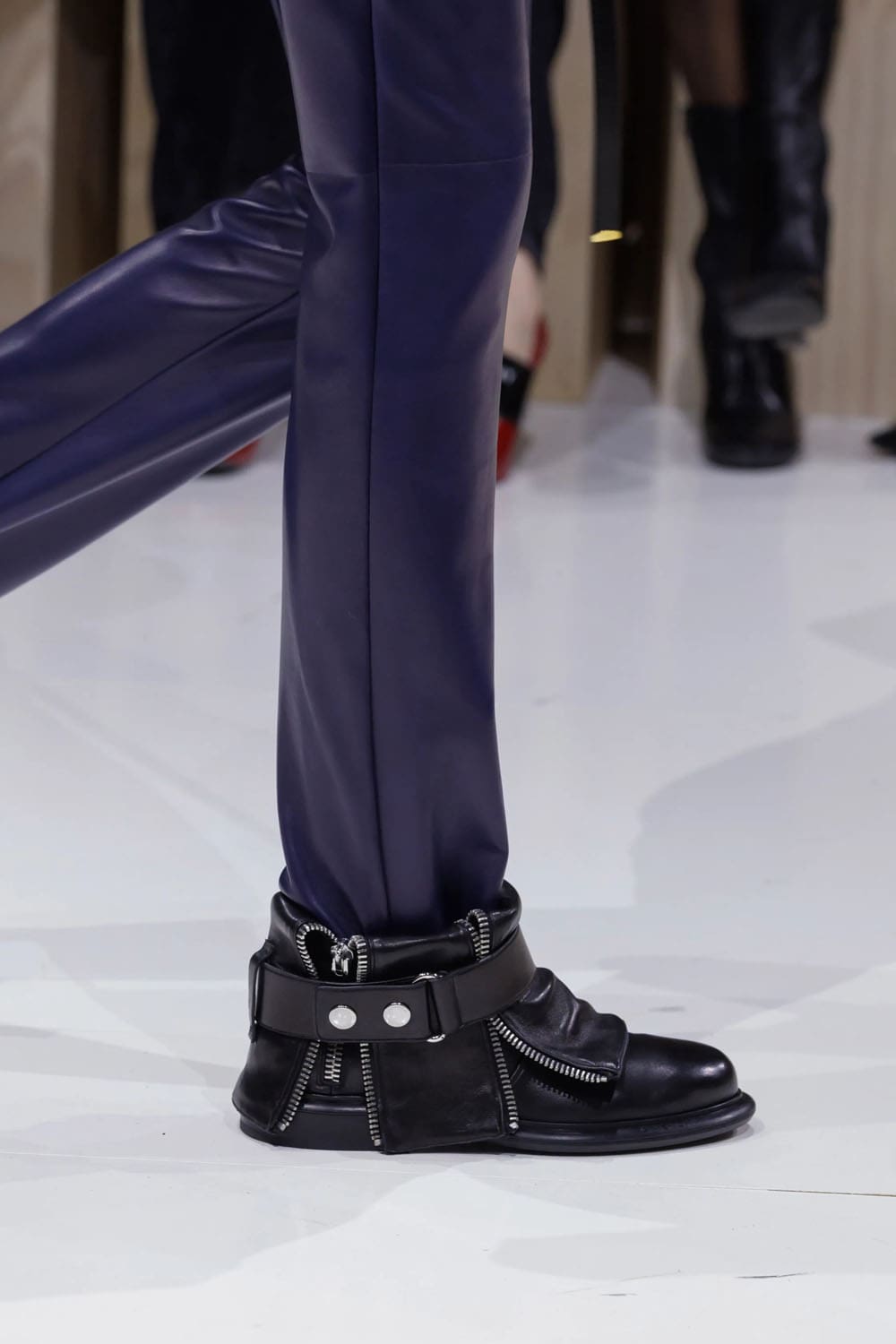
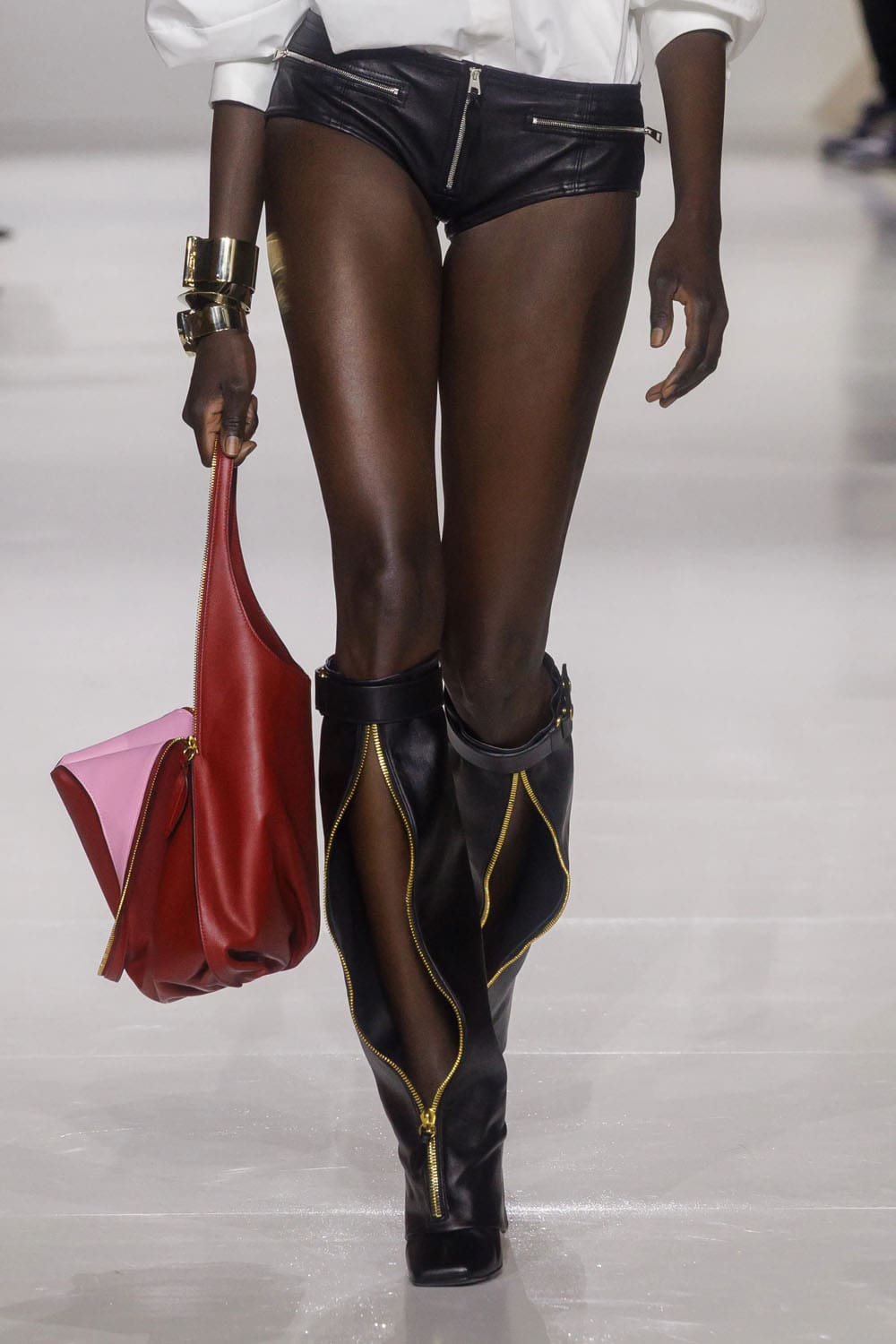
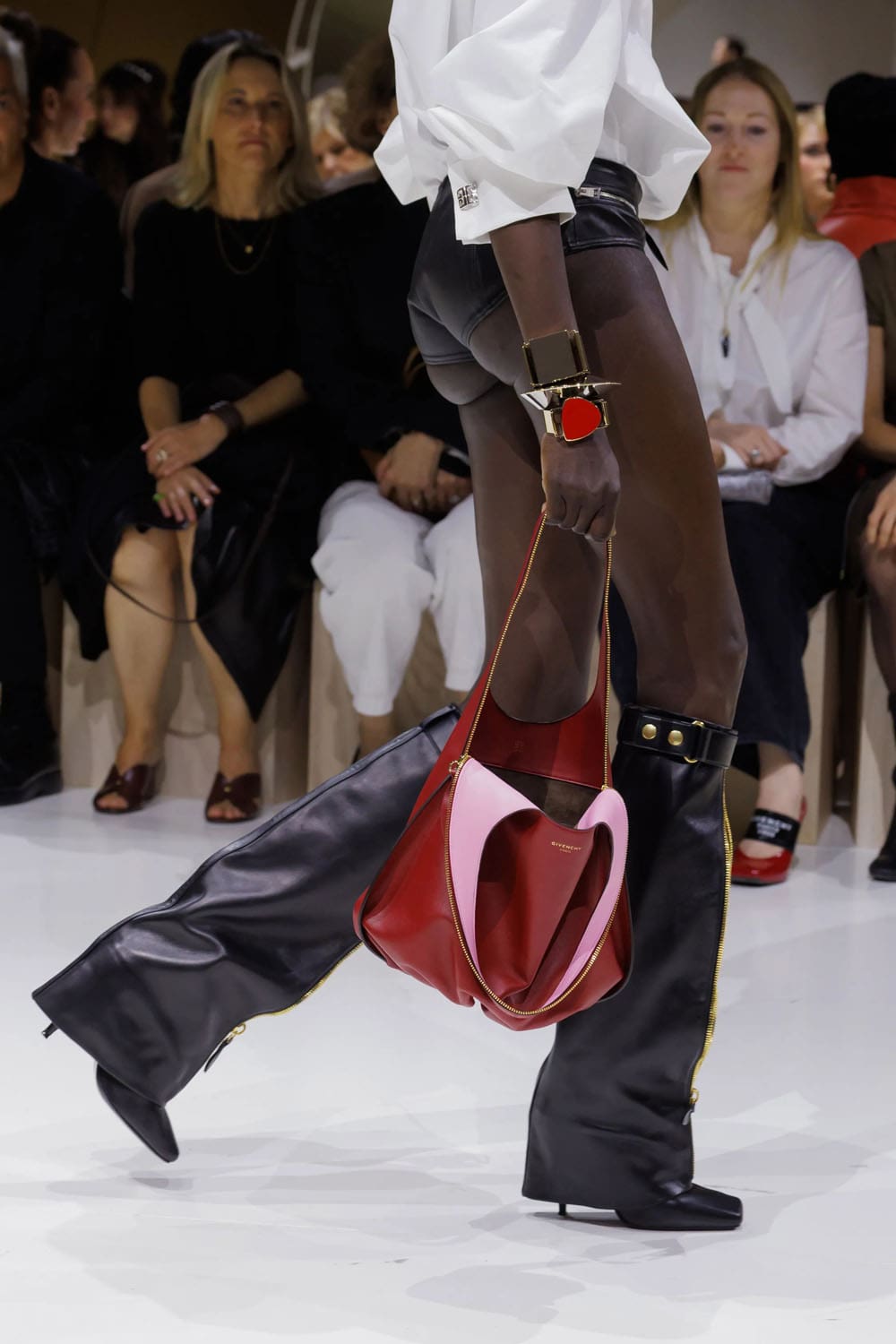
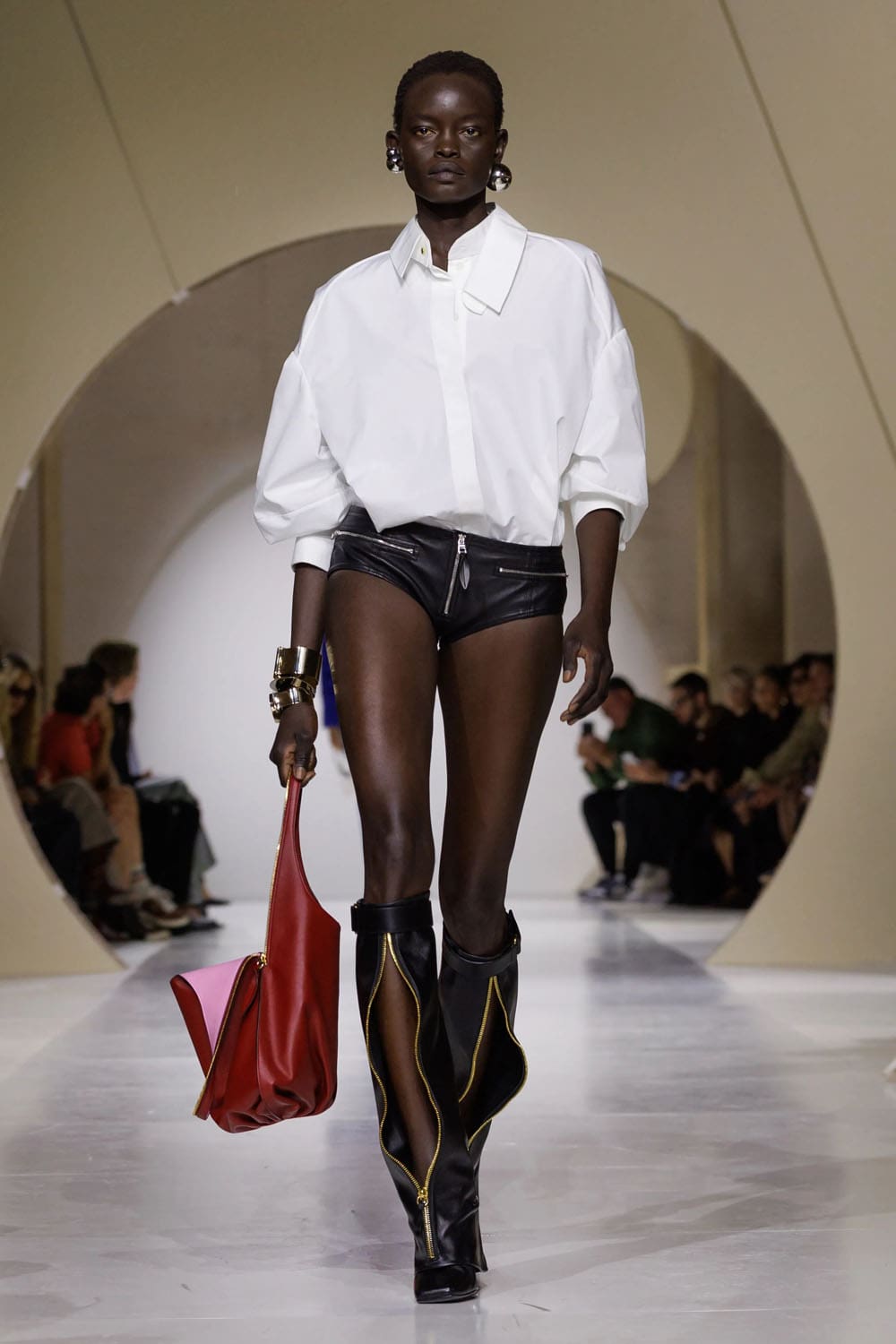
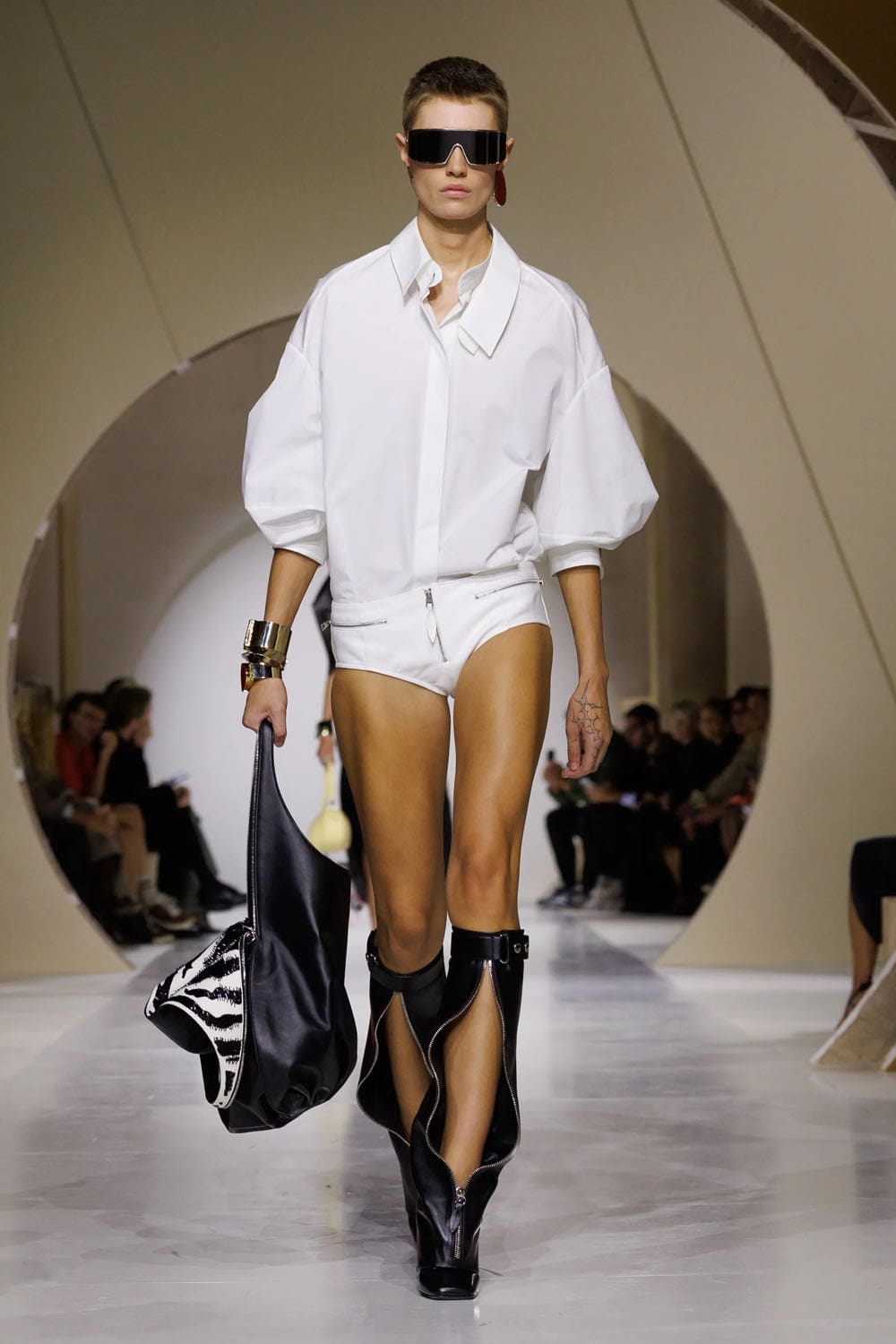
The most glaring aesthetic transgression lived south of the kneecaps. The models strode forward balancing on over-the-knee leather boots slashed wide down the front with gleaming metallic teeth, unzipped entirely down to the instep to expose the shin and calf. Anyone who has spent more than fifteen minutes studying contemporary design recognized the gesture immediately: it was an unmistakable carbon copy of the architectural cantilever boots that Rick Owens made his signature years ago. Seeing this trope transplanted onto a Givenchy runway without an ounce of dark gothic irony felt clumsy and derivative.
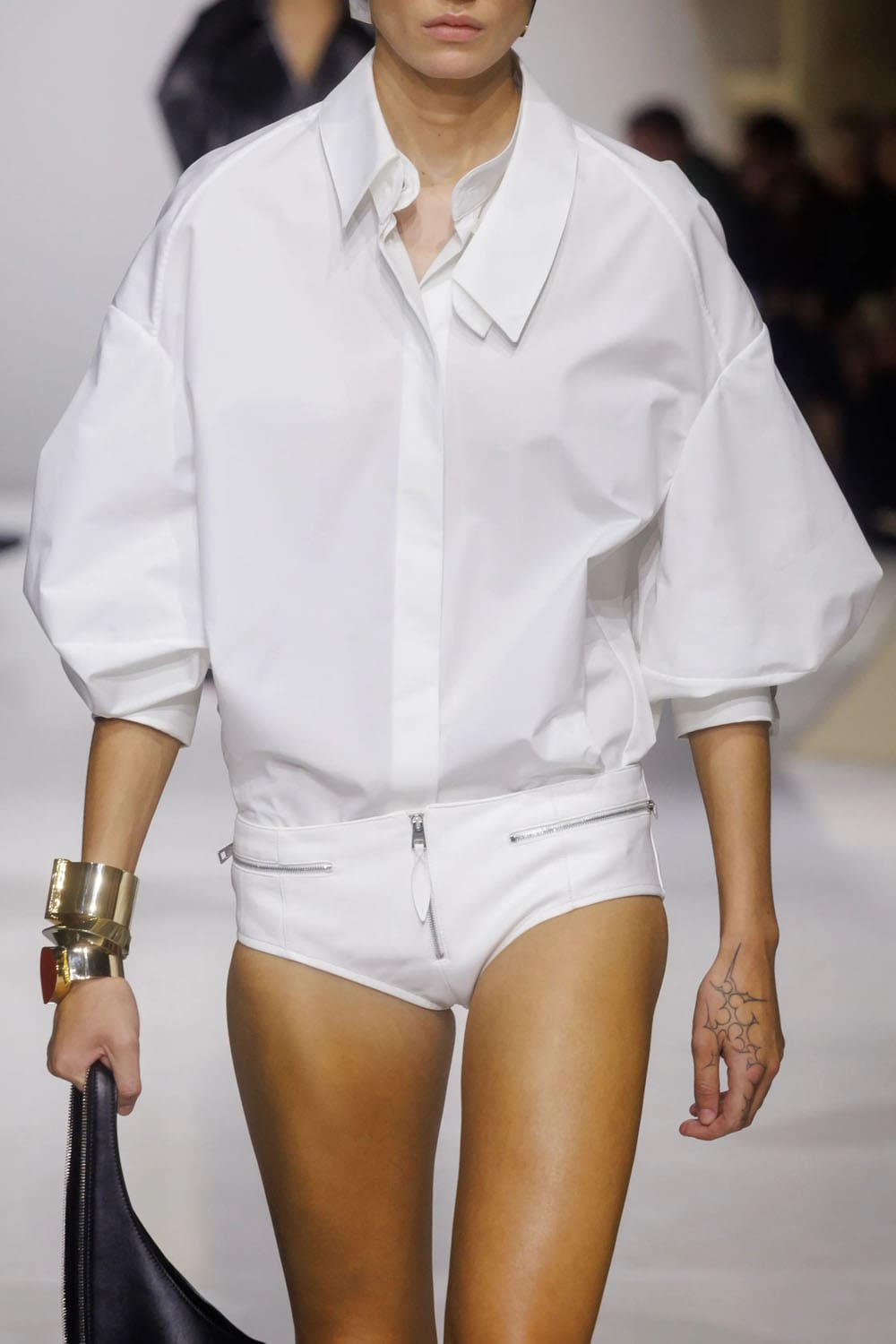
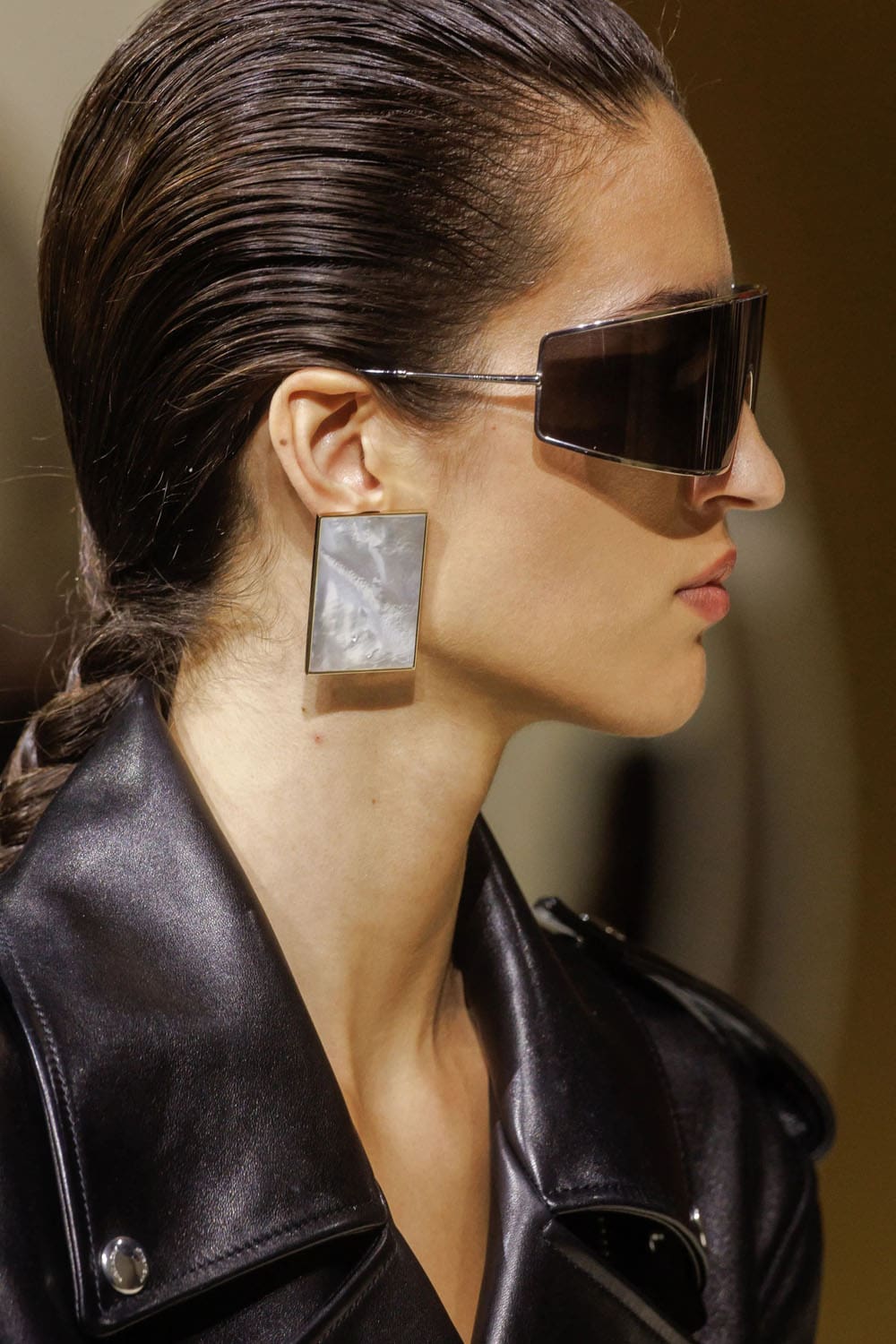
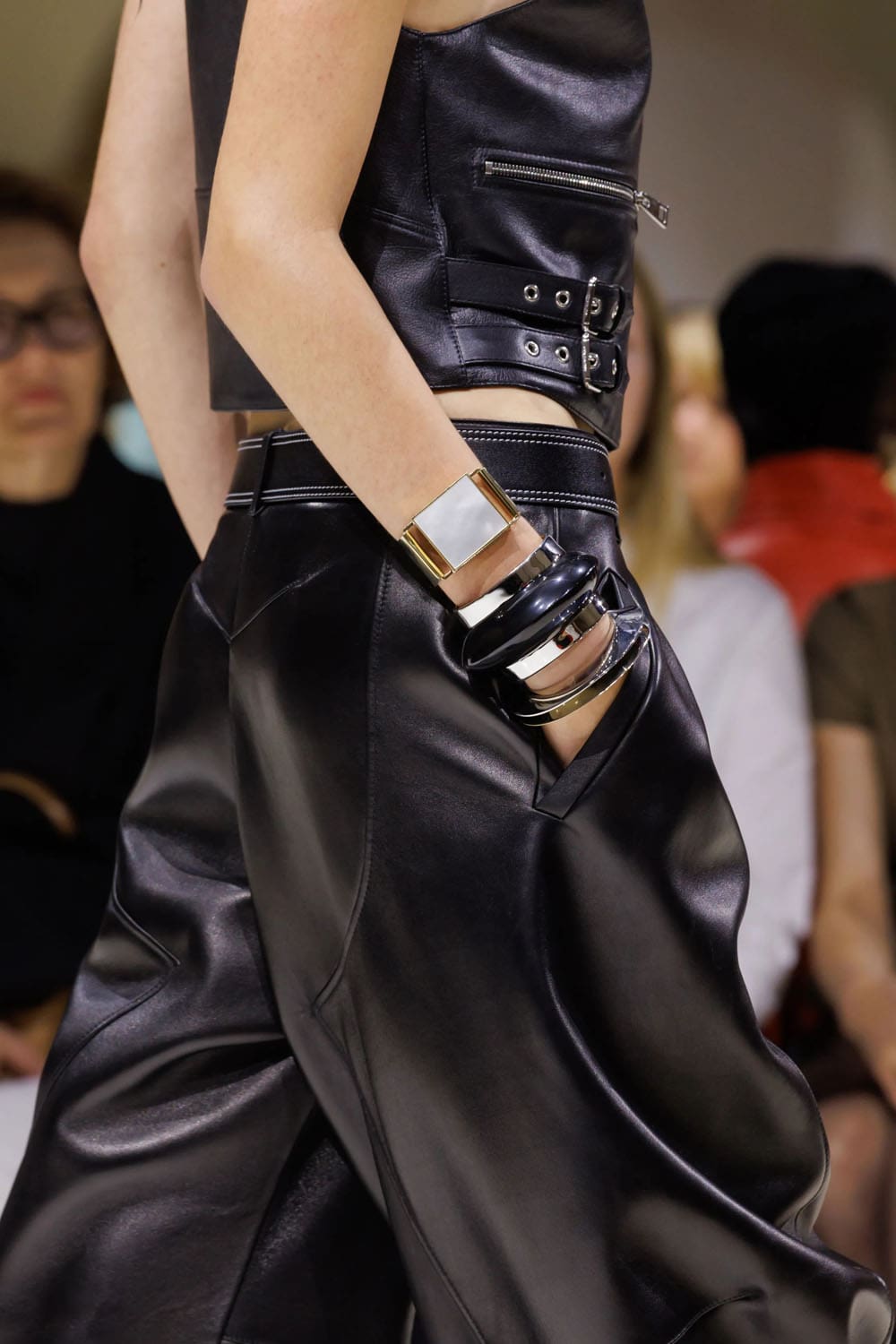
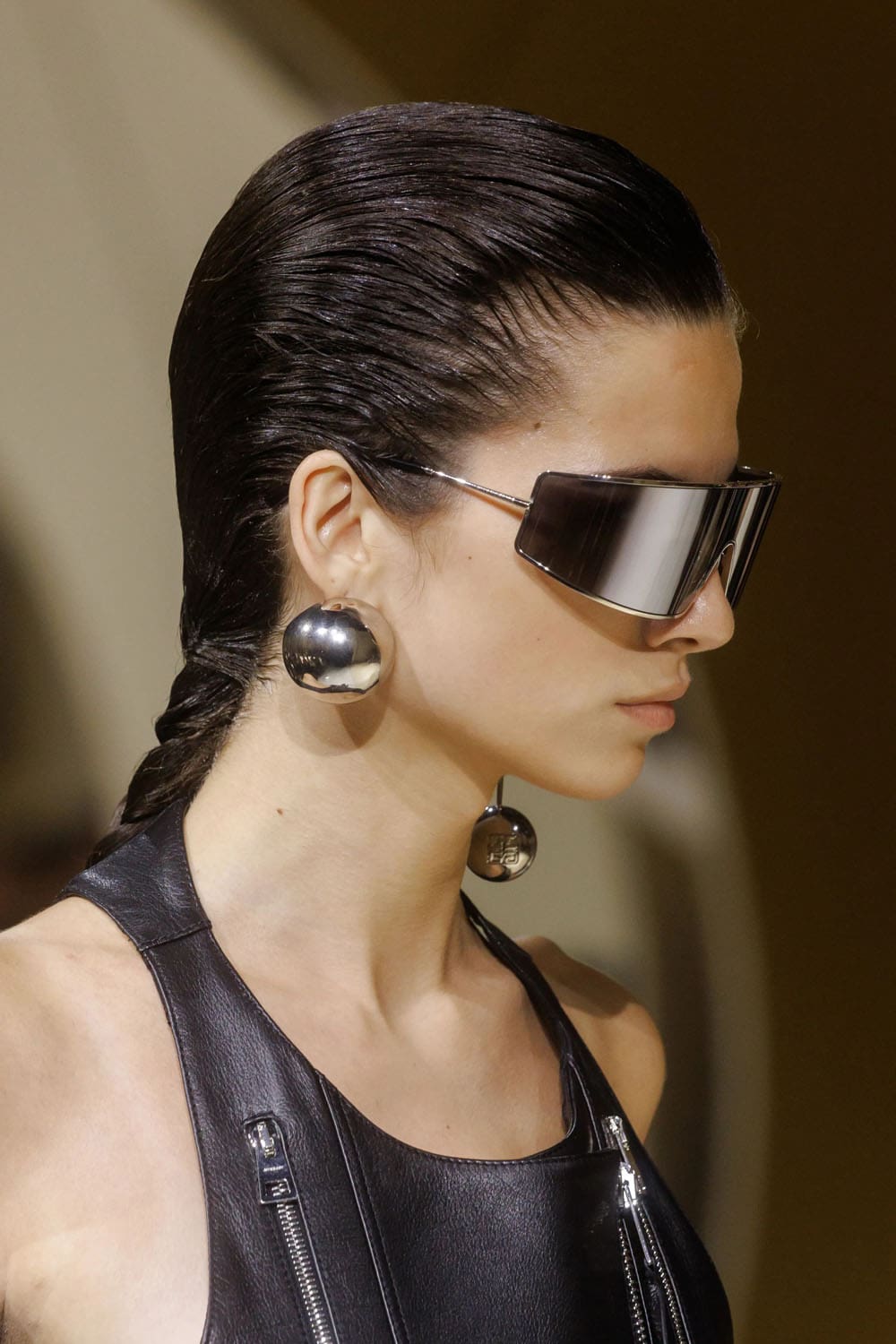
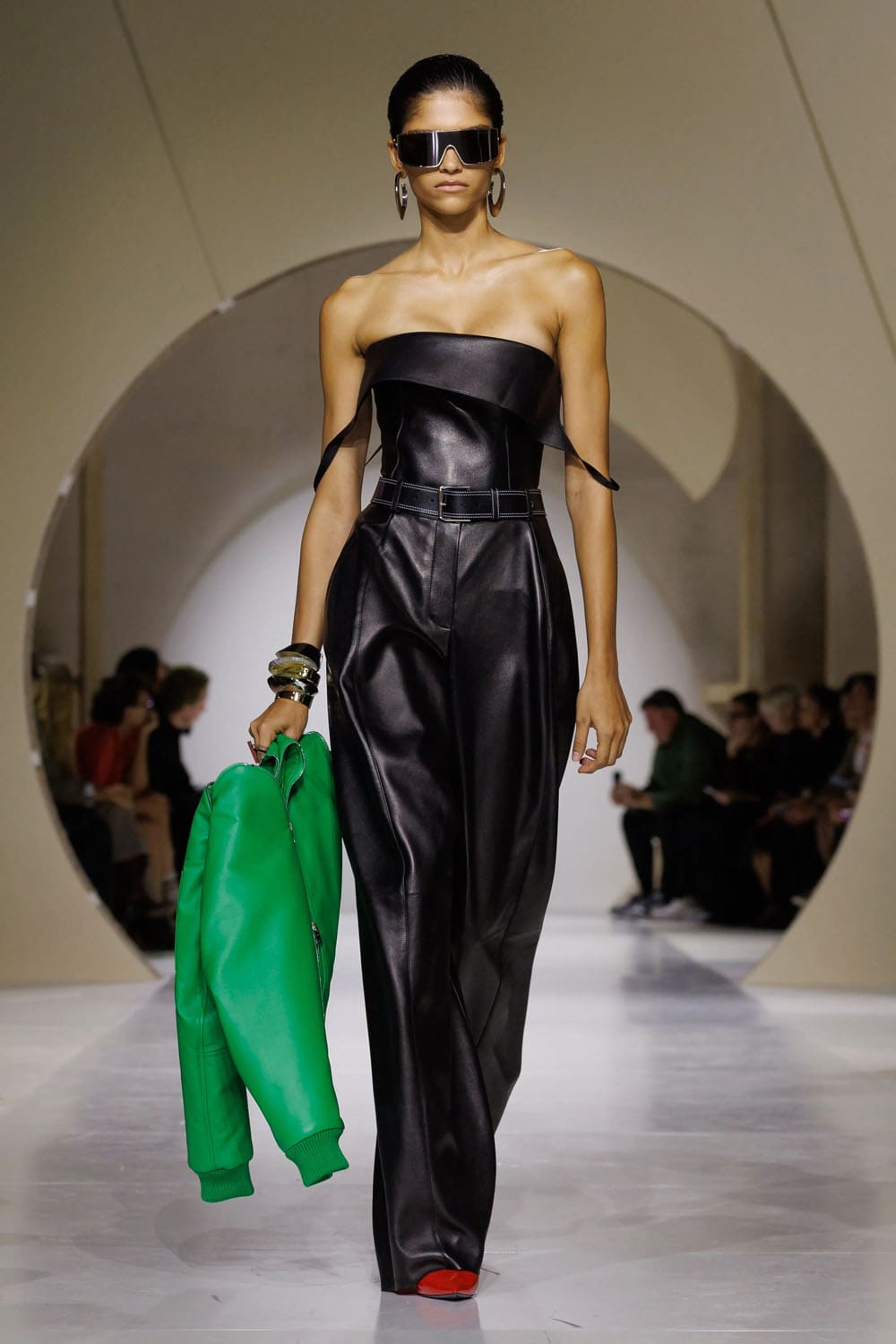
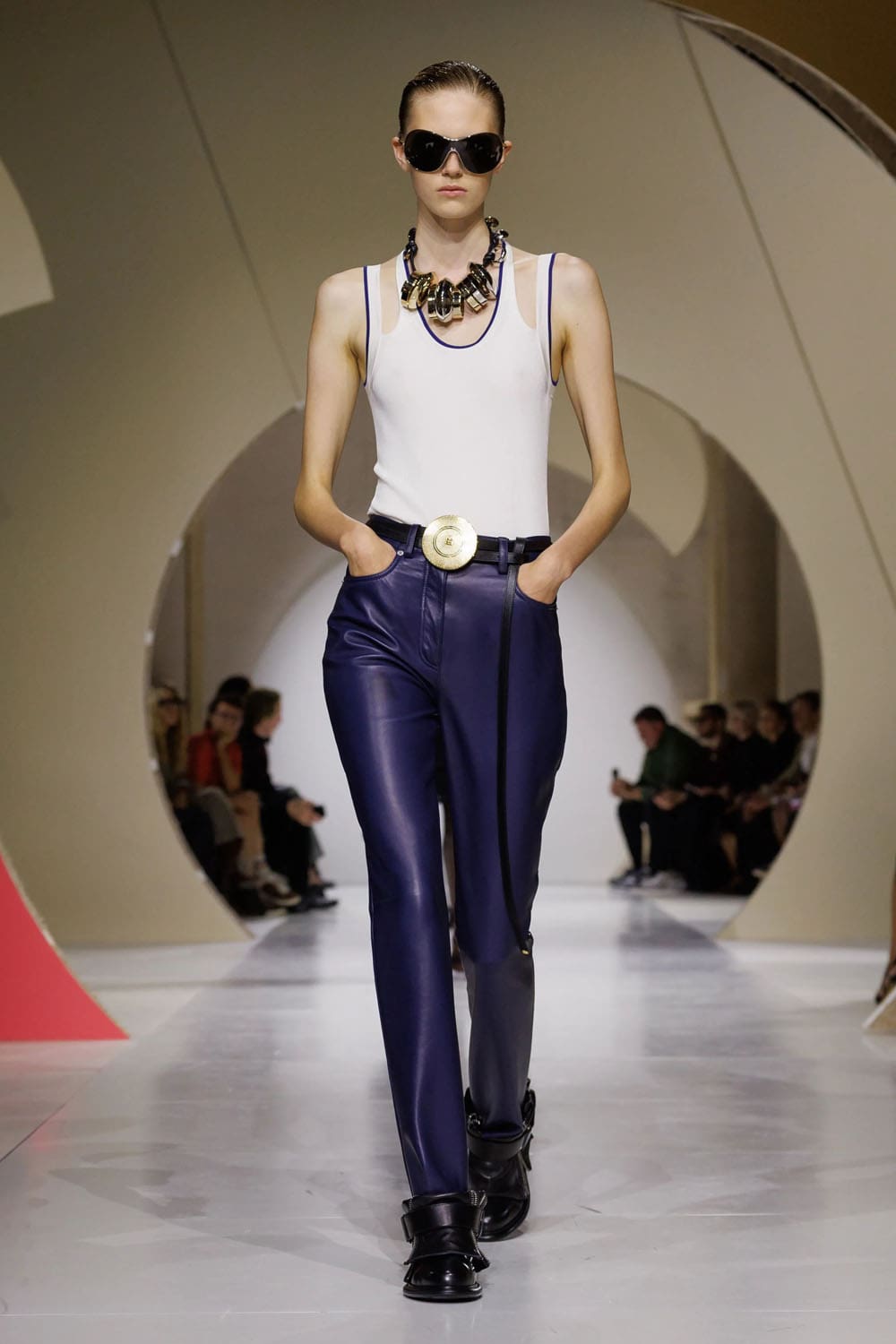
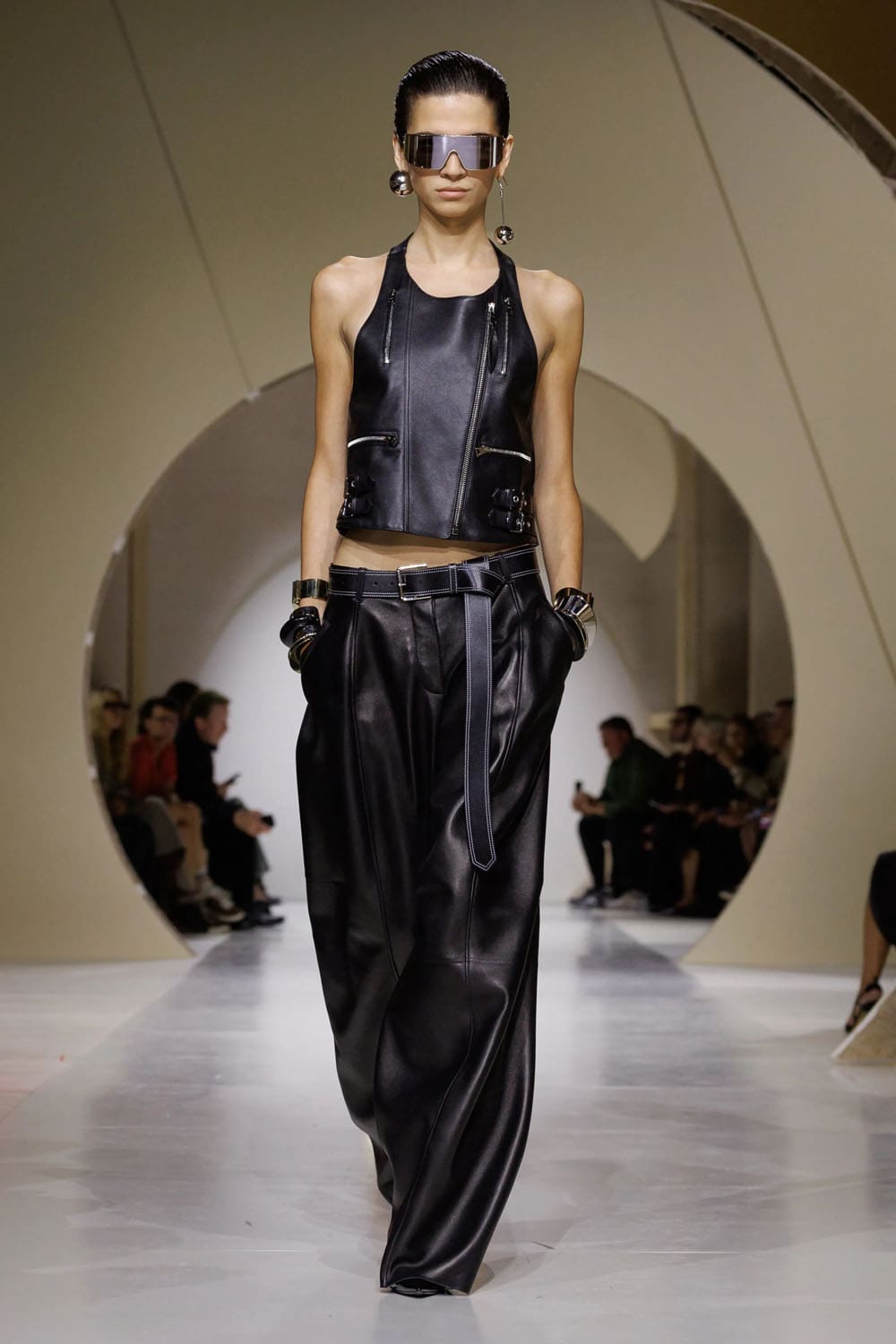
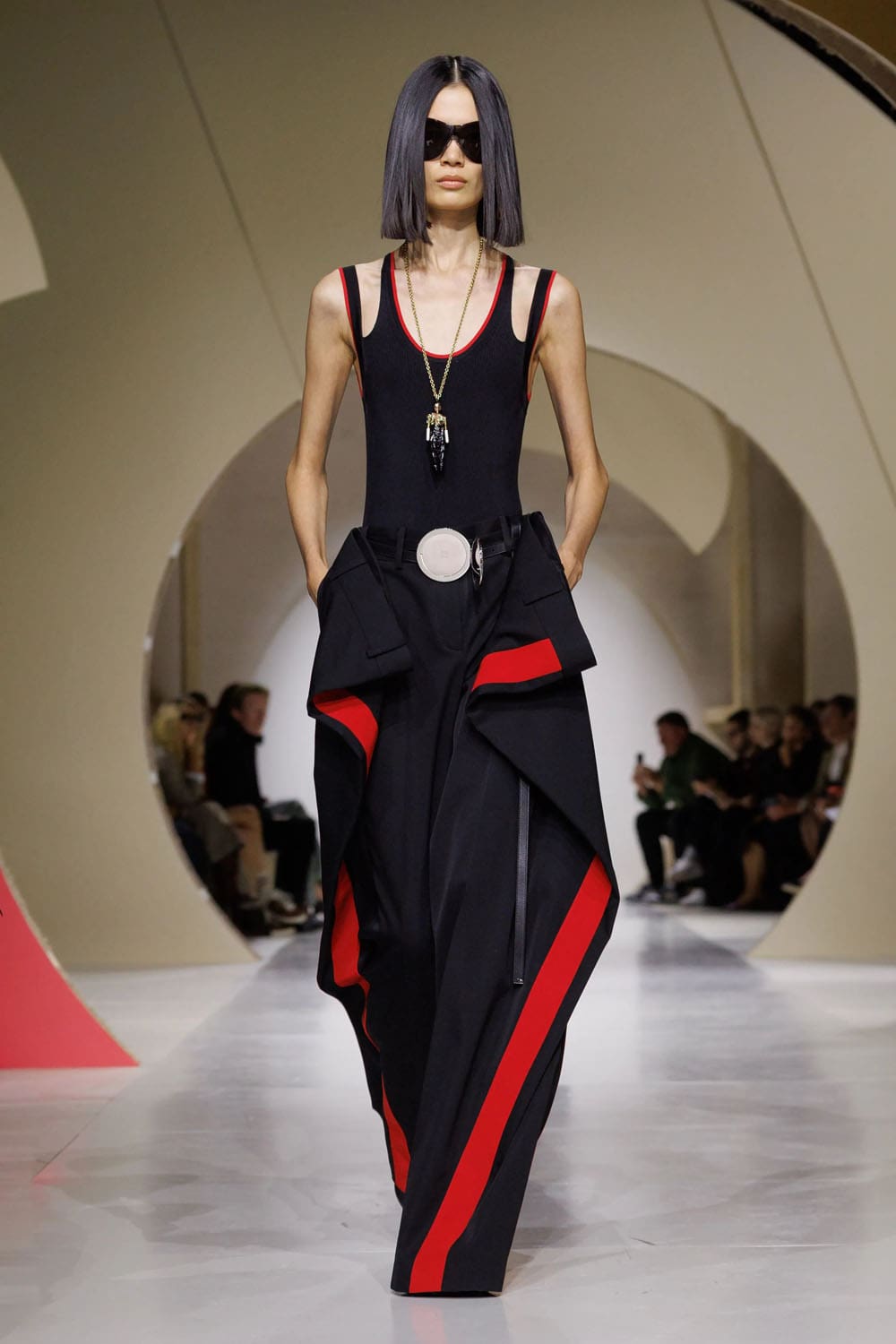
The styling doubled down on heavy-handed patrol gear. One look featured high-cut leather hot pants with horizontal zip pockets, worn with an unbuttoned white shirt and those gaping Owens-esque knee boots. Beside it, an all-leather motorcycle bodysuit—complete with storm flaps, epaulets, and heavy silver zippers—was accessorized with oversized dark visor shields and gauntlet gloves, marching down the pristine path like a highway patrol officer reporting for duty. Another model emerged in a halter leather biker vest cinched over cavernous black leather puddle trousers with a trailing utility belt, completing the leather-bar pastiche.
The casting added its own bizarre layer of confusion: several prominent, mature models long associated with Demna’s Balenciaga universe were mysteriously drafted into service. Placed against severe leather and open boots, they looked completely detached from the refined world of Givenchy, serving as visual reminders of another house’s aesthetic territory.
The Falsely Open Bag: Someone Else’s Trick
The borrowing did not halt at the footwear. Luxury fashion has watched with fascination over recent months as Pierpaolo Piccioli introduced his wildly popular, structured tote bags engineered with a false open mouth that deliberately exposes a flash of contrasting, vibrant leather interior. It was a clever structural trompe l’œil that captured the market’s imagination. Burton apparently decided that Givenchy needed in on the trend, though without the engineering finesse.
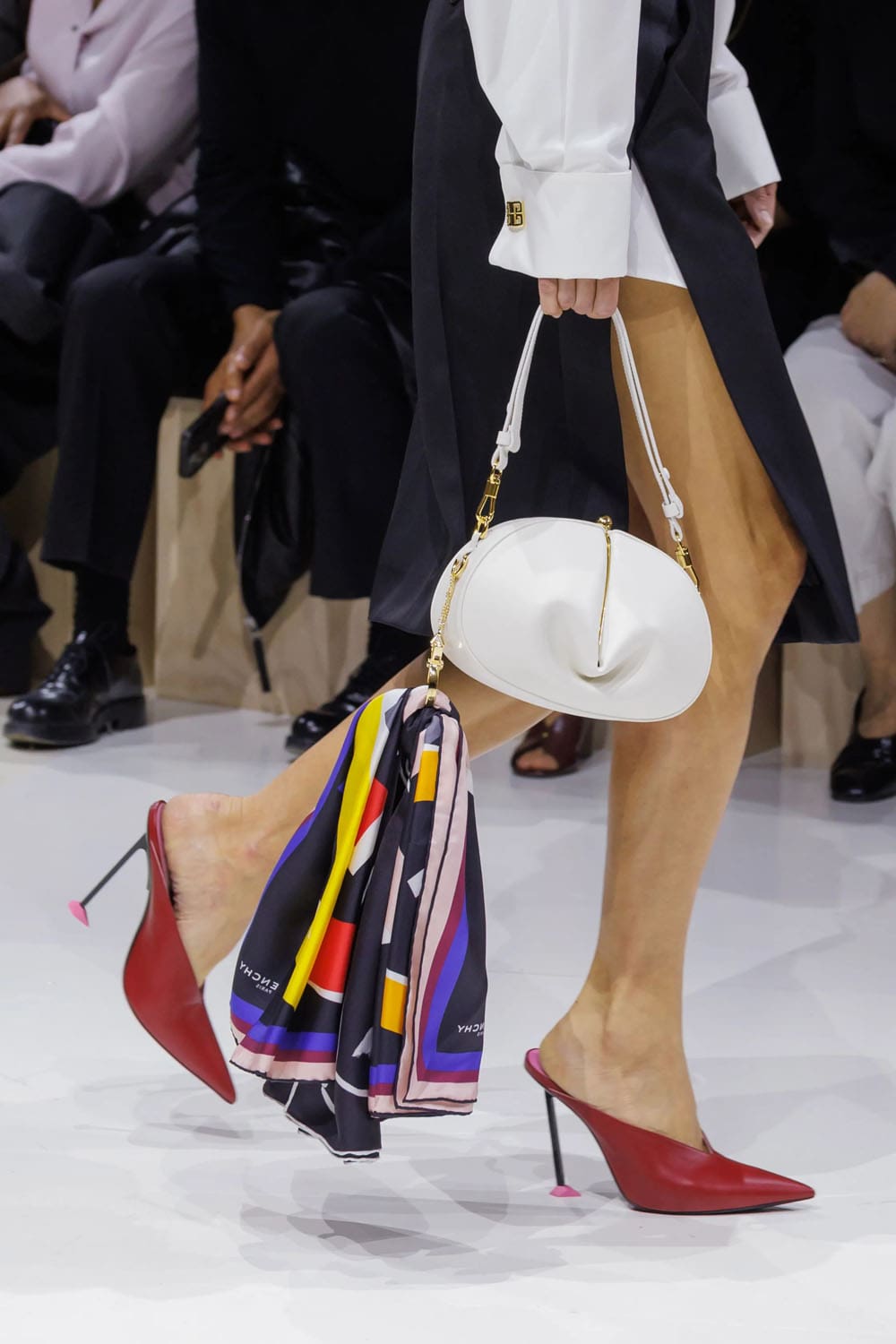
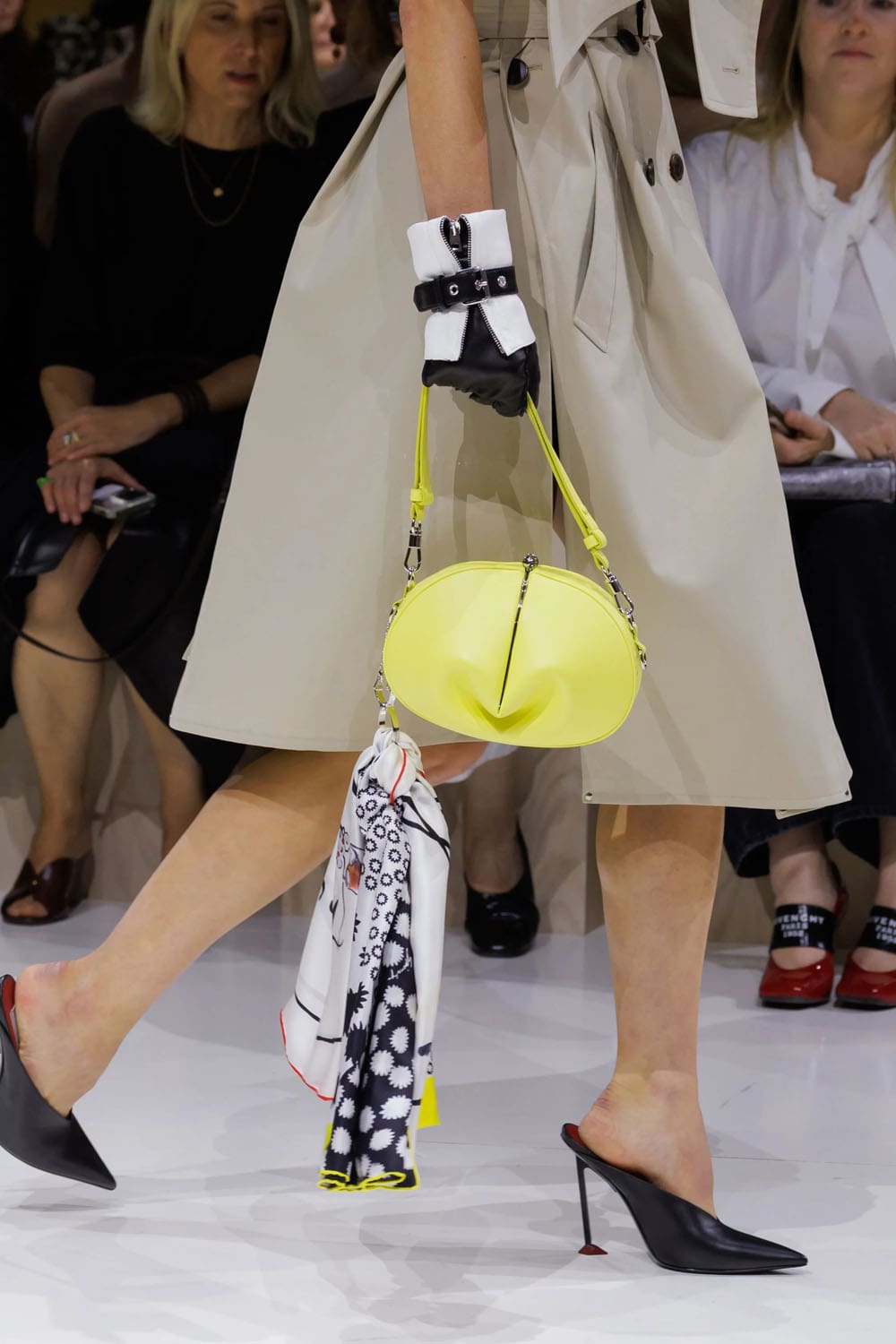
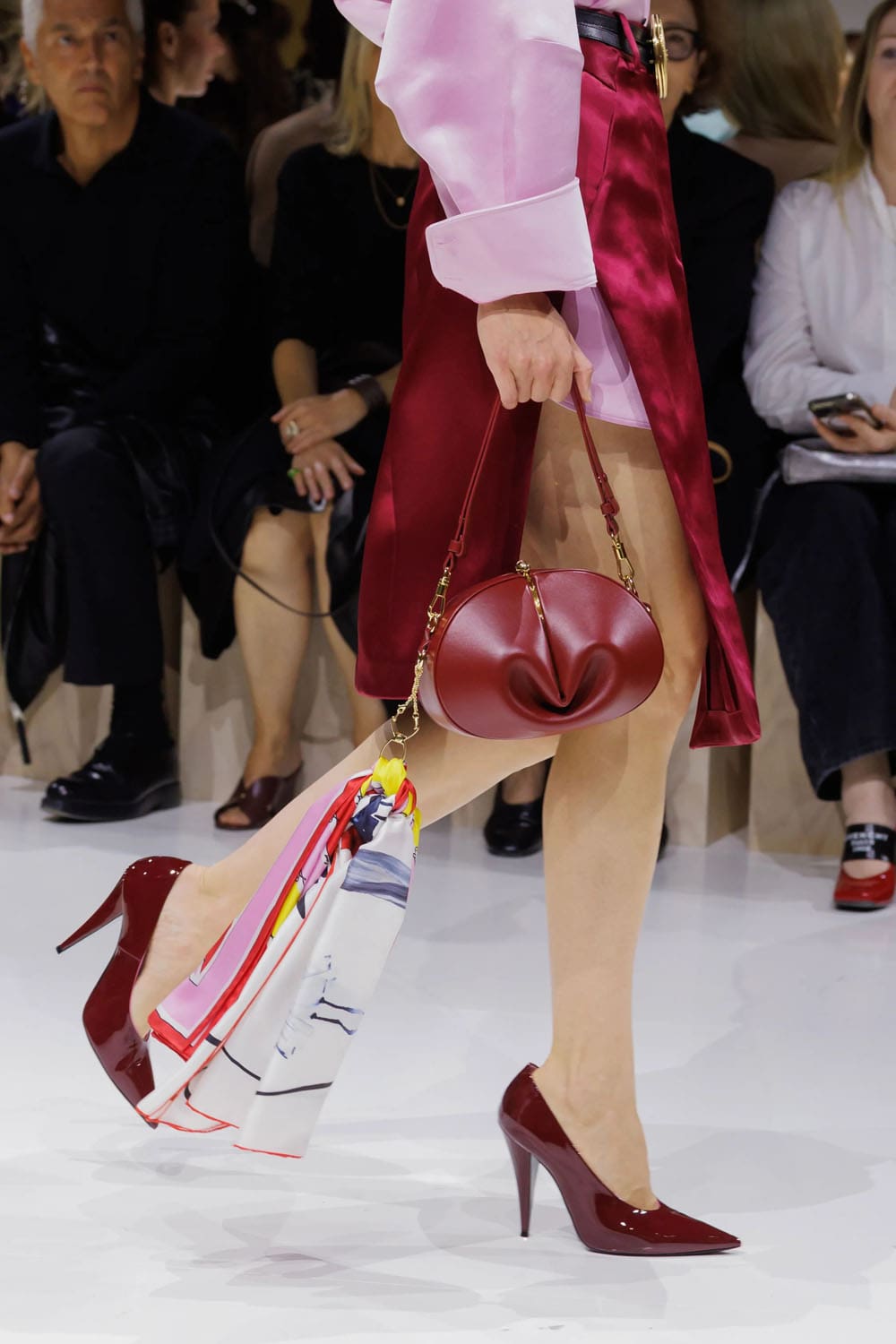
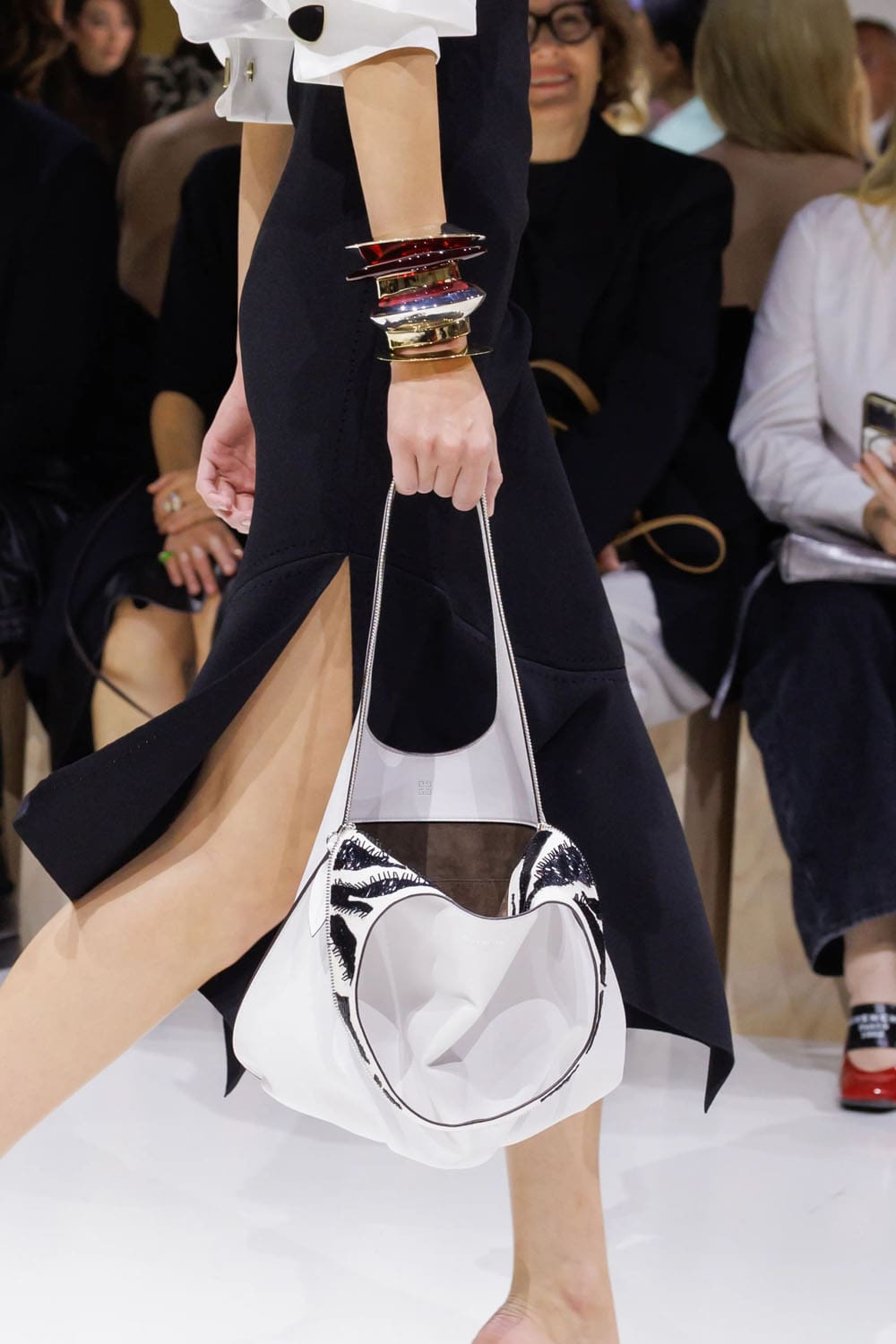
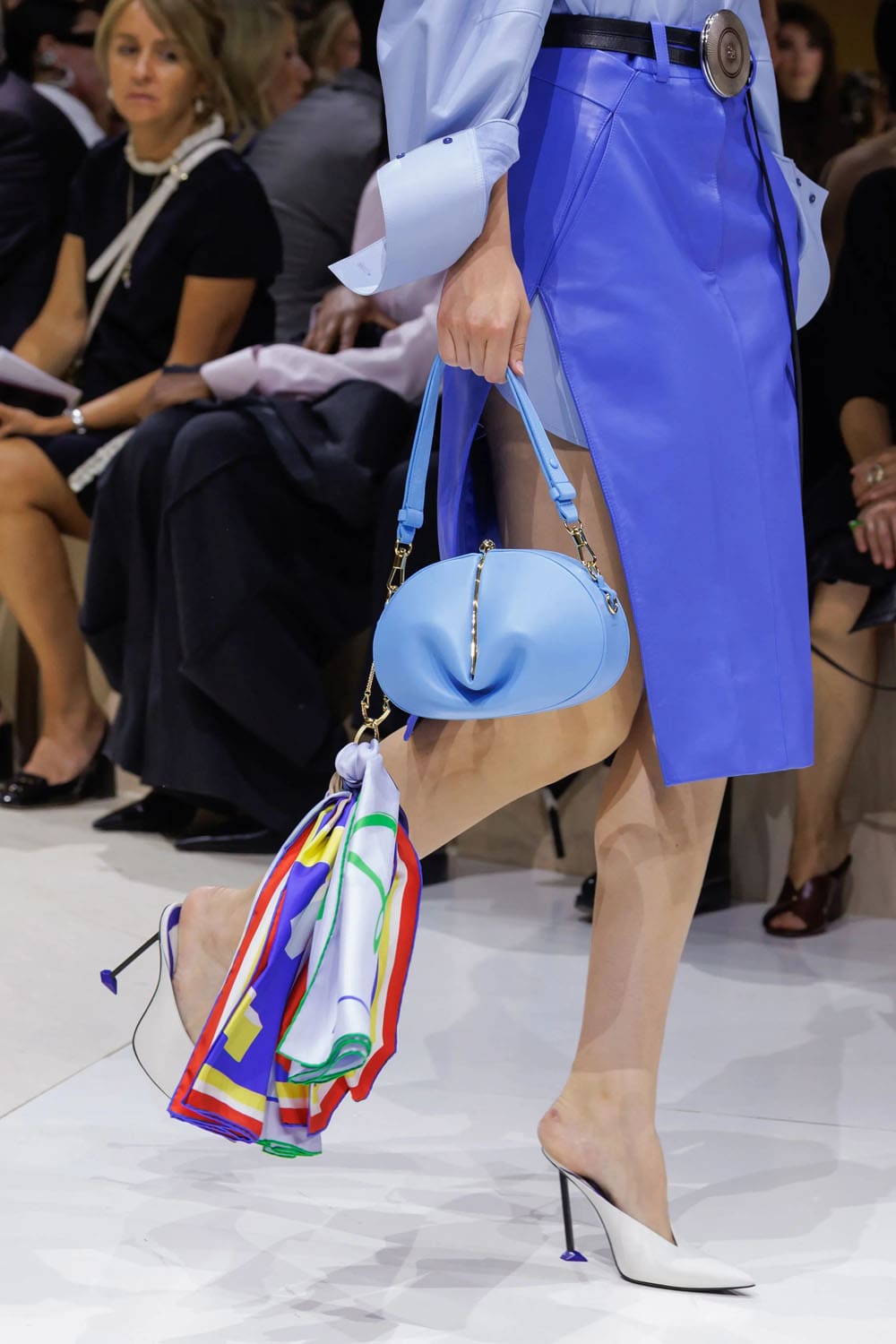
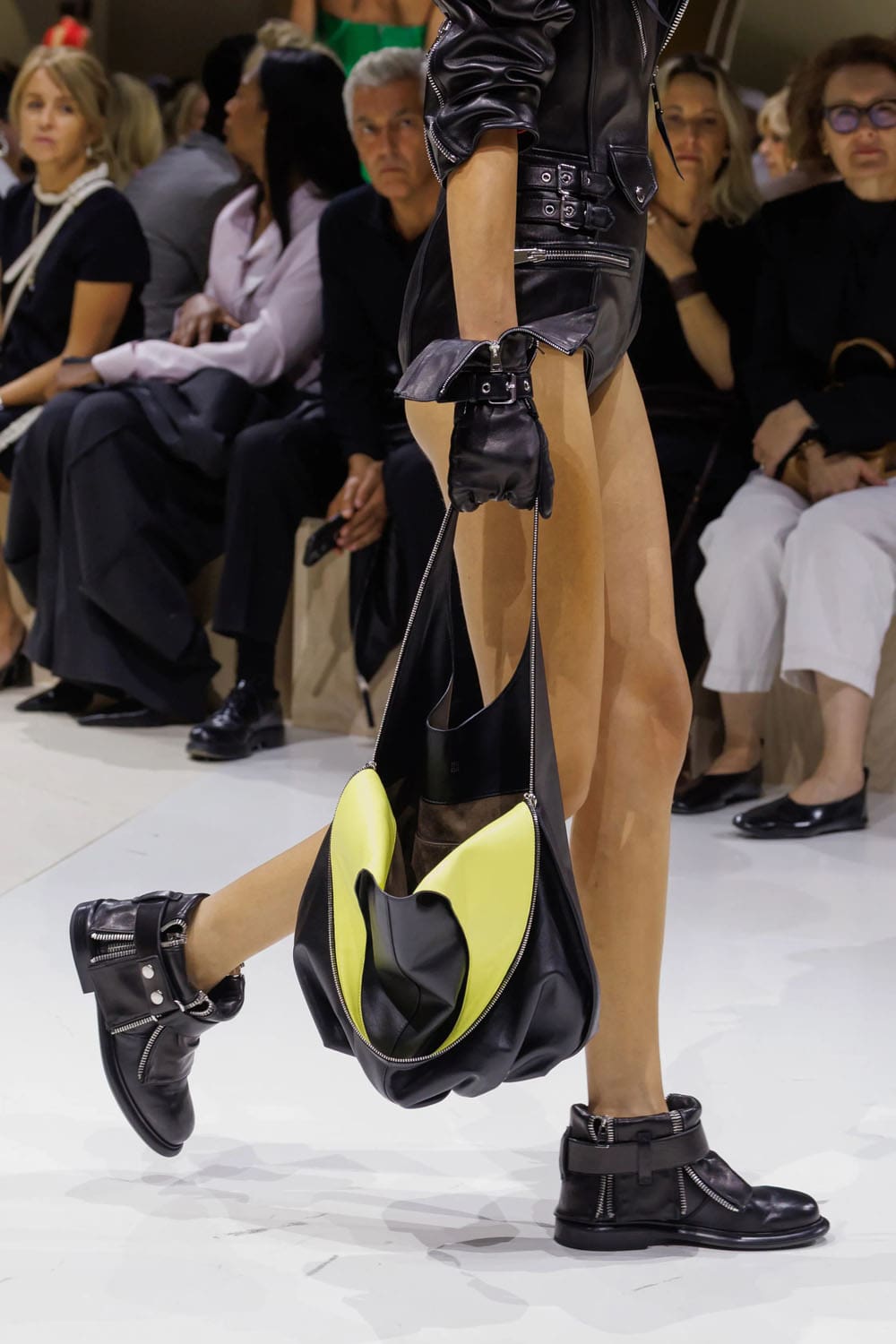
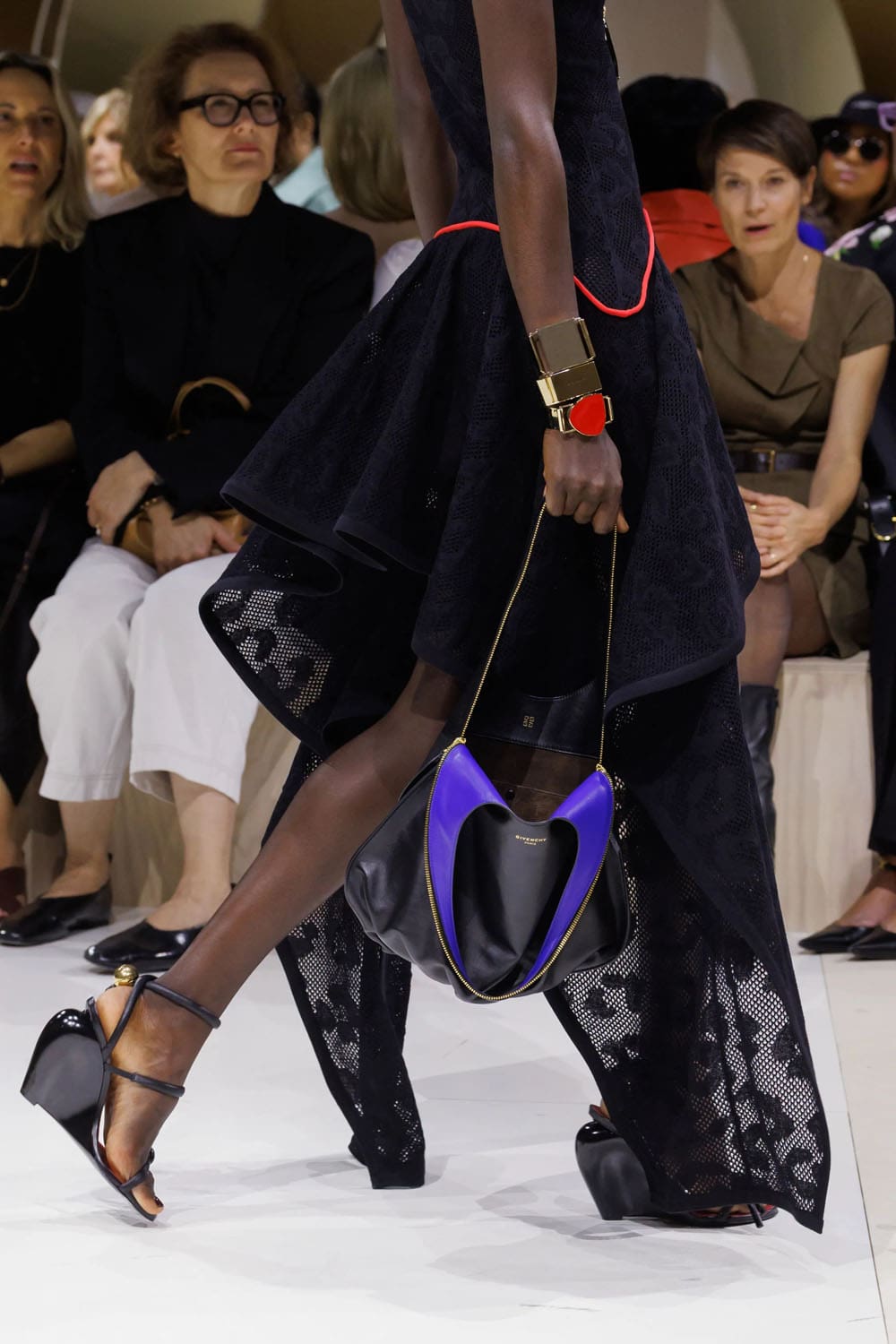
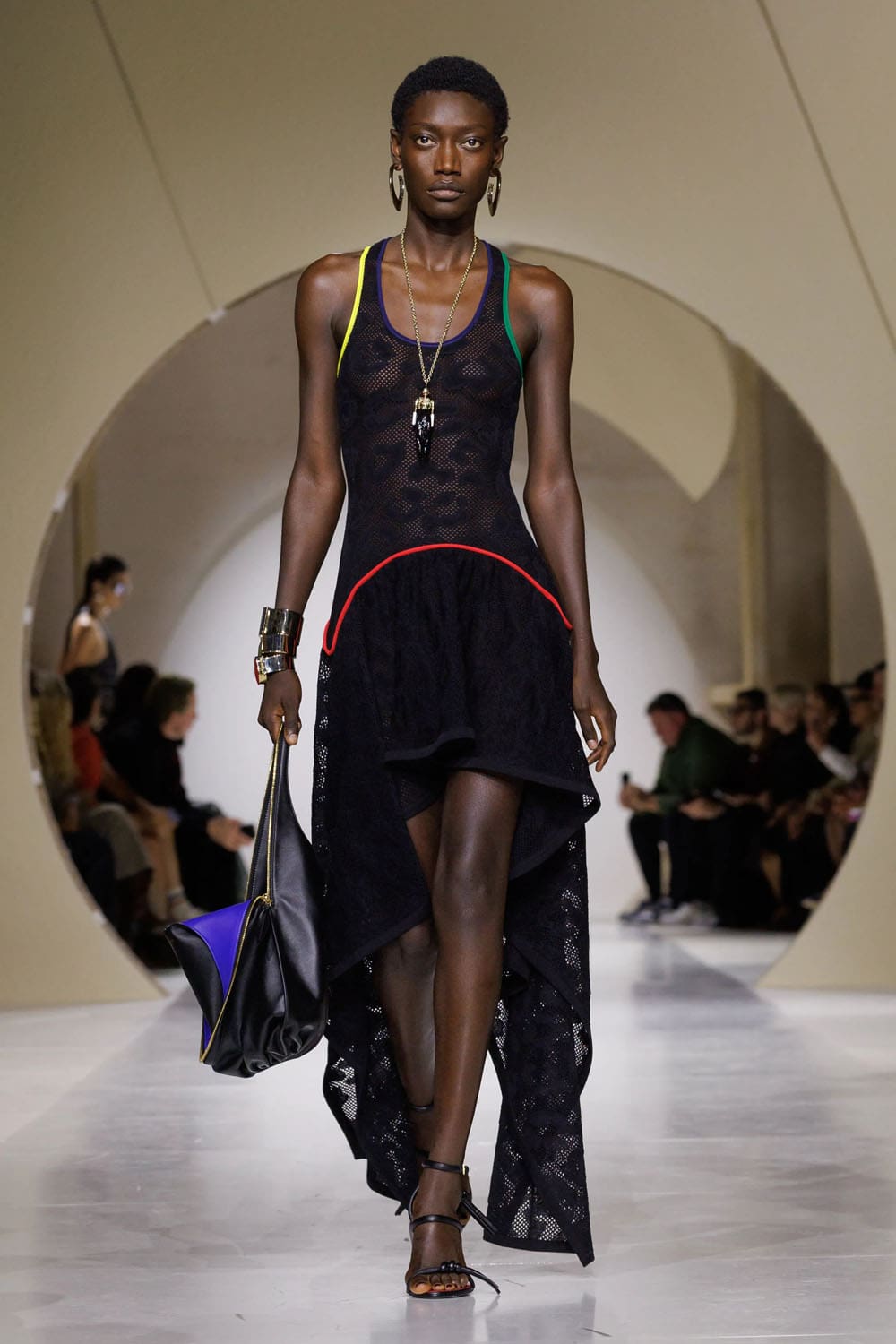
Her models paced the runway clutching ordinary, oversized slouchy leather shoulder bags worn conspicuously unzipped and folded outward, forcing the flaps open to expose contrasting chartreuse-yellow and bubblegum-pink suede interiors. Touting an unzipped handbag as a design breakthrough is a curious stretch. Instead of feeling like organic innovation, it came across as an opportunistic attempt to ride a competitor’s retail wave, slapped onto an already overloaded collection.
Sliced Shoulders and the Jean Paul Gaultier Playbook
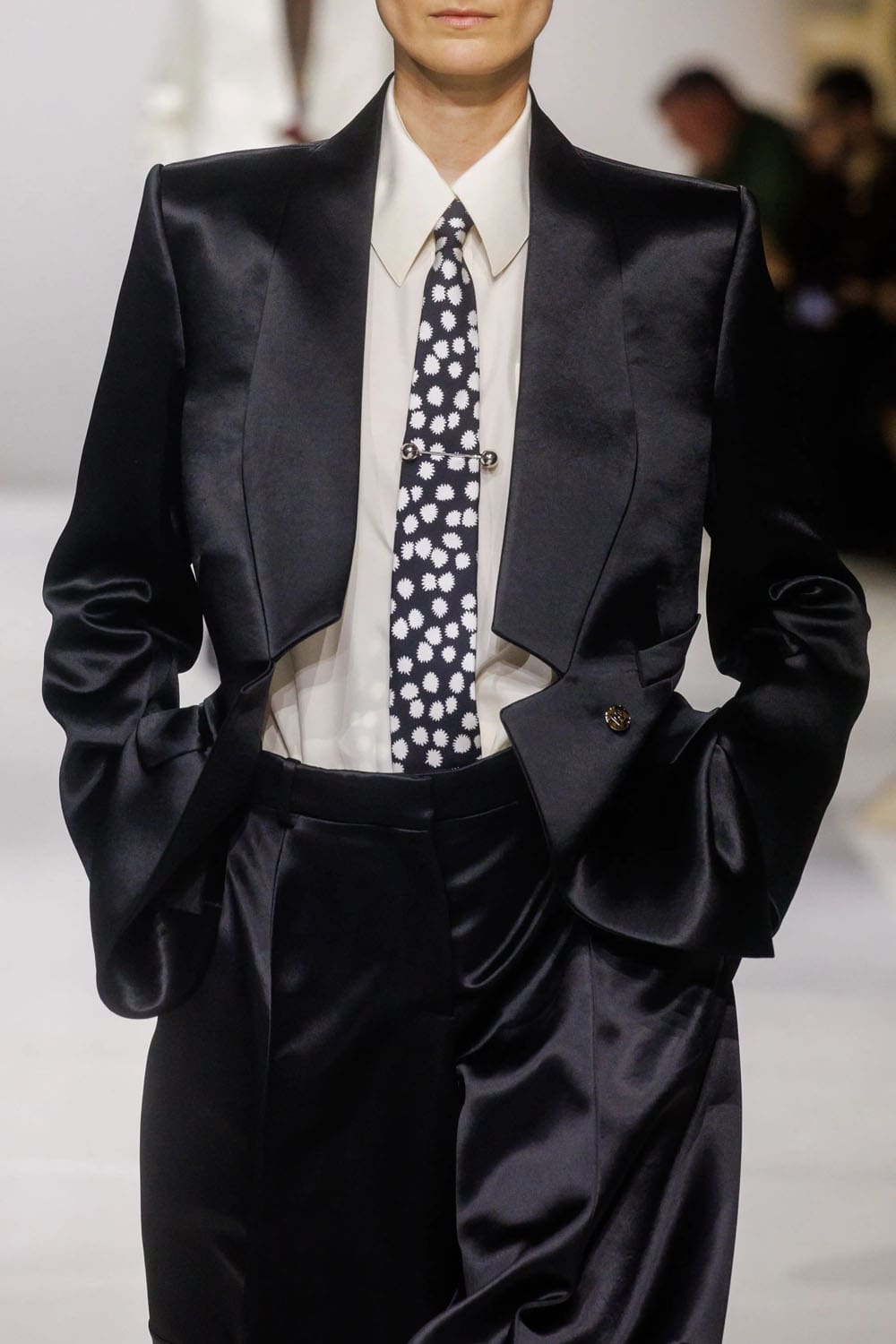
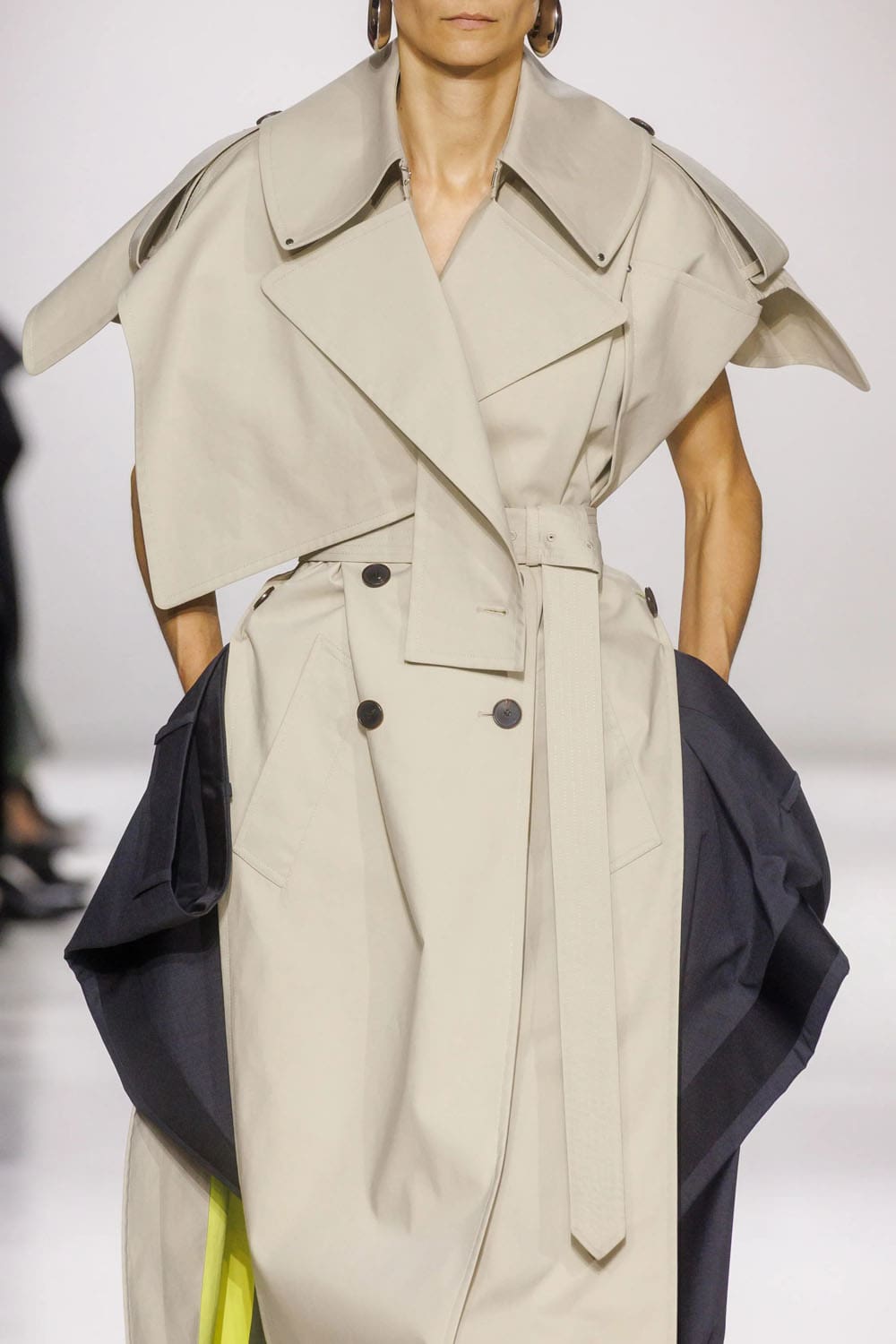
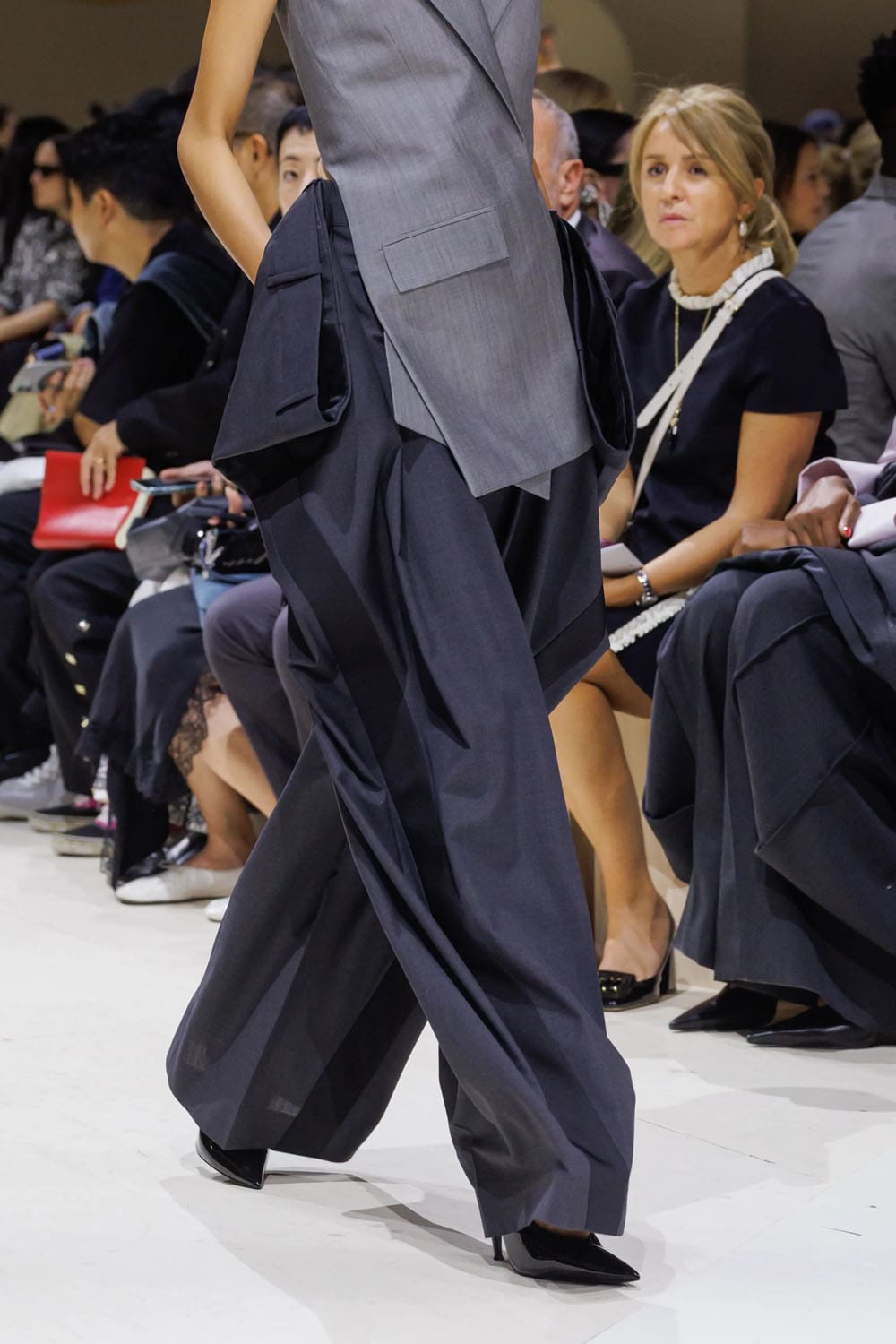
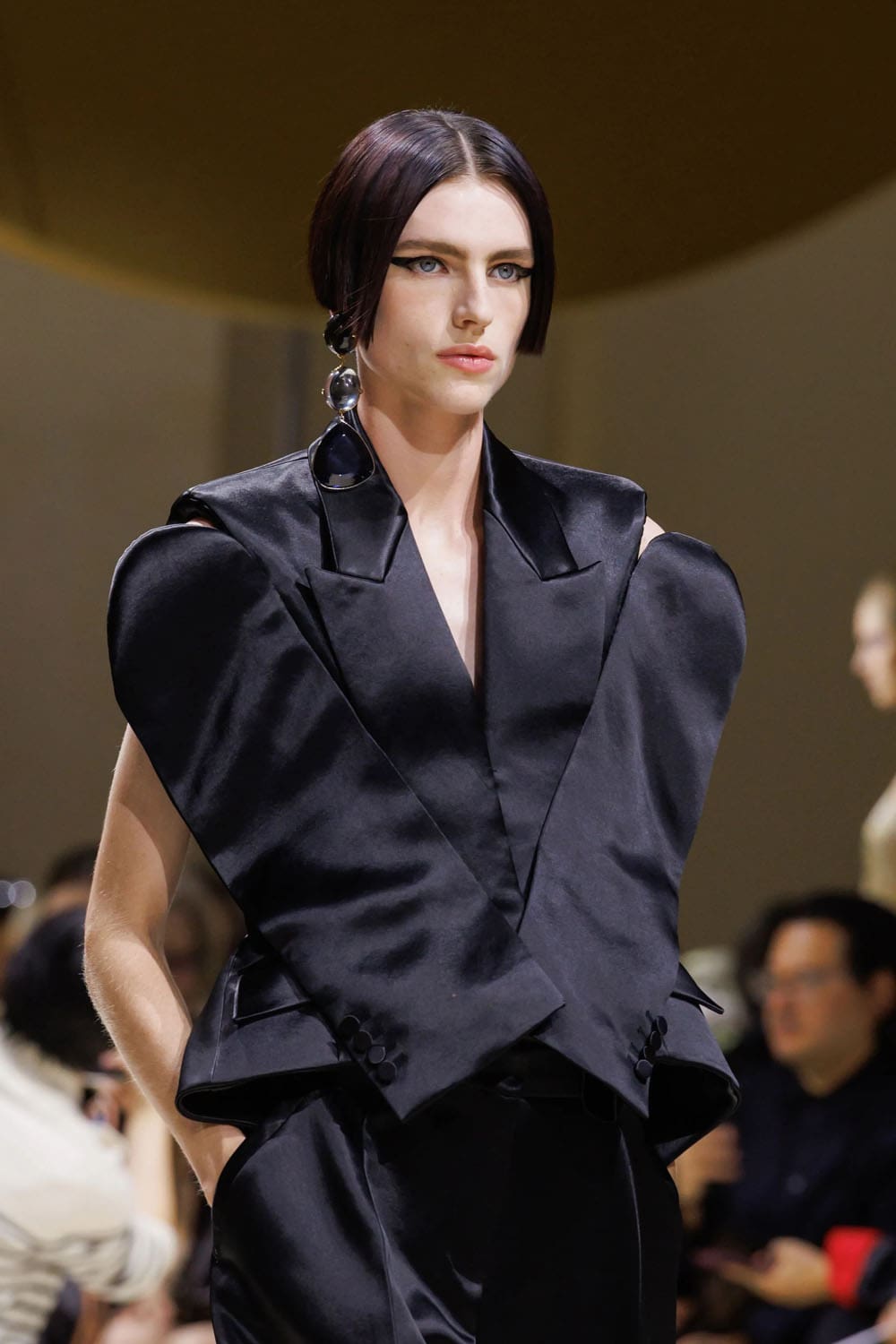
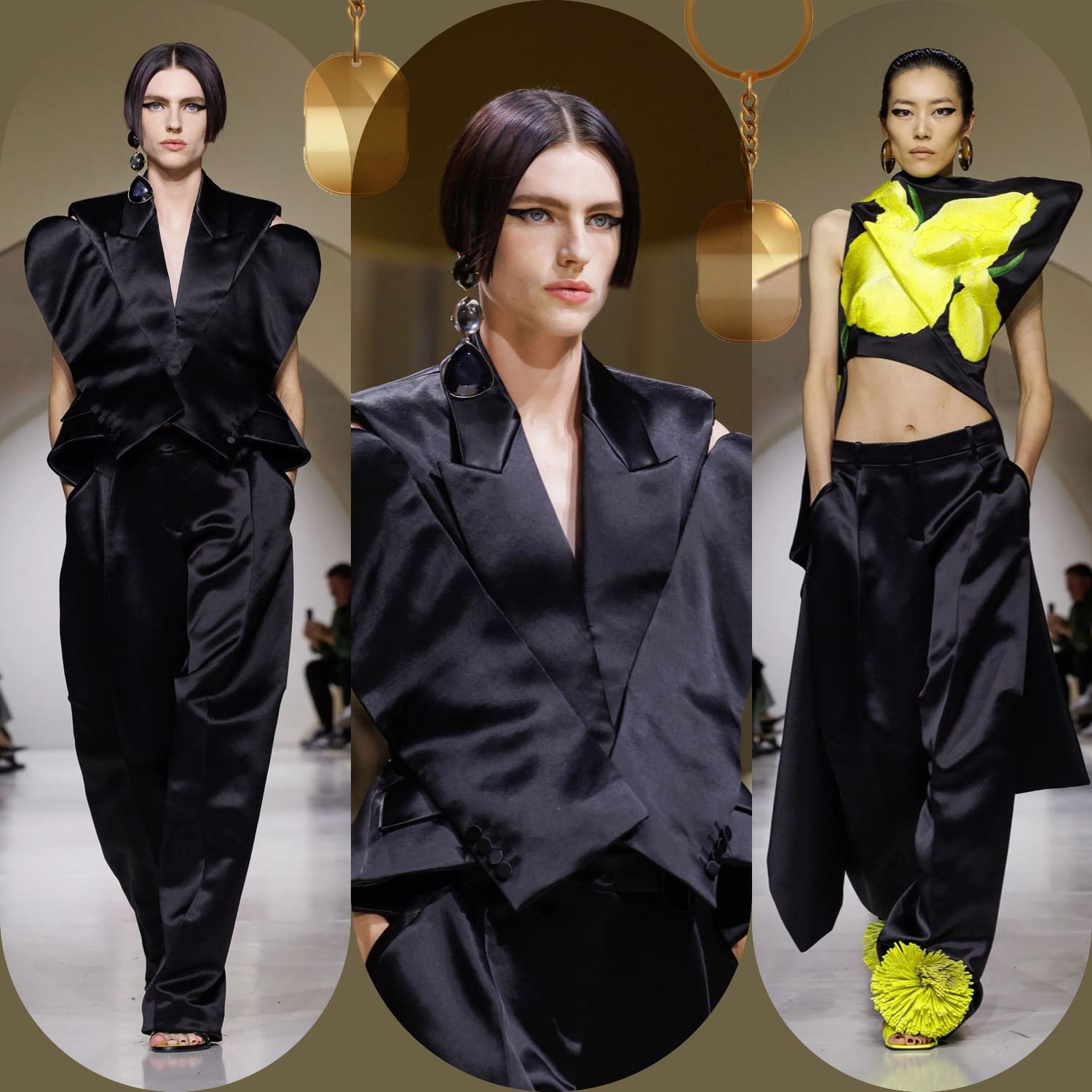
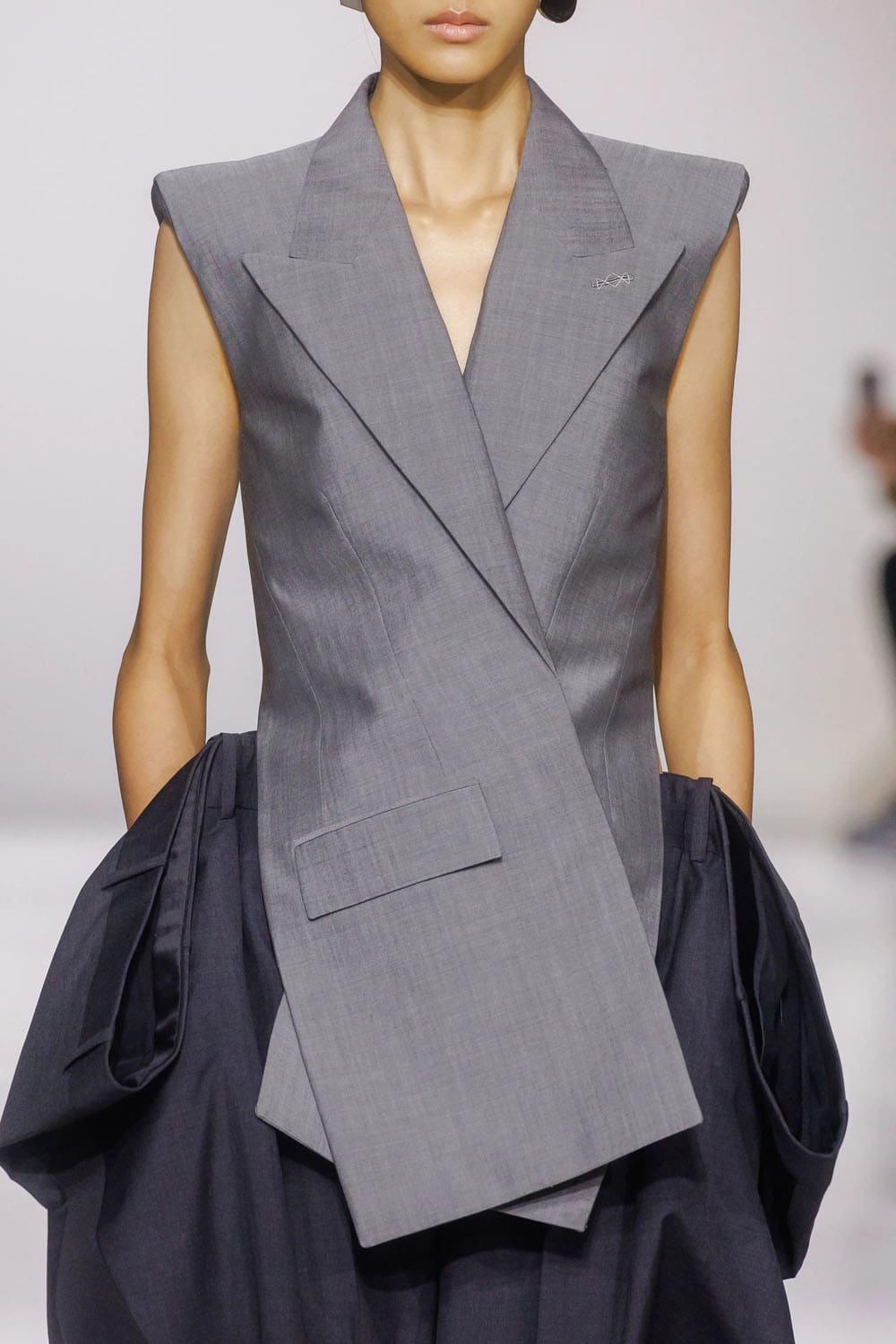
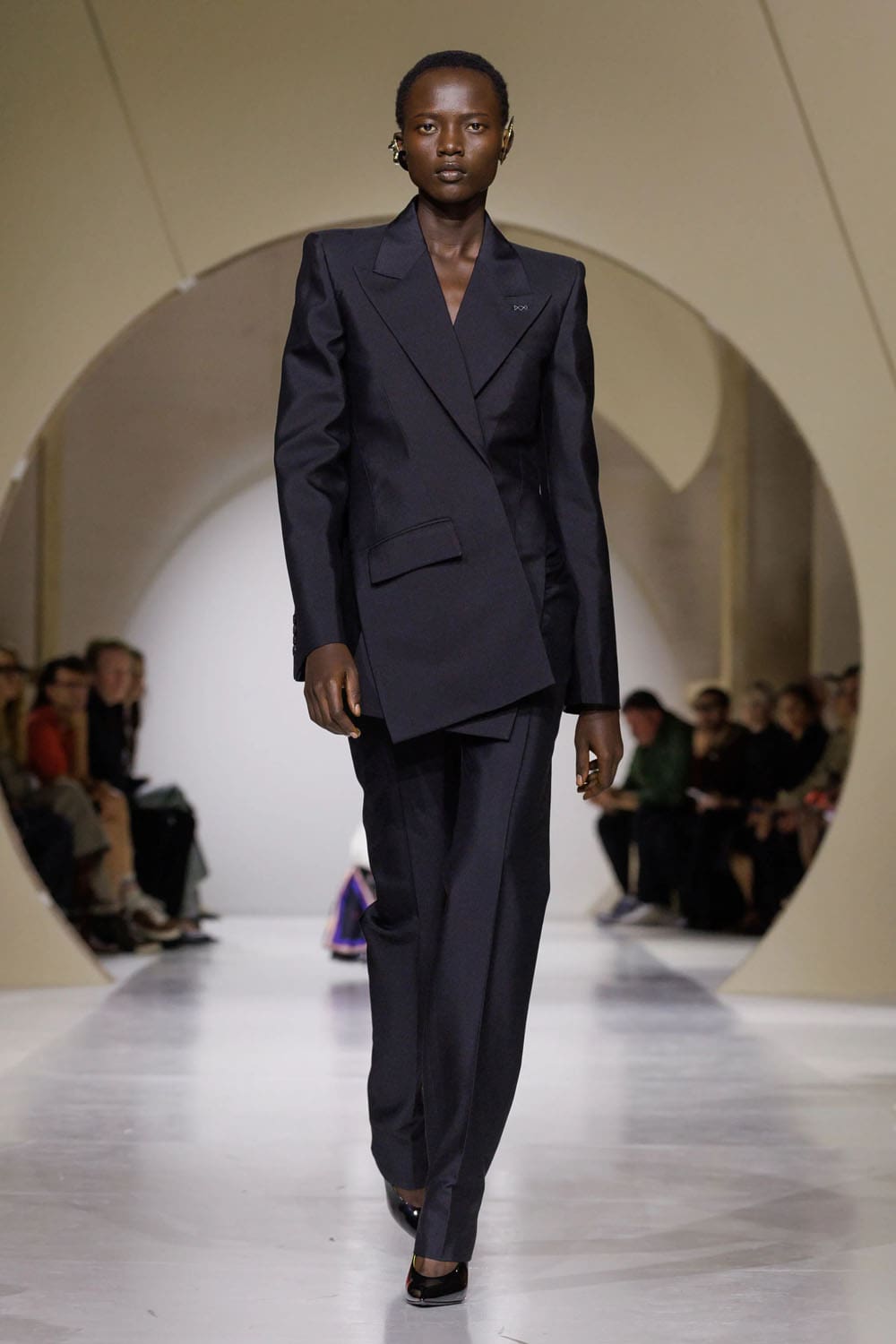
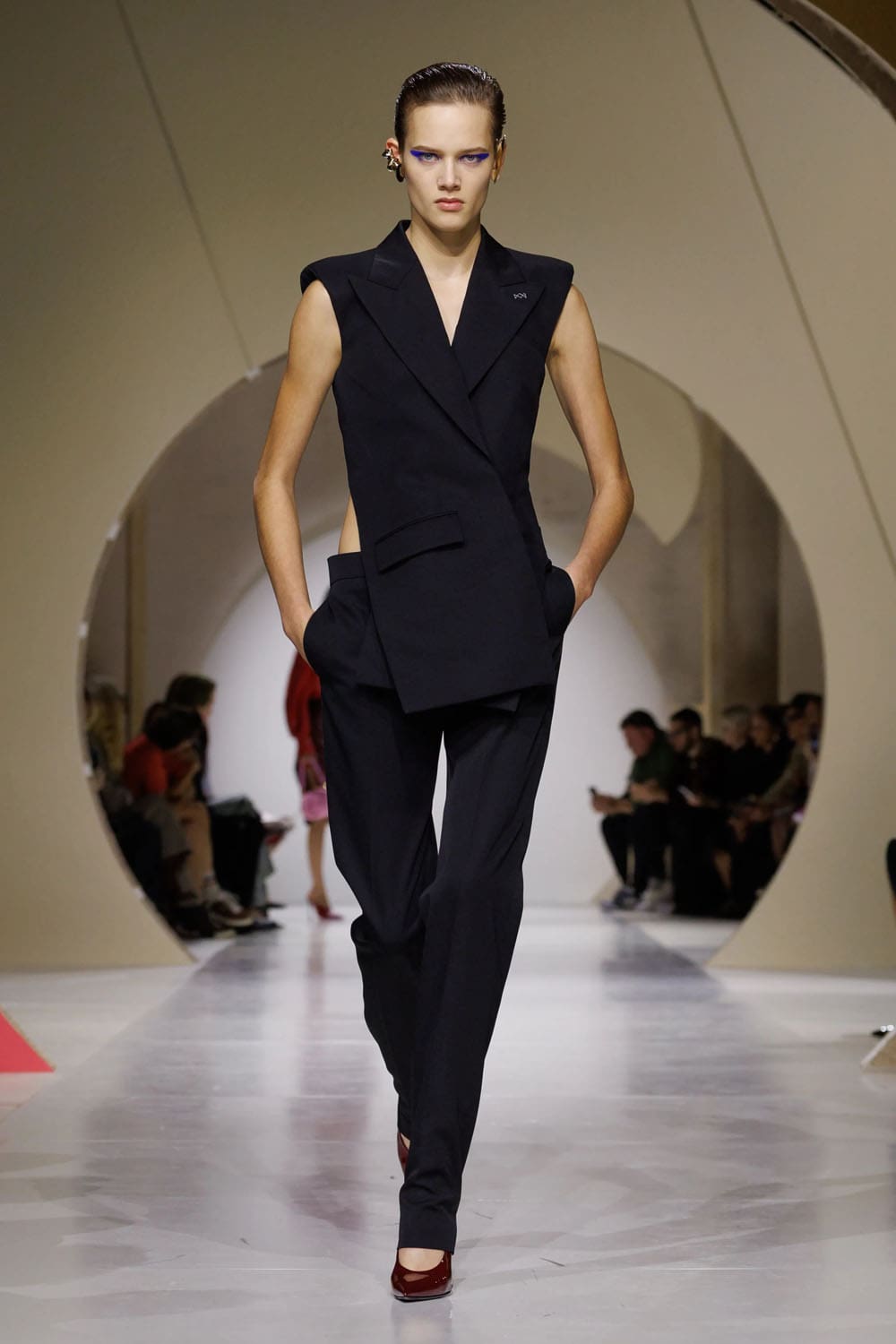
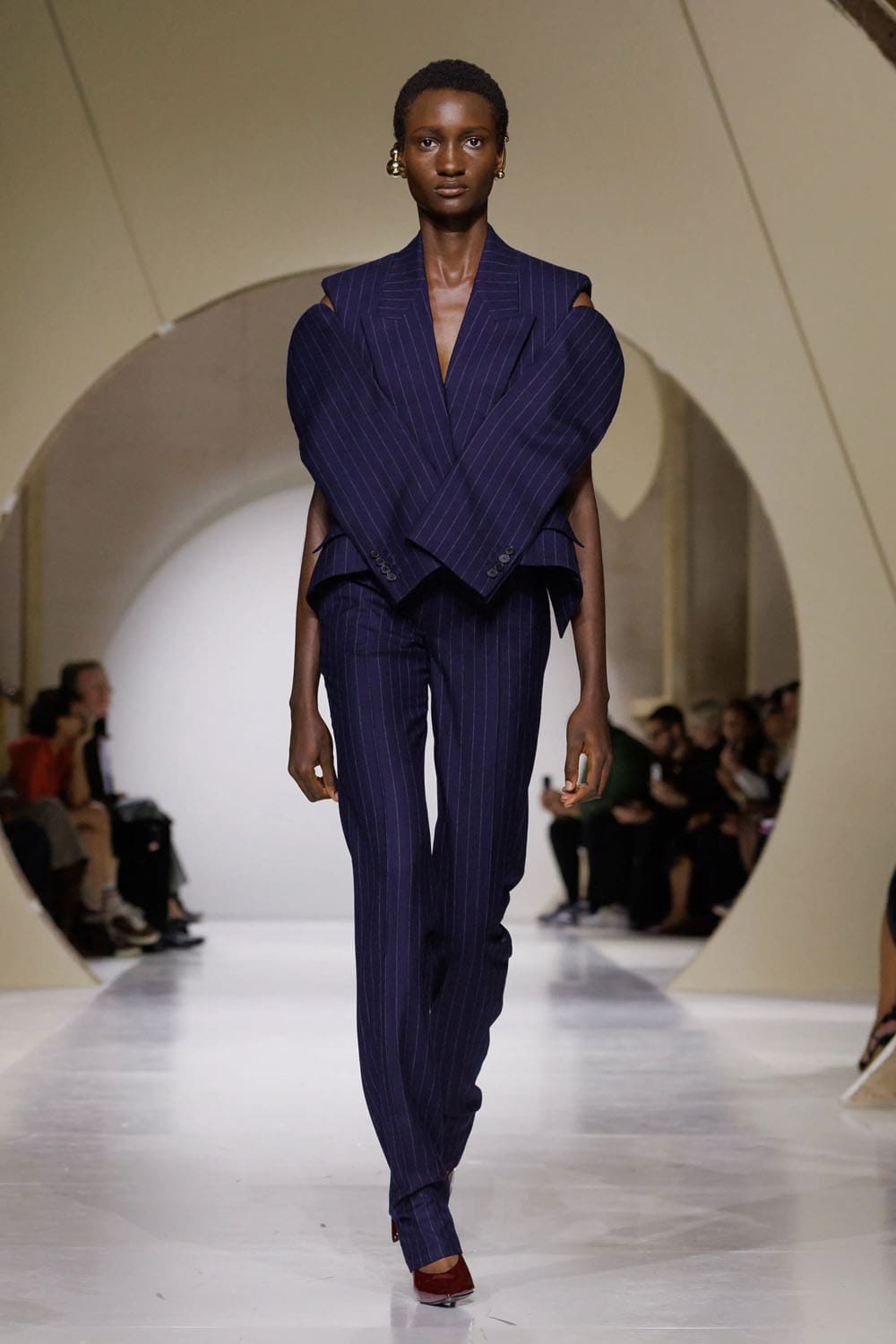
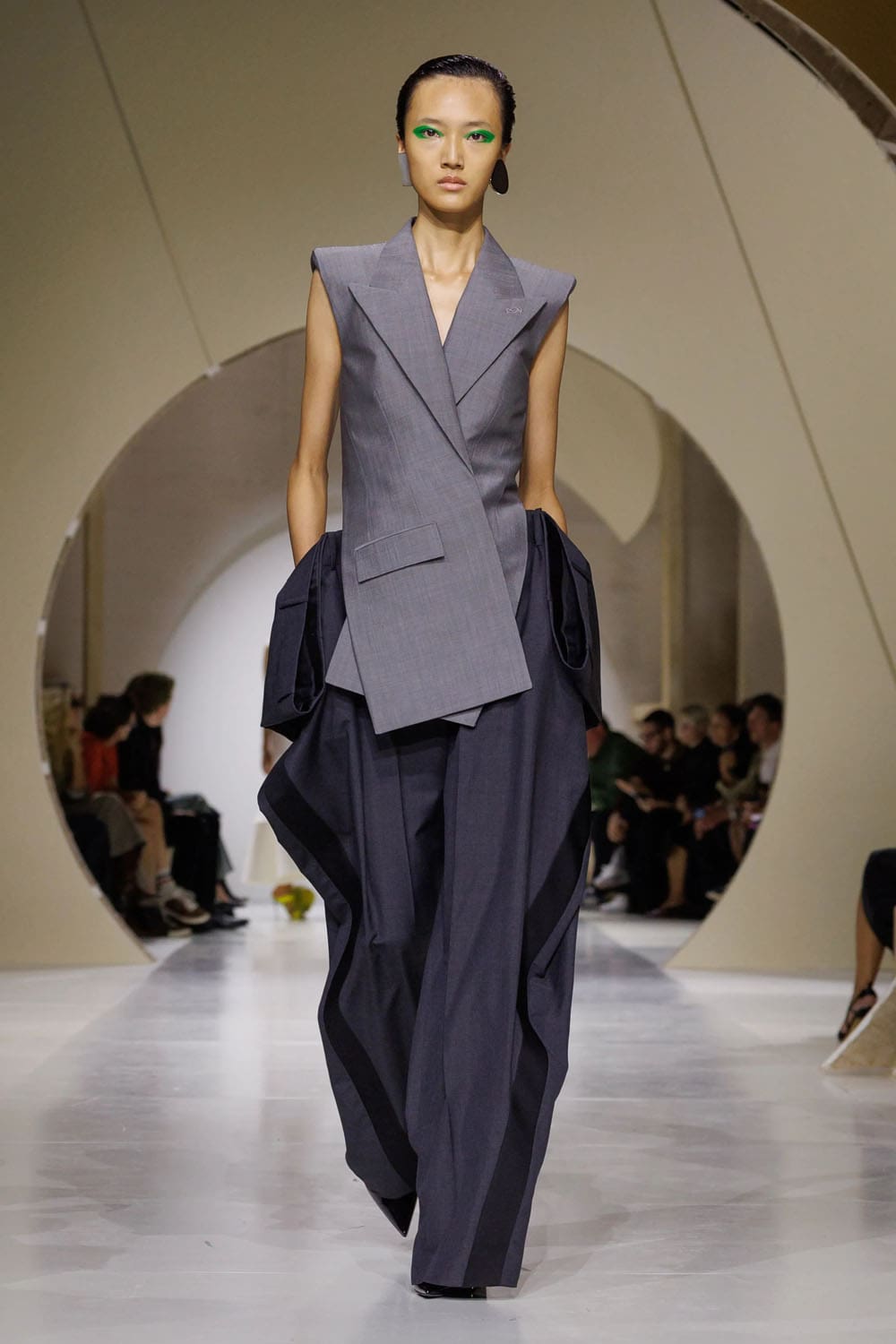
When tailoring did attempt to reclaim the conversation, it arrived filtered through someone else’s archives. A sleeveless double-breasted vest in chalky Prince of Wales wool featured sharp, pagoda shoulders and flat overlapping panels, layered over massive dropped-waist dark trousers. The device—sleeves sliced cleanly from the armholes, lapels pressed flat, and extended waistbands drooping down the sides—was introduced with far greater wit and erotic subversion by Jean Paul Gaultier in the early 2000s. Burton executes the construction with technical skill, yet the conceptual skeleton belongs to another designer entirely.
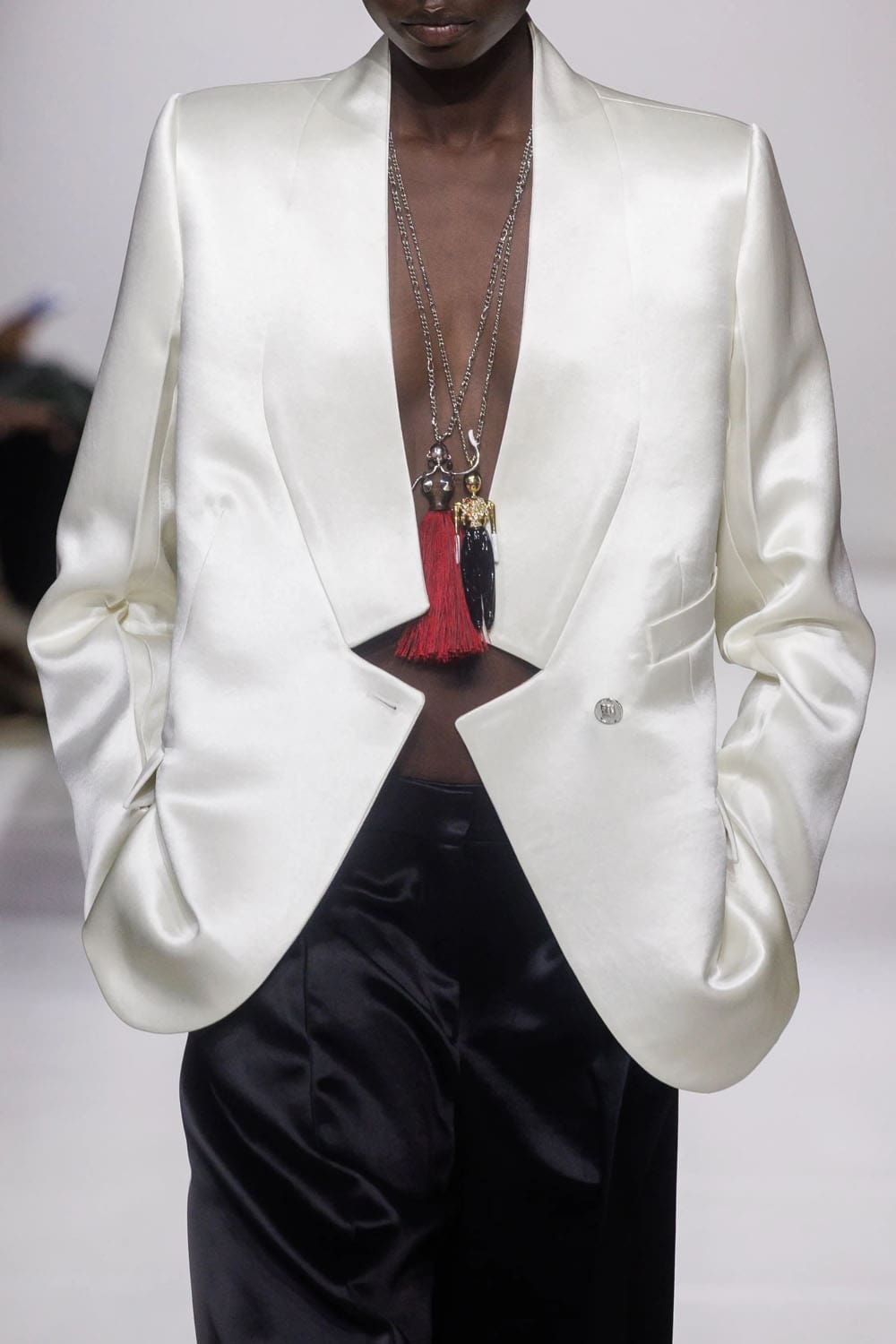
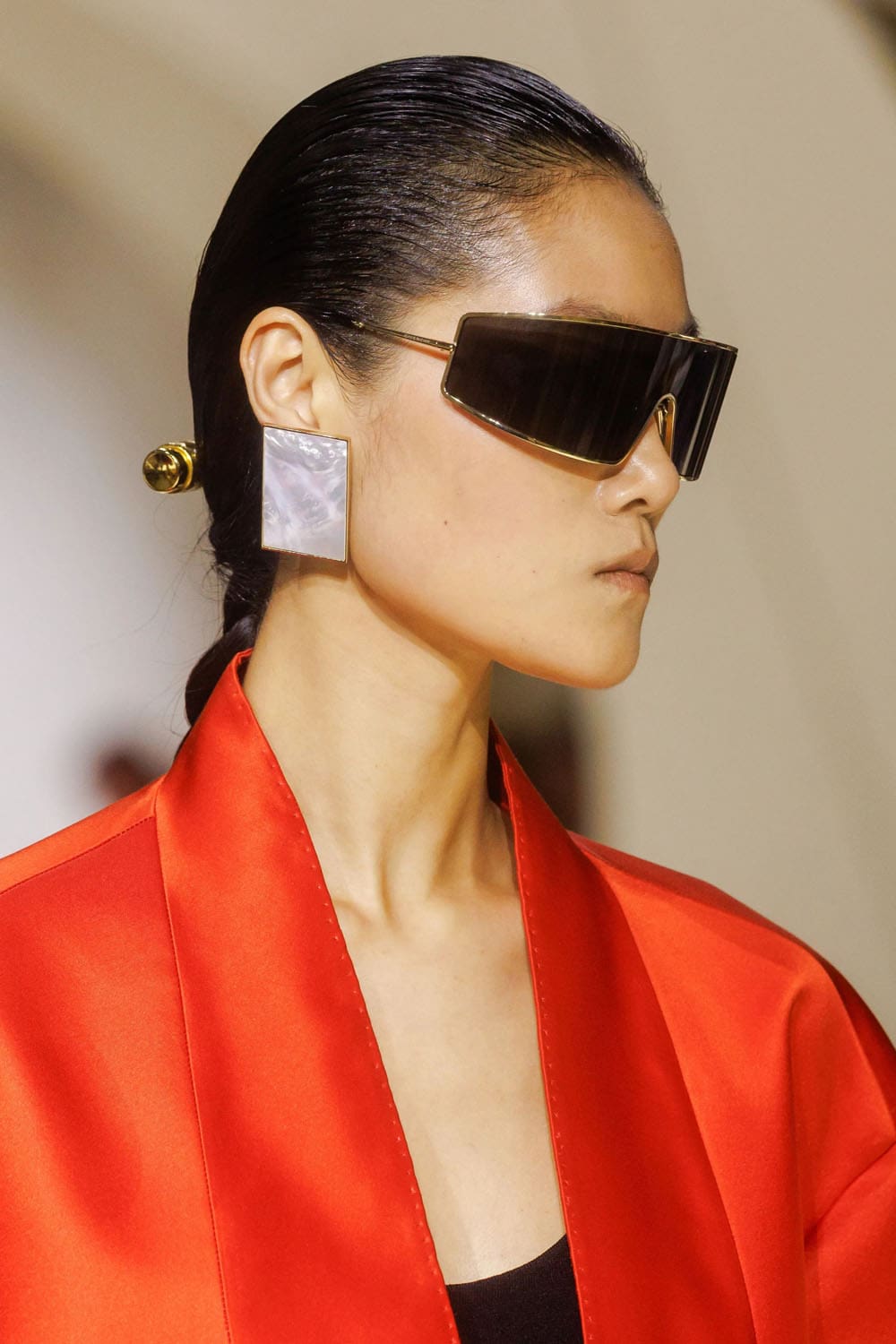
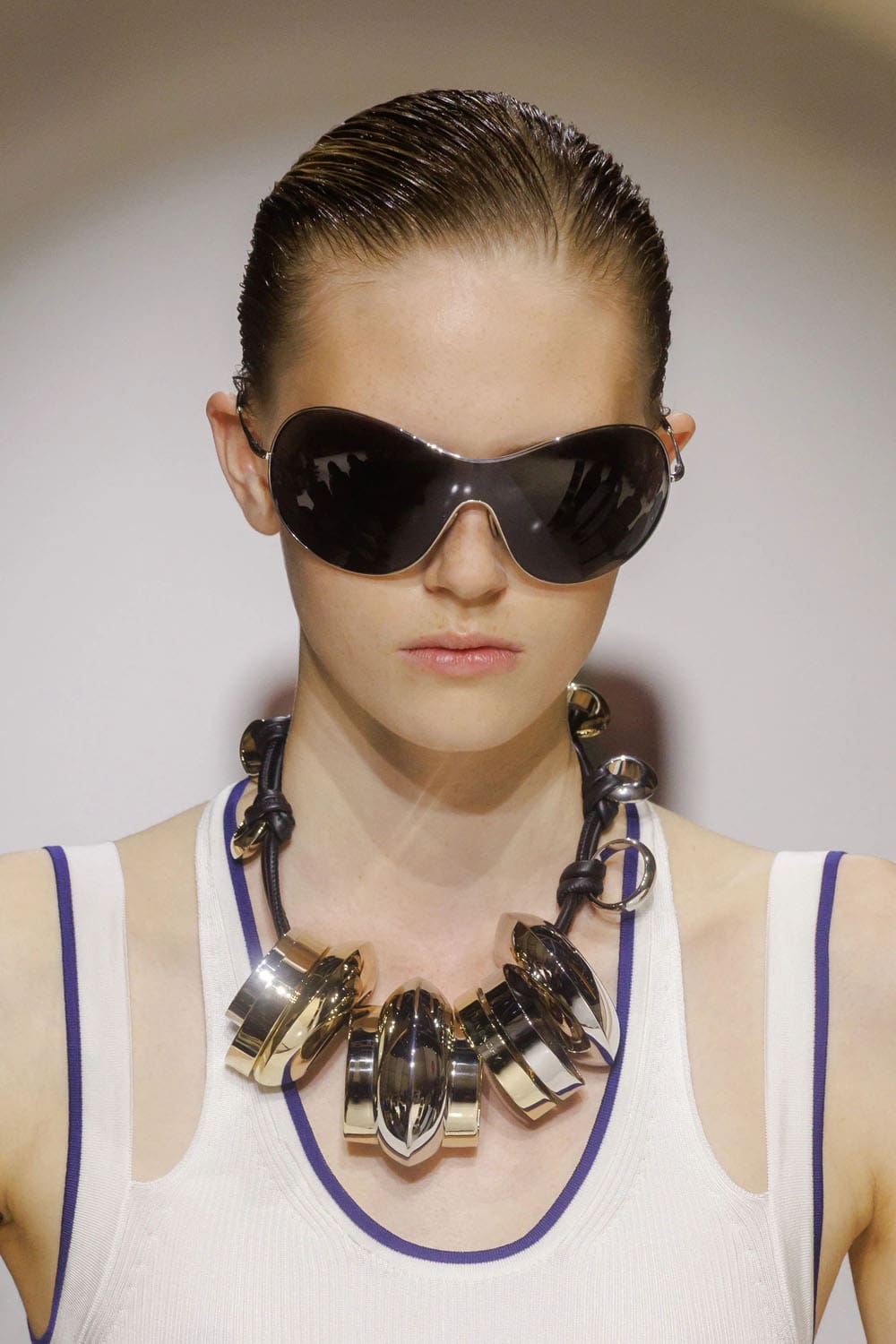
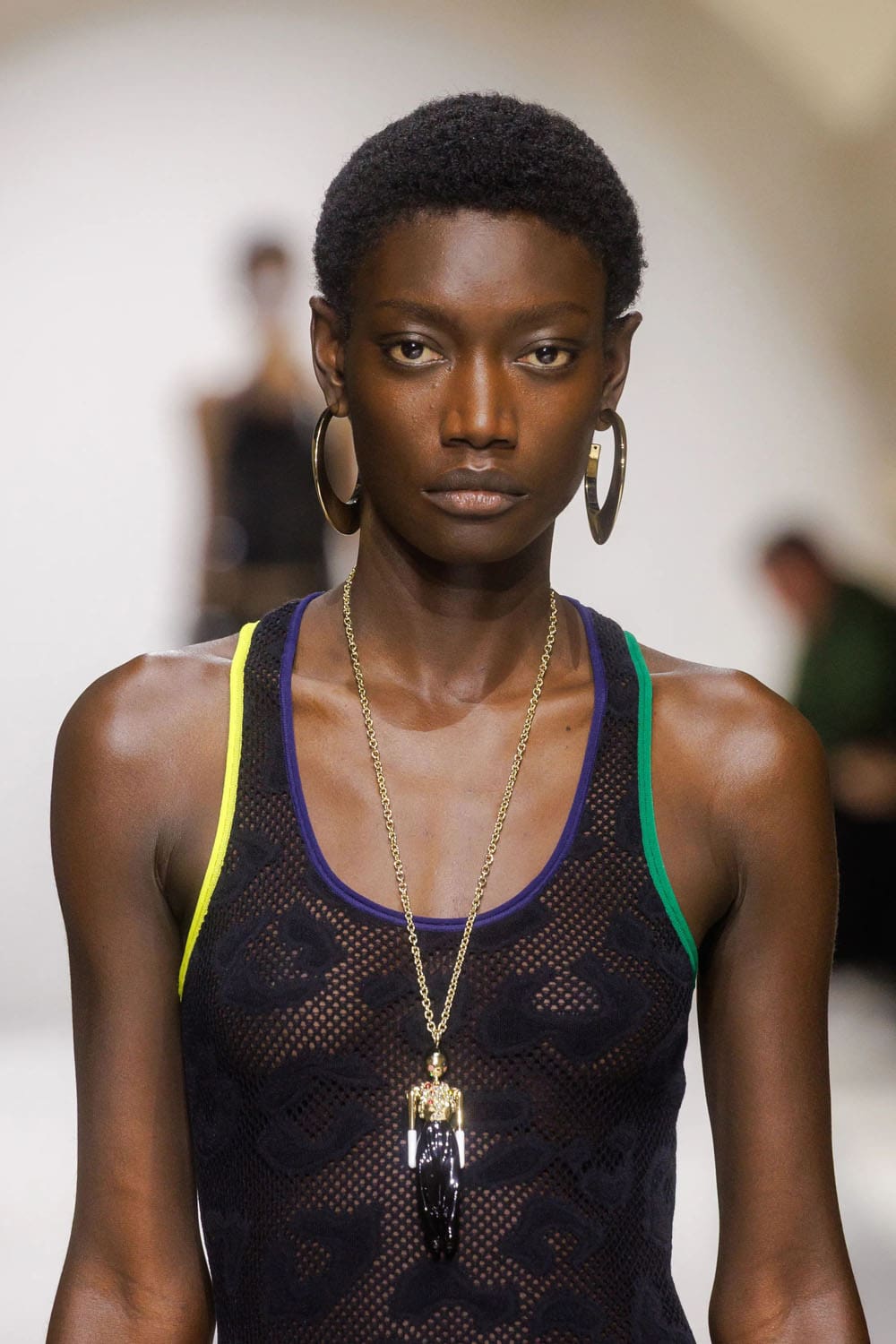
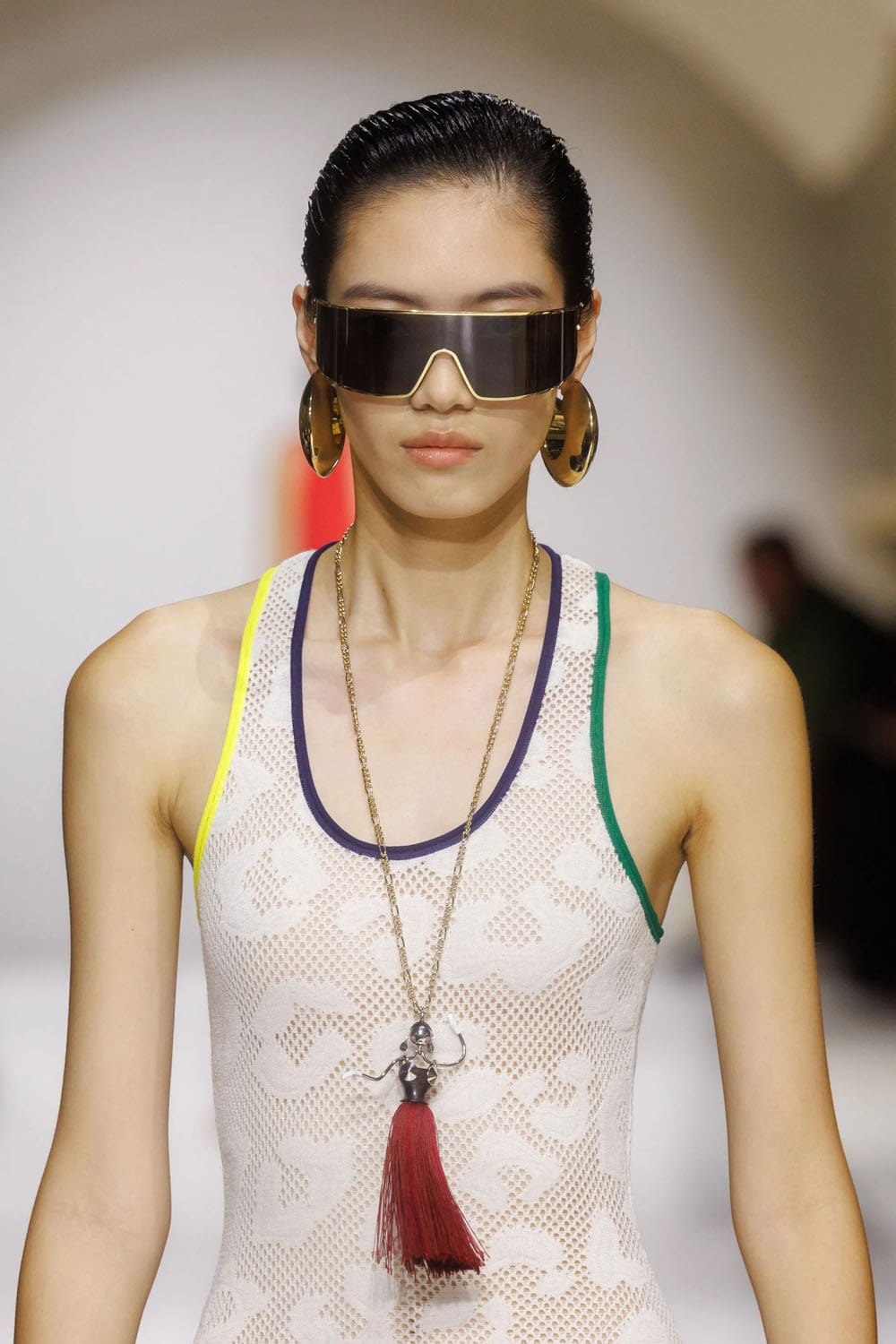
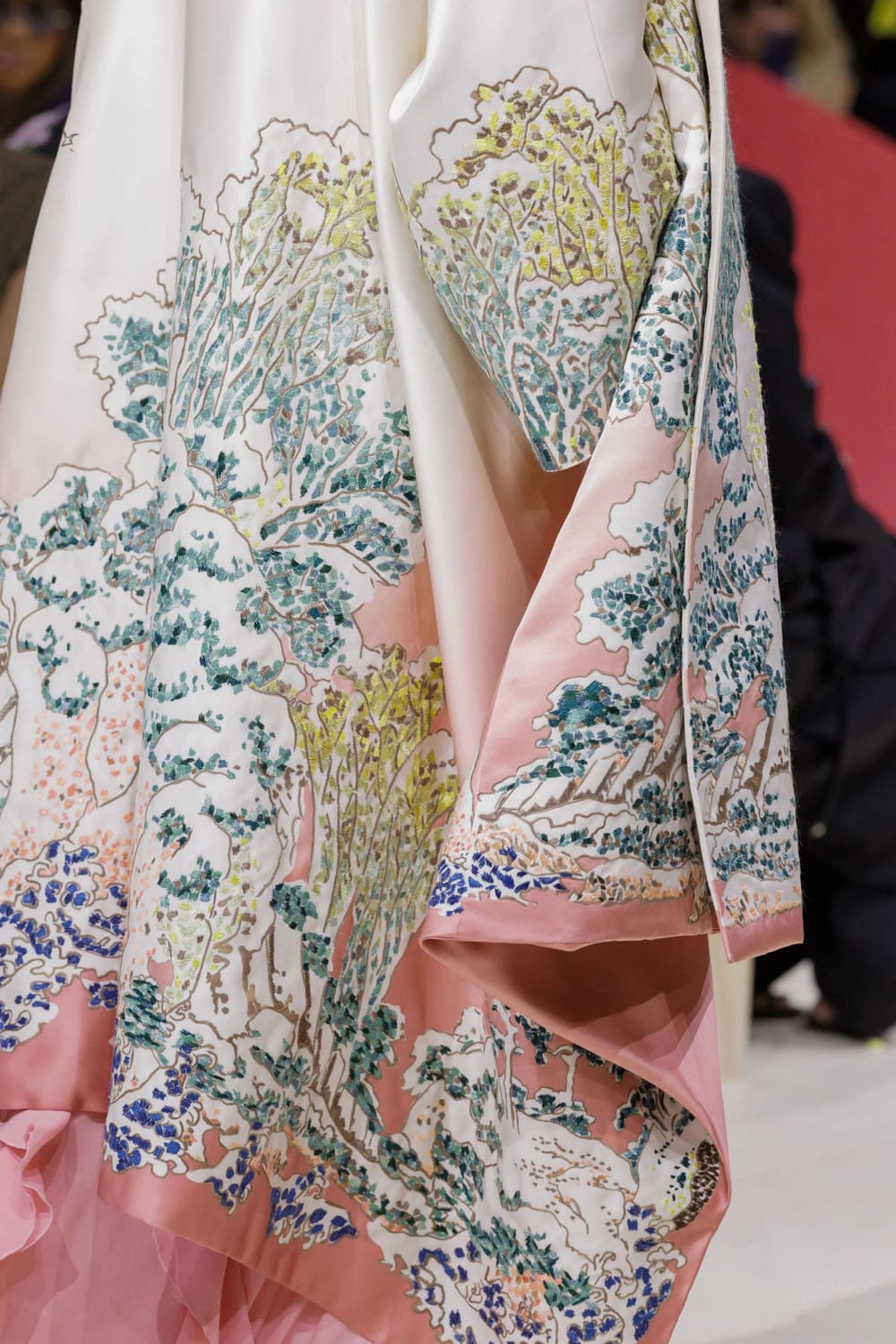
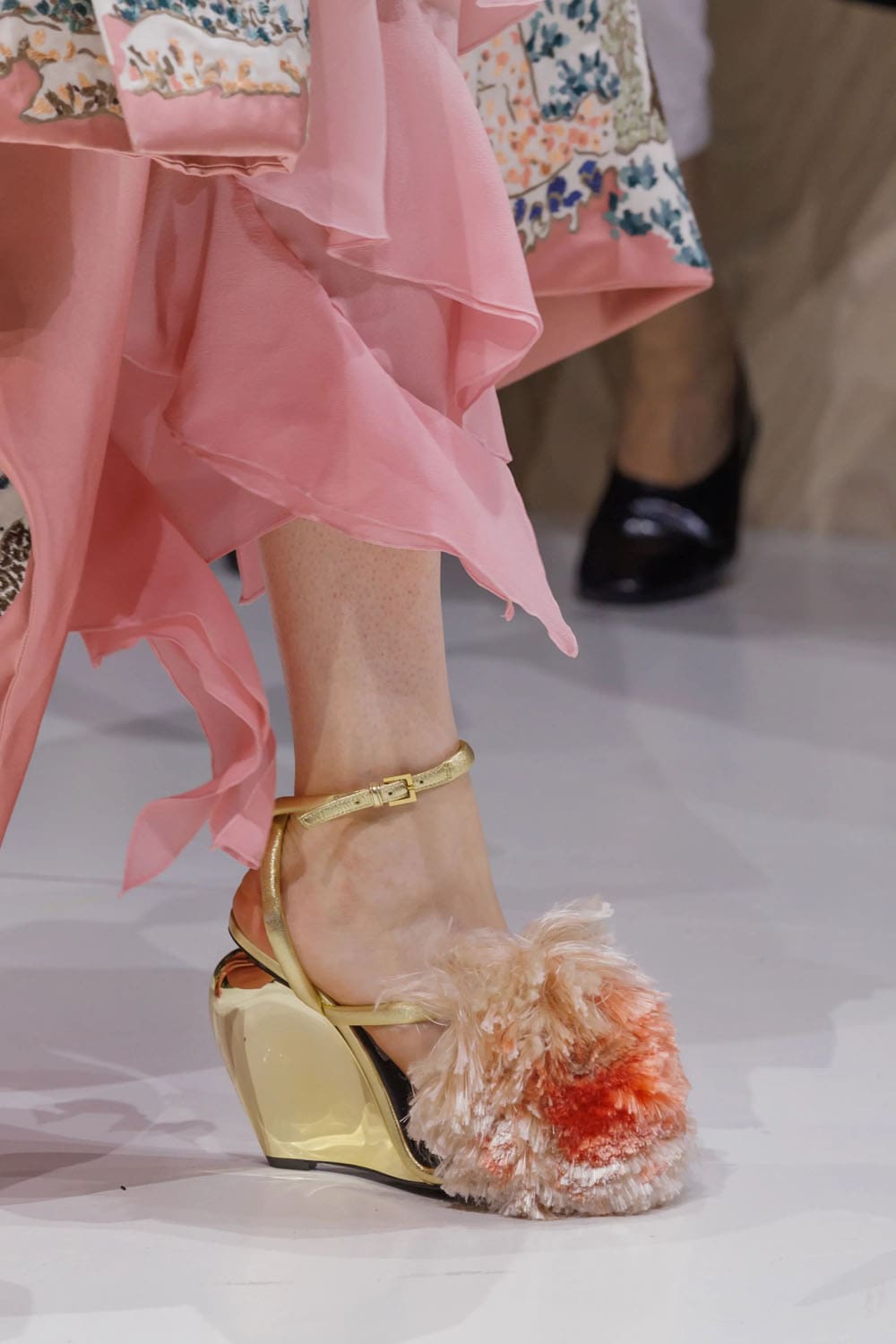
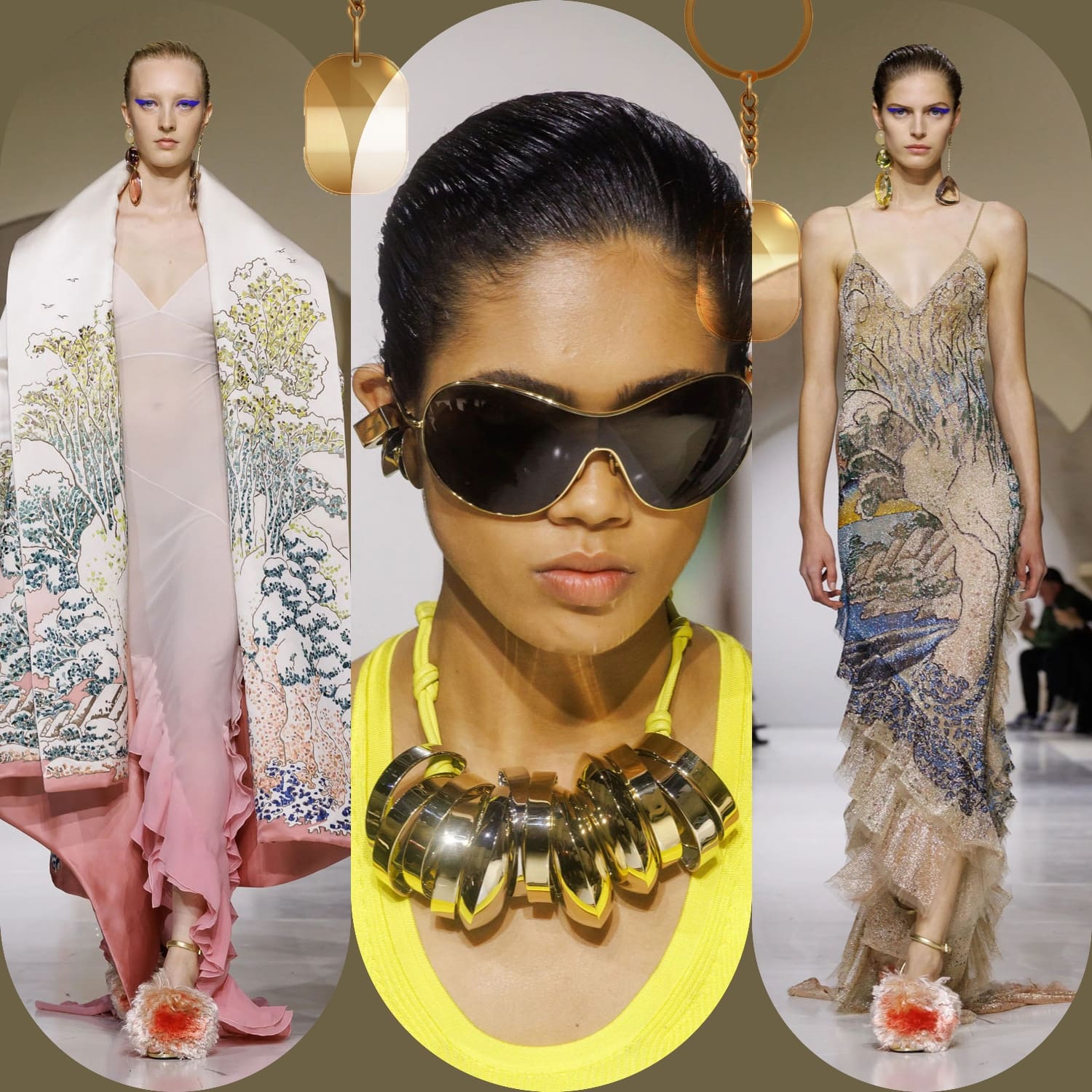
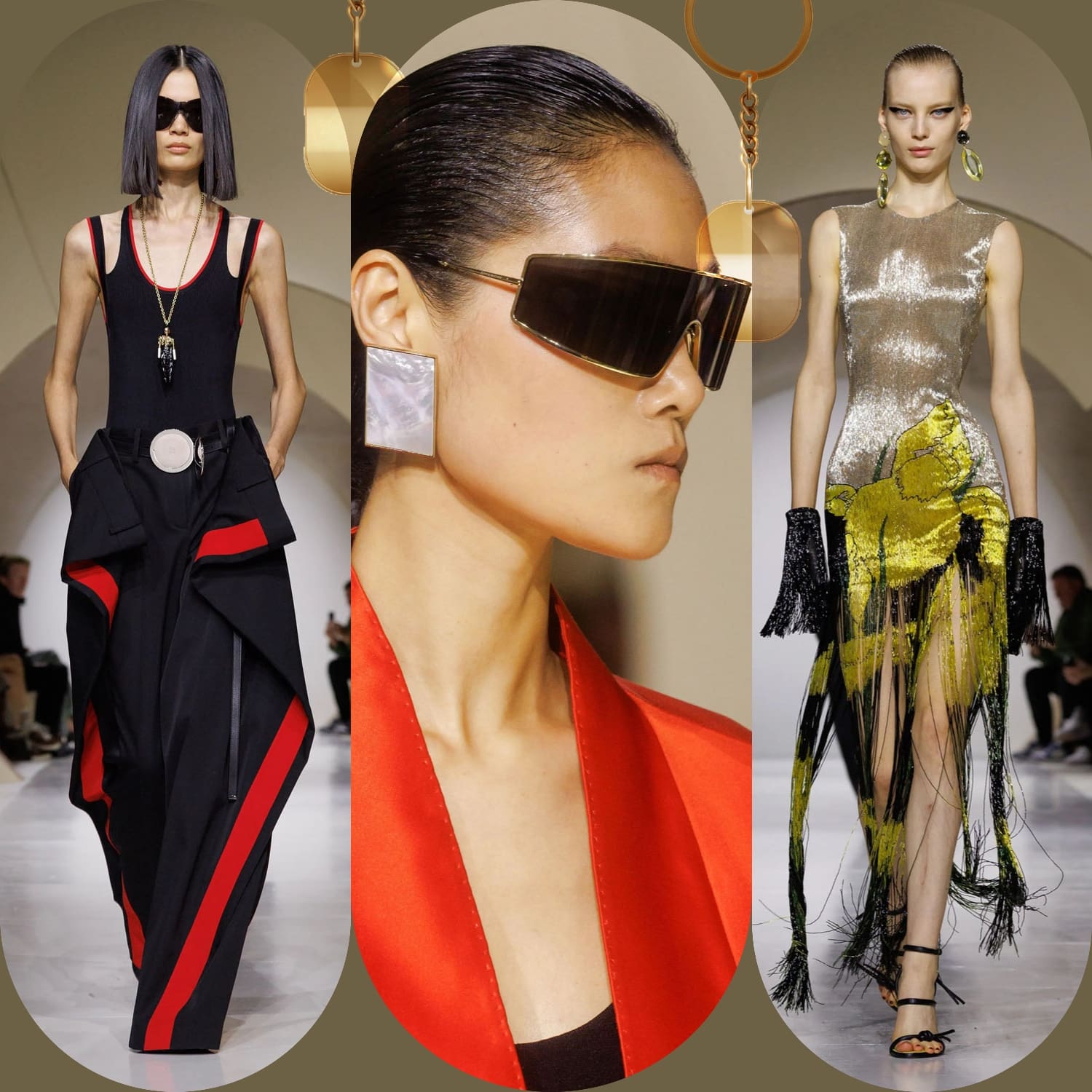
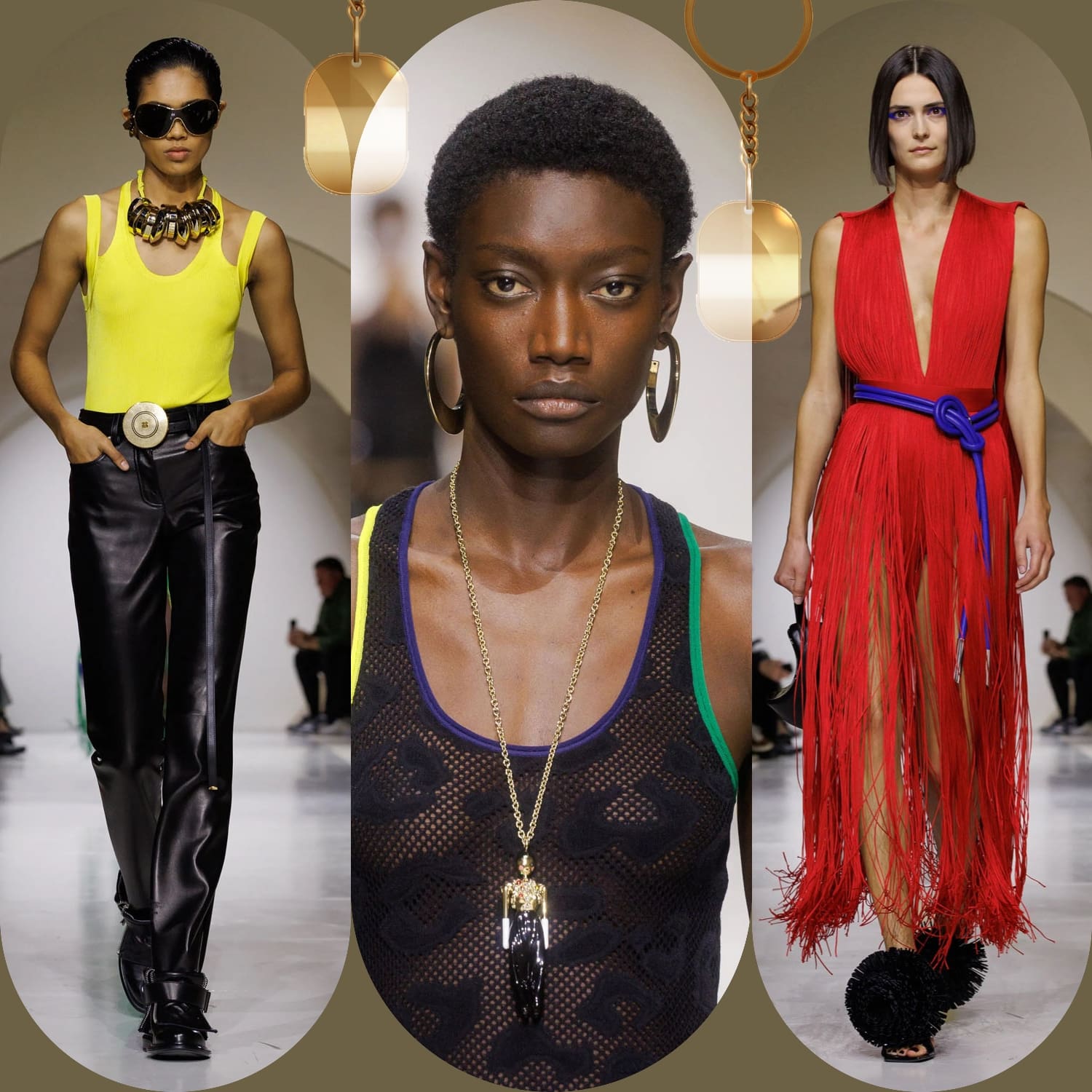
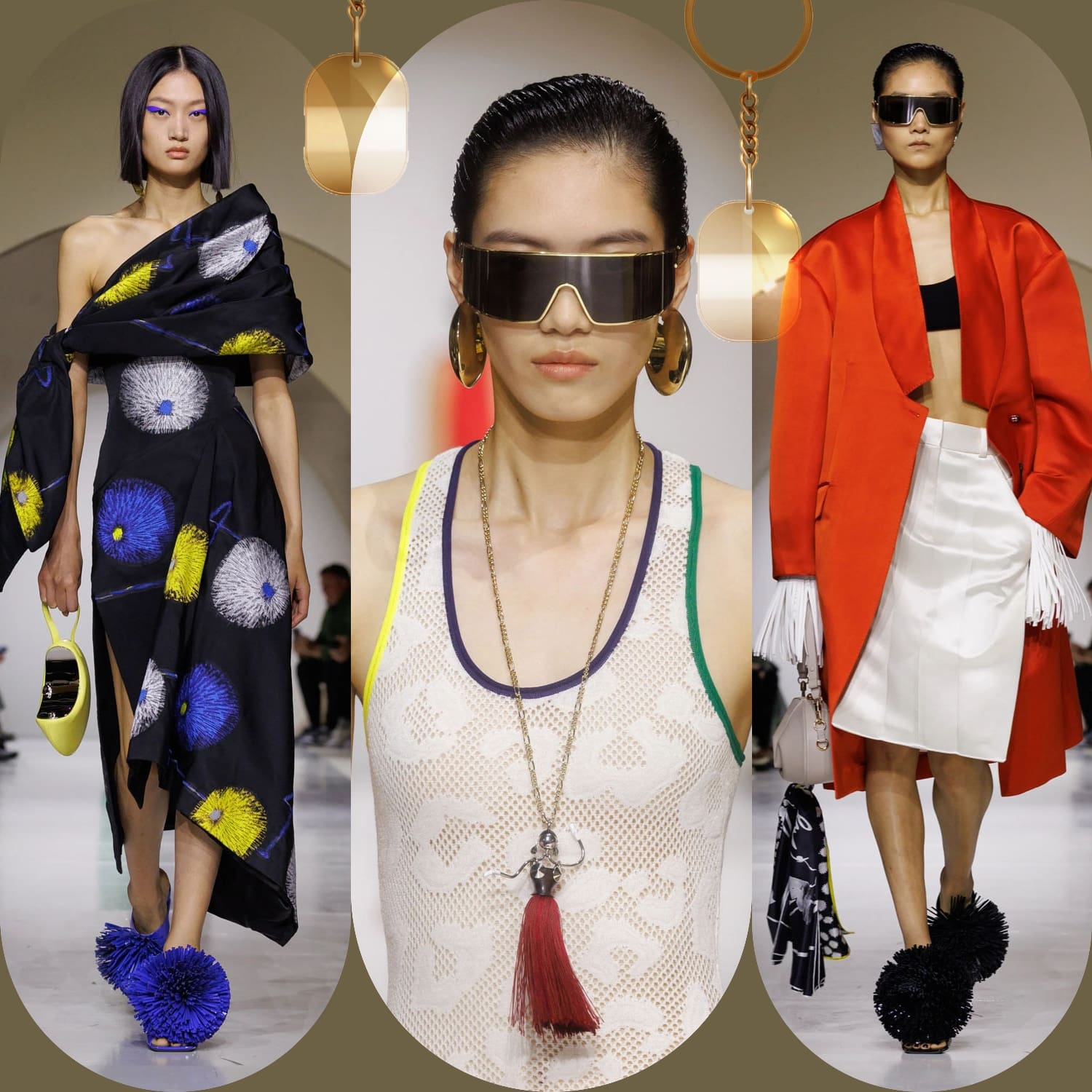
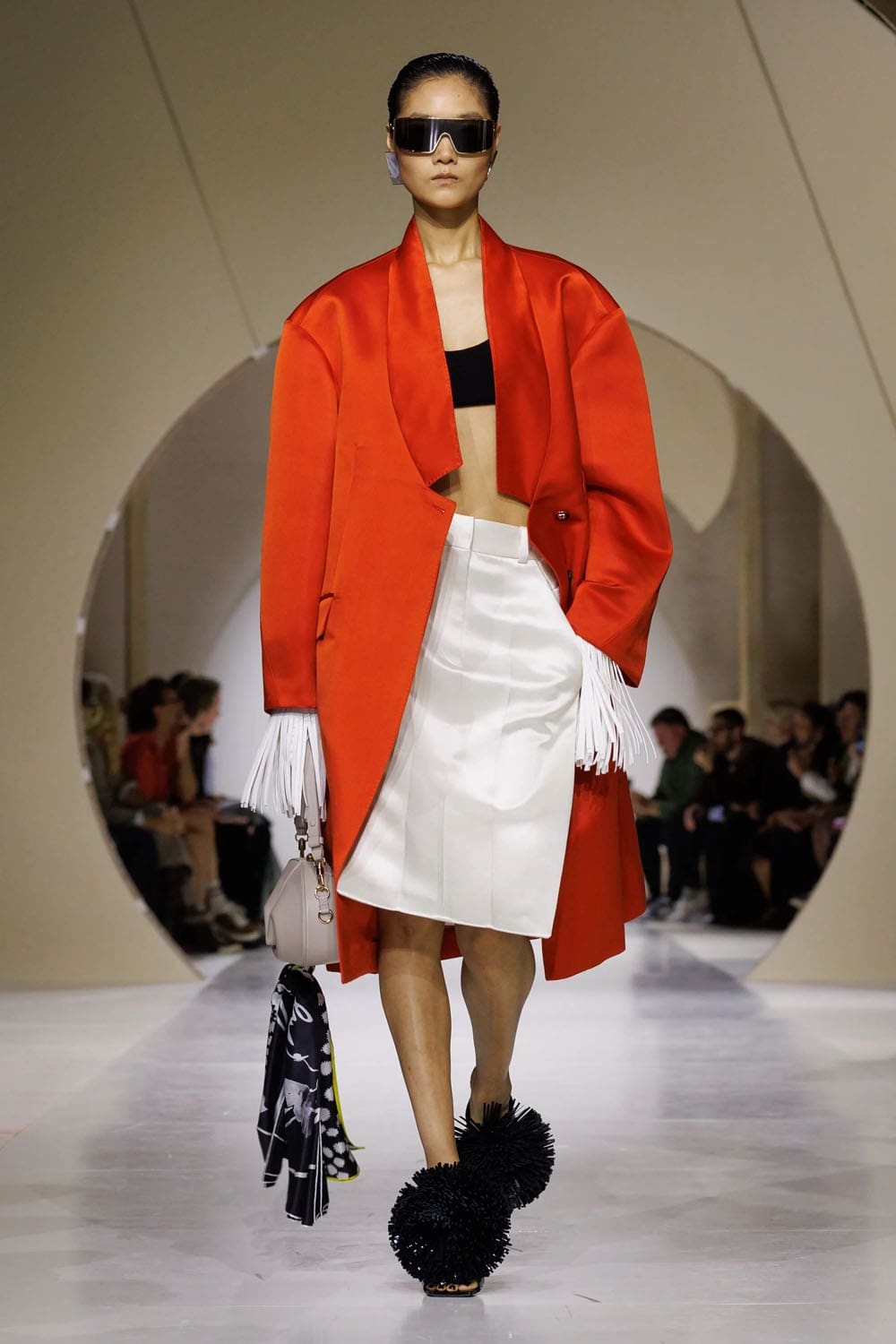
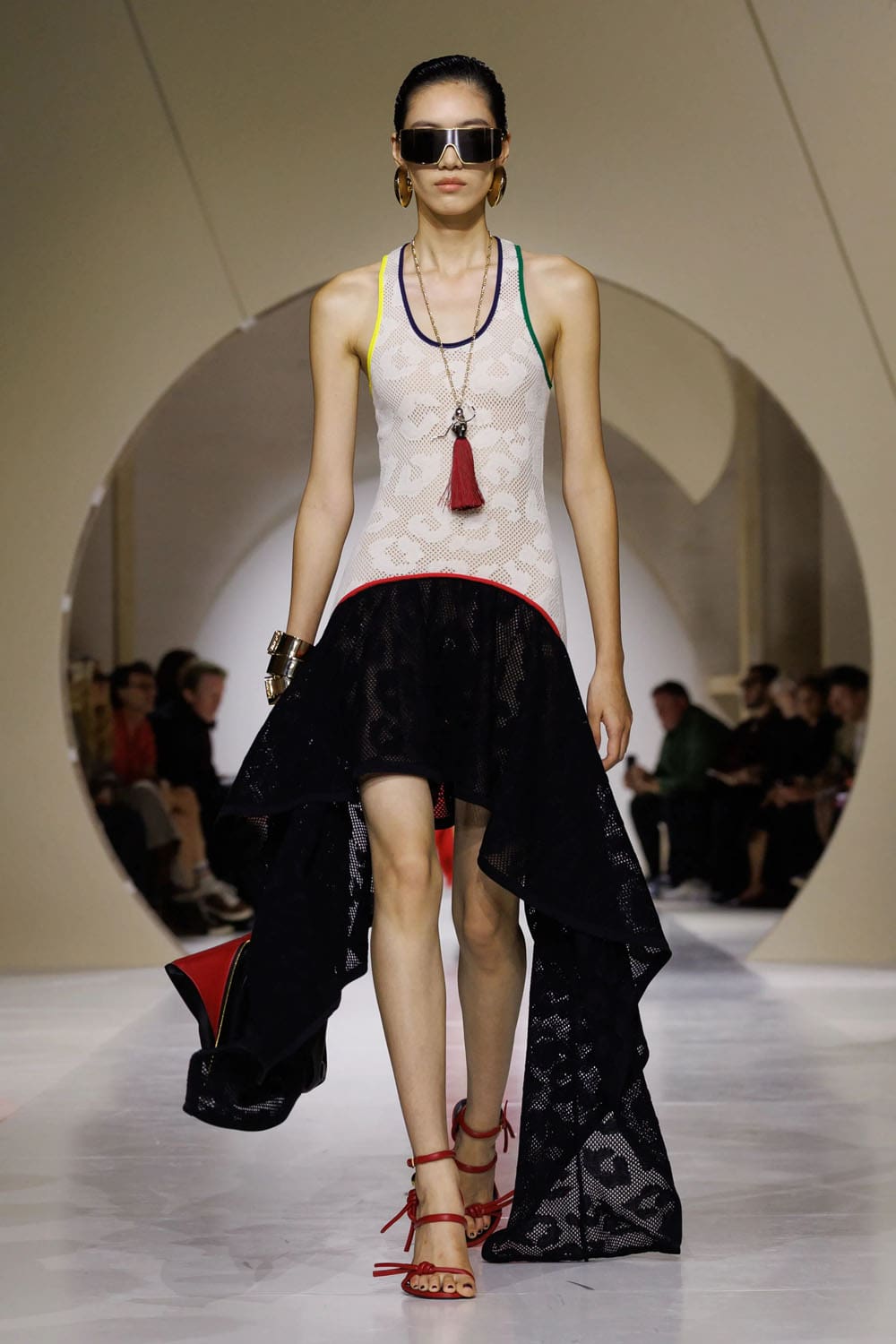
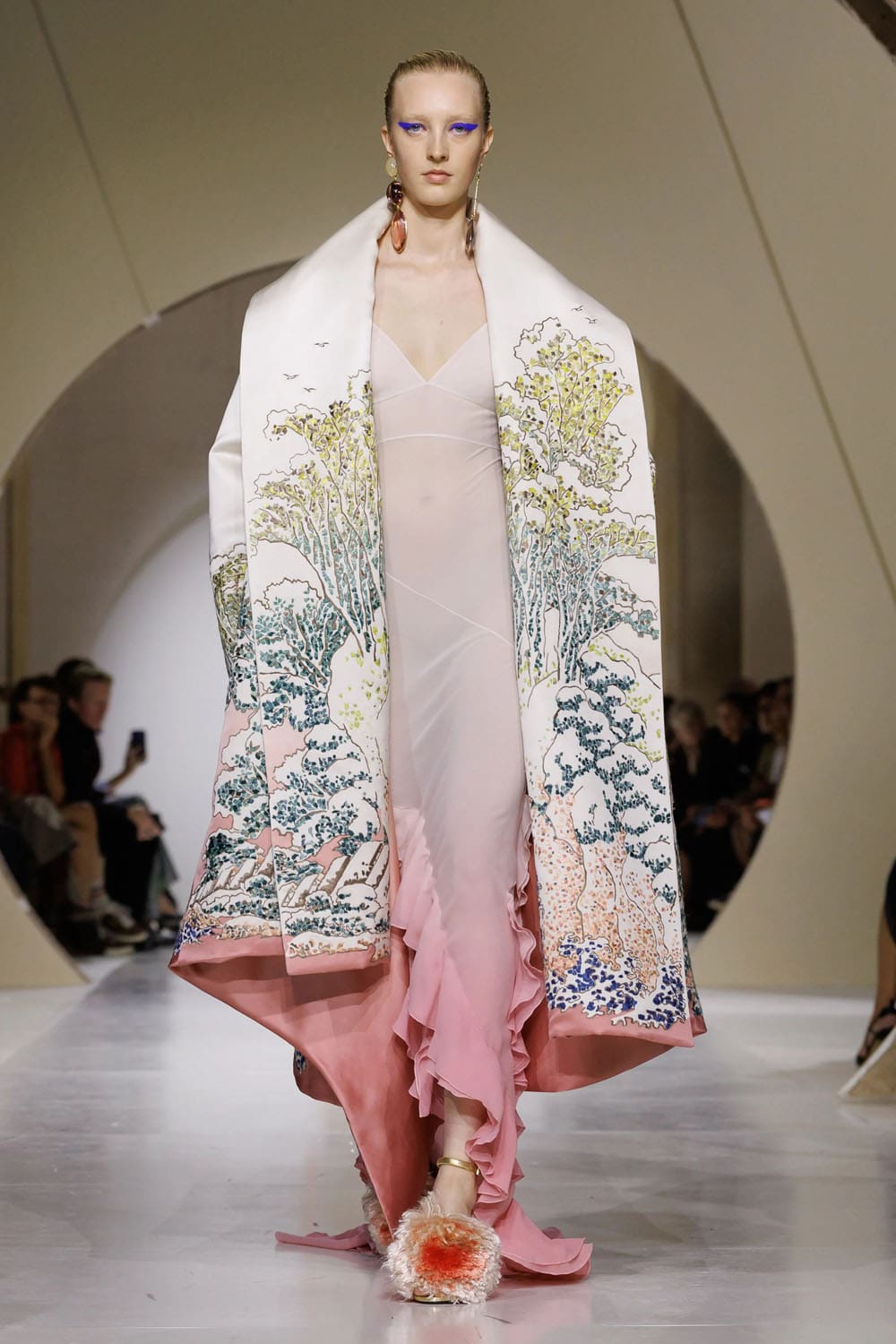
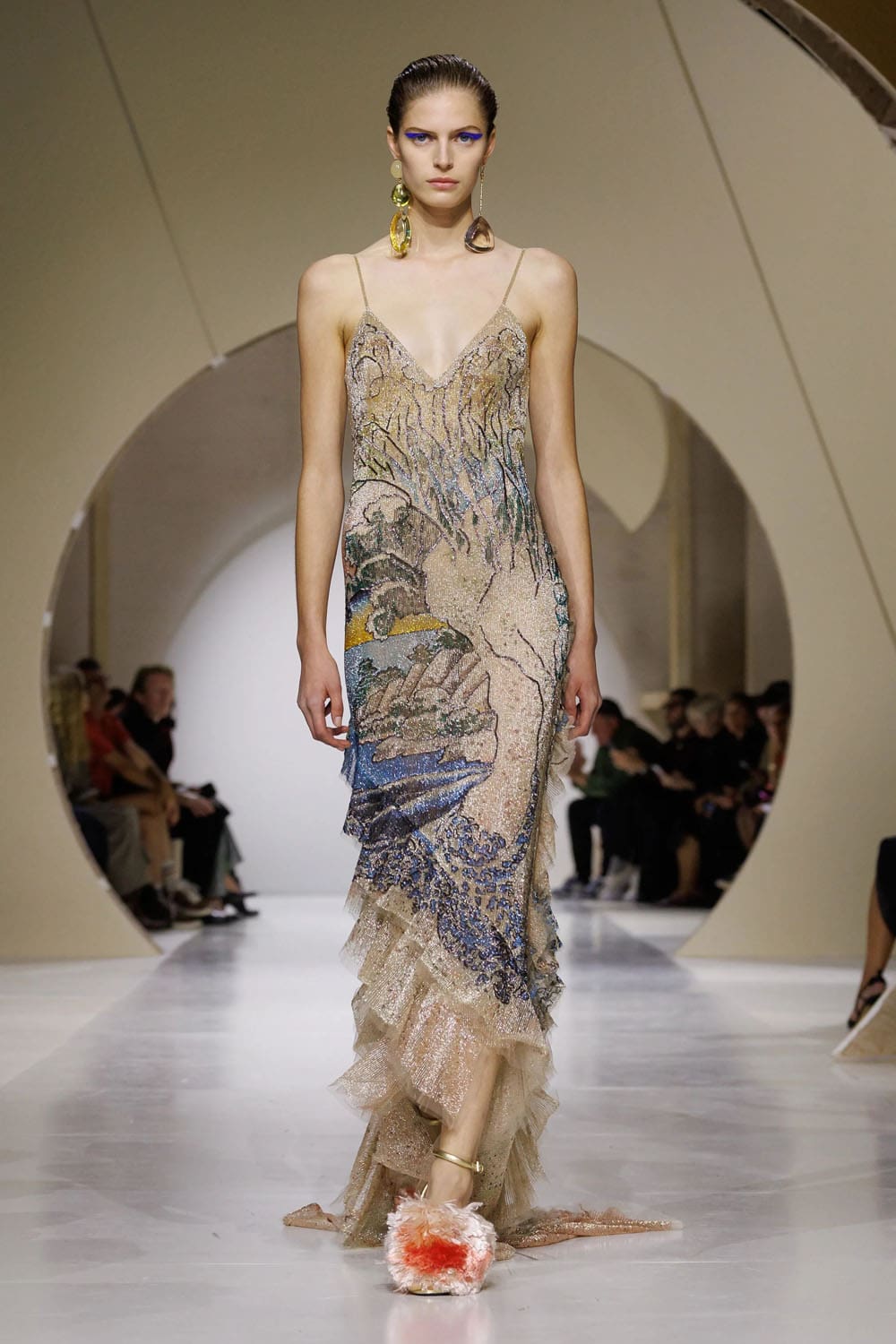
The visual kaleidoscope concluded with a baffling pivot toward ceremonial grandeur. After forty looks of leather enforcement uniforms, motorcycle leotards, and athletic mesh tank tops hung with doll-pendant necklaces, the presentation ended with silk kimonos smothered in massive, picturesque landscape embroideries. A pale pink sheer slip dress, finished with cascading ruffles, was wrapped beneath an ivory silk coat hand-painted with alpine trees and stone pagodas, grounded by feathered mules. Beside it, a structured vermilion silk coat with heavy gold toggle ear cuffs framed the jawline.
One had to ask: how does a Swedish highway officer in zip-up leather hot pants resolve into an embroidered Japanese ceremonial kimono? The collection functioned like the Village People themselves: plucking uniforms from disconnected subcultures—the cop, the biker, the geisha—and stitching them together under the banner of modern womanhood. Hubert de Givenchy gave women elegance that freed them from vulgarity; Sarah Burton gave them an identity crisis dressed for a costume party.
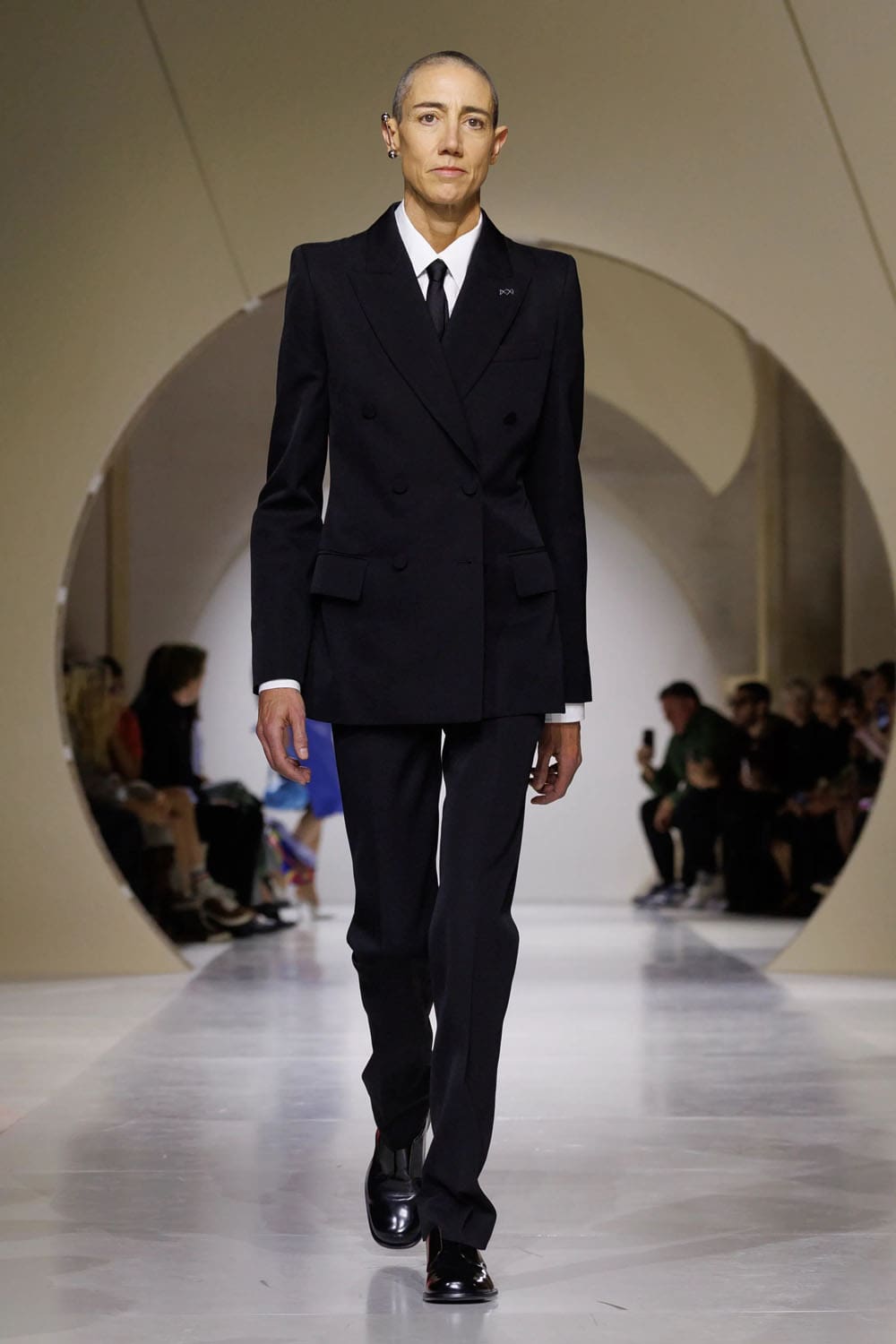
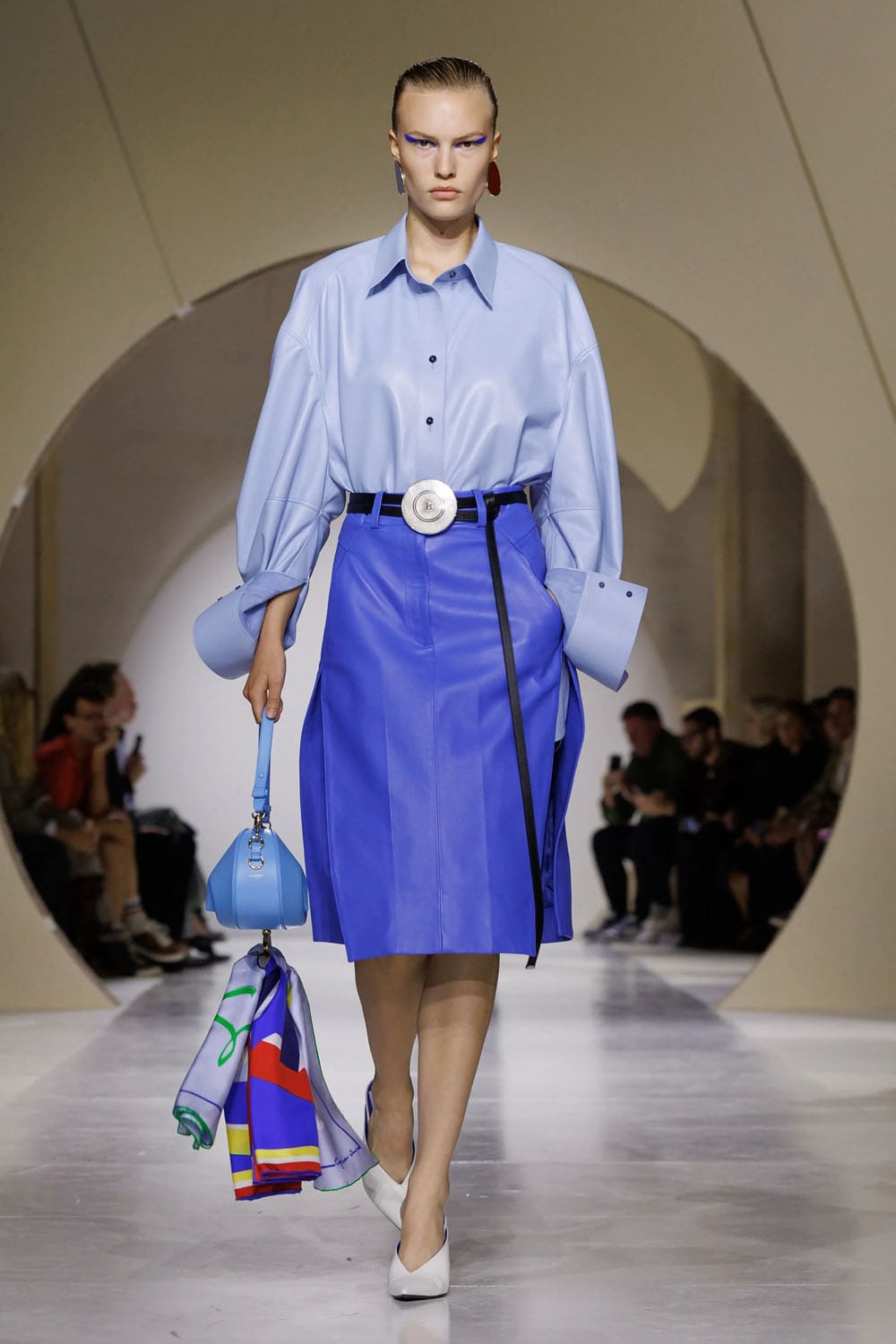
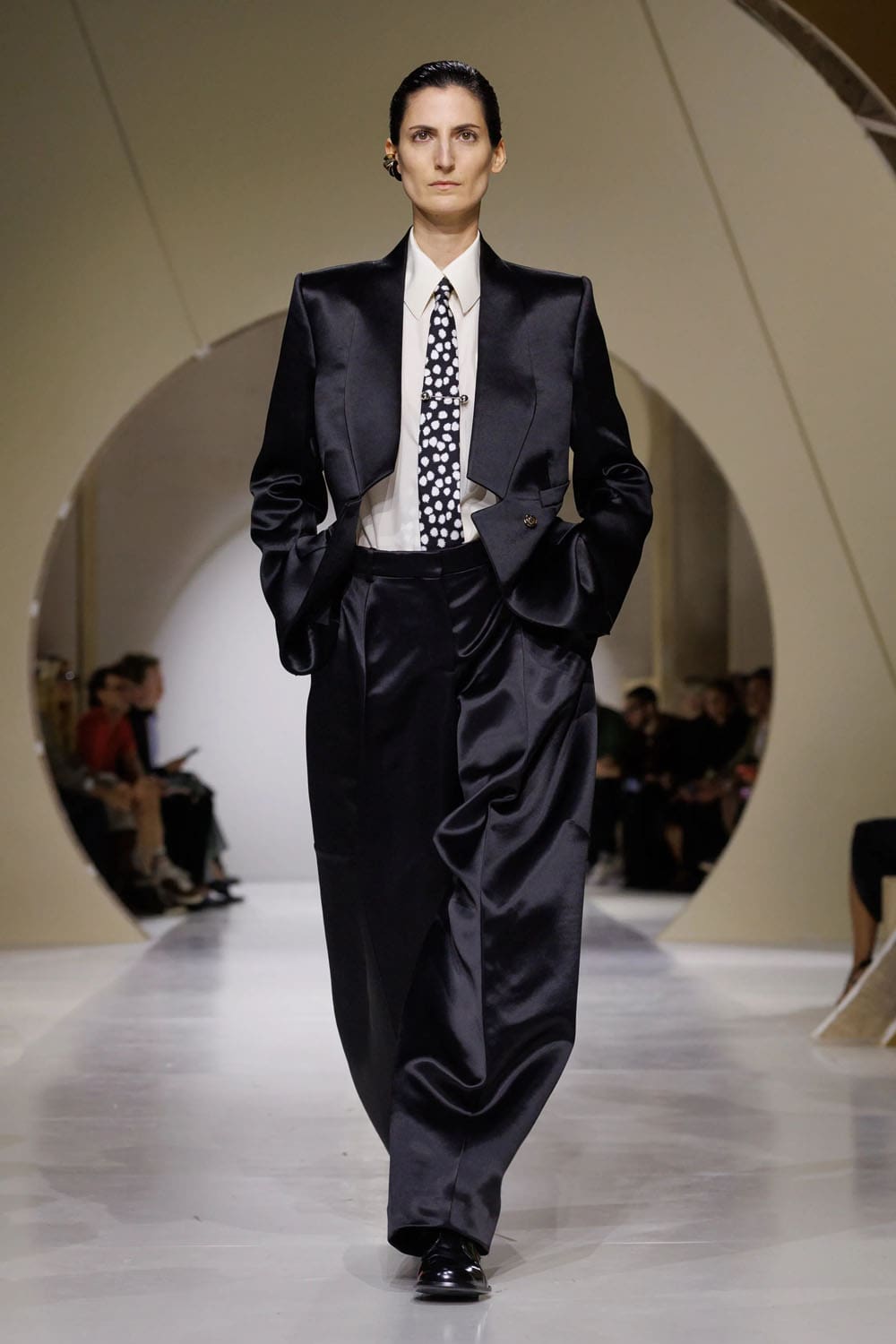
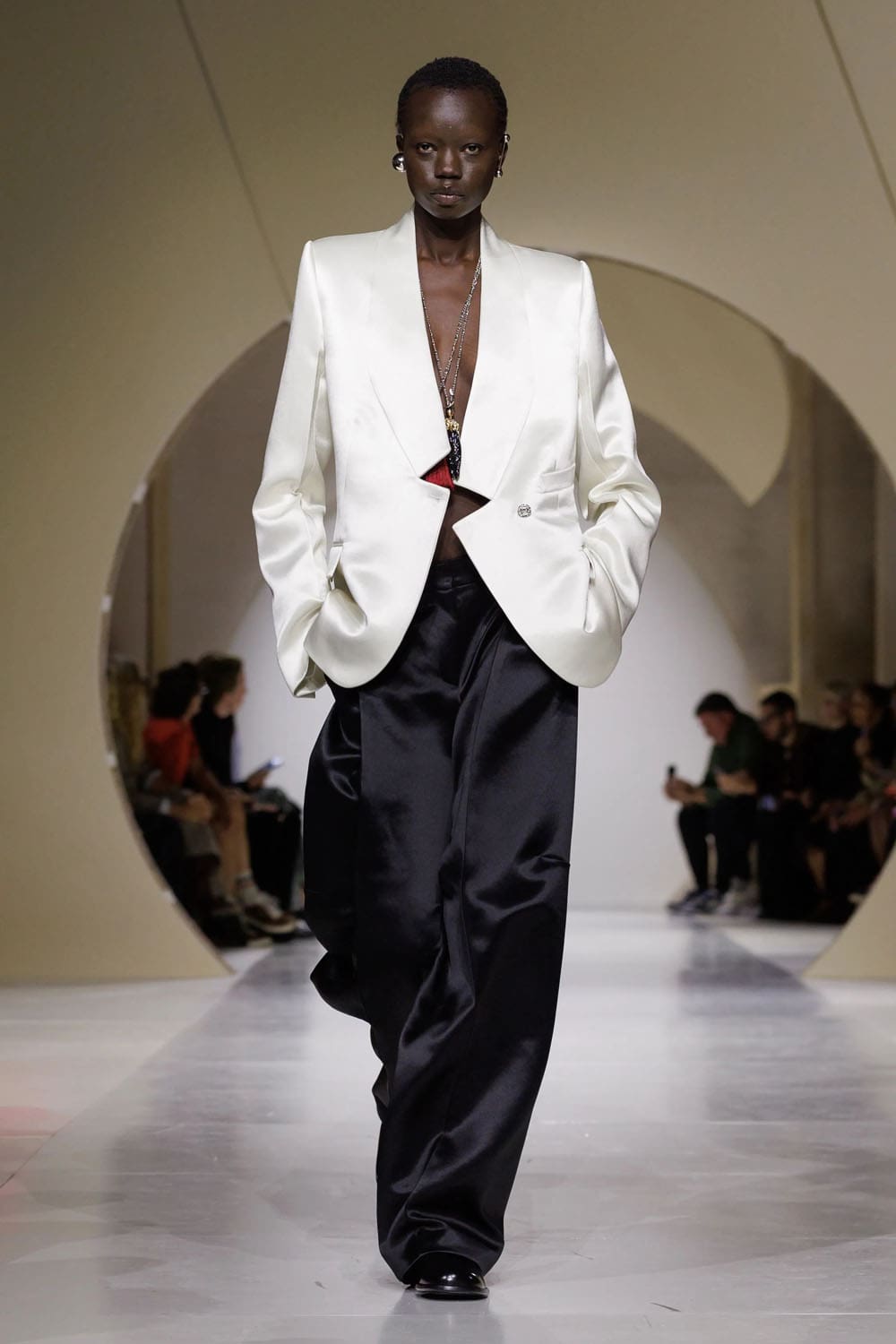
Veja todos os looks Givenchy Primavera Verão 2027
See Details Givenchy Spring Summer 2027